
In this guide
The Great Migration is a year-round movement of wildebeest and other grazing animals across the Serengeti–Mara ecosystem. It does not occur on one fixed date or in one park sector. Seasonal rain, grazing and water influence the broad pattern, while daily movement changes from year to year. A good private safari chooses accommodation and drives based on your travel month rather than promising one specific crossing.
December to March: Southern Serengeti and Ndutu
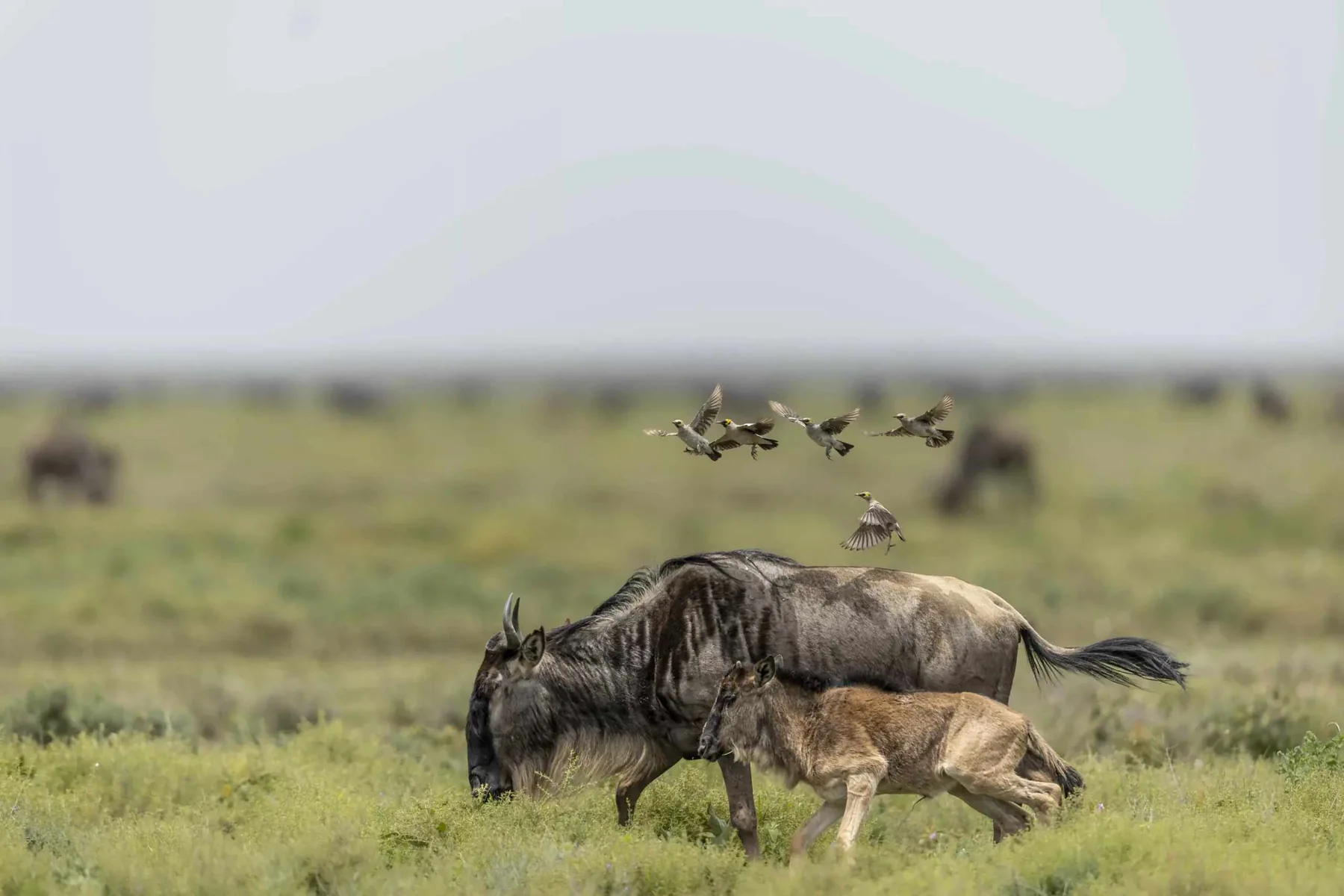
Seasonal rainfall can draw herds to the short-grass plains of Ndutu and the southern Serengeti. Many wildebeest give birth during the early-year calving period, with January and February often especially productive. Predator activity is an important reason to spend at least two nights in the area. Conditions and sightings are never guaranteed, and vehicle access depends on the specific reserve or conservation-area rules.
April to June: Central and Western Serengeti
As the southern plains dry, herds generally move through central Serengeti and toward the Western Corridor. The Grumeti River region may offer dramatic wildlife viewing, although river crossings are unpredictable. Green-season travel can mean quieter roads, striking landscapes and muddy sections after rain. For a targeted Western Corridor safari, allow several nights rather than treating it as a quick day trip.
July to October: Northern Serengeti and Mara River
During the drier months, migration herds may be found around northern Serengeti and the Mara River region. Crossings can happen repeatedly or not at all during a guest's visit. Riverbank crowding and animal welfare matter: guests should use responsible guides who observe established tracks and keep distance. A three- or four-night northern stay improves flexibility but cannot guarantee a crossing.
November: A transitional month
The short rains can begin to draw animals southward again, but the timing varies. Central Serengeti remains rewarding for resident wildlife, so combine migration expectations with a balanced safari focused on lion, leopard, cheetah and plains game.
Choosing the right migration safari
For calving, prioritize Ndutu and the southern plains in January–February. For river-crossing opportunities, focus on northern Serengeti during the appropriate dry-season window. For visitors who value variety over one event, combine Serengeti with Ngorongoro and Tarangire. Private itineraries should account for road times, airstrip schedules, conservation fees and the seasonal location of mobile camps.
How Wildlux plans the journey
Wildlux Expeditions designs private Tanzanian safaris from Arusha, matching the route to travel dates and comfort preferences. Explore our 8-Day Ndutu Calving & Southern Plains safari or read the month-by-month Great Migration calendar. Ask for a custom route if your priority is wildlife photography or a slower pace.
