
Mount Kilimanjaro
“At four in the morning on summit night there is nothing but the circle of your headtorch and the sound of your own breathing — and then, without warning, the whole curve of the earth turns orange.”
Africa's highest peak and the world's tallest freestanding mountain — a non-technical trek through rainforest, moorland, alpine desert and glacial ice to Uhuru Peak at 5,895 metres.
About Mount Kilimanjaro.
Kilimanjaro is one of very few genuinely great mountains that an ordinary, reasonably fit person can stand on top of. There is no rope work, no crampons on the standard routes, no technical climbing at all. What there is, instead, is altitude — 5,895 metres of it — and the honest, slow, unglamorous business of walking uphill for a week while the air thins around you.
It is also the largest freestanding mountain in the world, rising almost five kilometres straight off the plains of northern Tanzania with nothing else nearby to compete. That isolation is what makes the first sight of it, usually from the road out of Arusha with the snow line floating apparently unattached above cloud, so disorienting. It looks impossible. It also looks, from that distance, deceptively gentle.
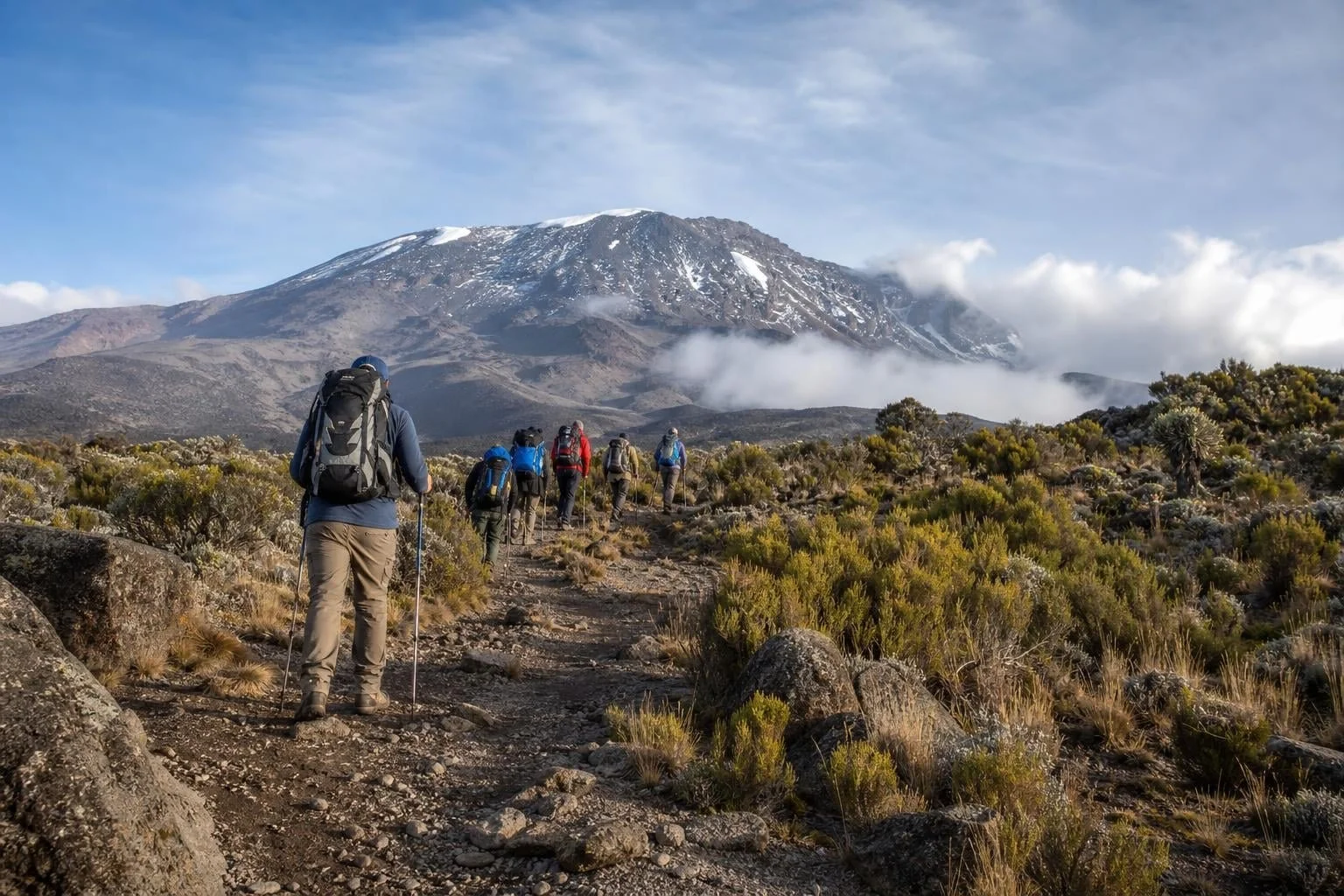
The trek passes through five distinct ecological zones in the space of a few days, which is part of what makes it so memorable. You start in cultivated farmland, enter dense montane rainforest hung with moss and loud with colobus and turaco, climb through heather and giant heath into moorland where surreal groundsels and lobelias stand like sculpture, cross a high alpine desert of dust and rock that feels genuinely lunar, and finish on the arctic summit among glaciers that have been retreating for a century. Few walks anywhere take you through so many worlds so quickly.
Choosing a route matters more than anything else you decide. The Lemosho route, seven or eight days from the western side, is our default recommendation: beautiful, quiet in its early days, and with an acclimatisation profile that gives the highest success rates. The Machame route, six or seven days, is scenic and popular — busier, but with a good climb-high-sleep-low profile. The Northern Circuit, nine days, is the longest and has the highest success rate of all, ideal for those who want the best possible chance and the emptiest trails. The Rongai route approaches from the drier north and is the best choice in the rainy months. The Marangu route, with its hut accommodation, is often marketed as the easy option and is in fact one of the least successful because it is too short and too direct. The Umbwe route is steep and for experienced trekkers only.
Success comes down to time on the mountain. Add a day. Then consider adding another. Summit success rates rise sharply with each extra acclimatisation night — the difference between a five-day attempt and an eight-day trek is dramatic, and every experienced operator will tell you the same thing. Pole pole — slowly, slowly — is not a cliché here, it is the entire technique. Walk more slowly than feels natural. Drink three to four litres a day. Eat when you do not want to.
Summit night is its own event. You wake around eleven at night at Barafu or Kibo, dress in everything you own, and start walking in the dark at a pace that feels absurd. It is cold — minus ten to minus twenty with wind chill. It takes six to eight hours to reach Stella Point or Gilman's Point on the crater rim, and then another forty-five minutes along the rim to Uhuru Peak. The sun comes up somewhere in the middle of that, and the light on the Rebmann and Furtwängler glaciers, with the whole of Tanzania spread out below and Mount Meru poking through cloud a hundred kilometres away, is the reason people do this.
Behind every climber is a team. Kilimanjaro is portered, and the guides, cooks and porters who carry your kit, pitch camp and cook at altitude are the reason the mountain is accessible at all. Ethical operation is not optional: fair wages, weight limits, proper equipment, insurance and decent food for crew are the baseline. We work only with teams that meet those standards, and we would rather lose a booking than compromise on it.
Luxury on Kilimanjaro is not marble. It is a private mess tent, walk-in sleeping tents with proper mattresses, a portable toilet you do not have to queue for, excellent food, oximetry checks twice daily, emergency oxygen and a comprehensive evacuation plan, and enough days on the hill to enjoy it rather than endure it. Bracket the climb with a night at a beautiful lodge on the mountain's lower slopes before and after, and follow it with Zanzibar. That is how to do this properly.
Nature & landscape
The rainforest zone between roughly 1,800 and 2,800 metres is the most biologically rich, home to black-and-white colobus, blue monkey, bushbuck and, very rarely, elephant and buffalo on the lower slopes. Hartlaub's turaco, silvery-cheeked hornbill and the endemic Kilimanjaro white-eye are all present. Above the forest, giant groundsels (Dendrosenecio kilimanjari) and giant lobelias — plants found only on East Africa's high mountains — dominate the moorland in shapes that look invented.
Higher still, the alpine desert supports almost nothing but lichen and the occasional white-necked raven patrolling the camps. The summit's glaciers, remnants of a far larger ice cap, have lost the great majority of their mass since the early twentieth century and continue to retreat — a fact that lends the summit view a certain urgency.
Signature experiences
- The Lemosho route, seven or eight days — our default recommendation for scenery, quiet and success rate.
- The Northern Circuit, nine days — the longest route, the emptiest trails and the highest summit success.
- Machame, six or seven days — scenic, popular and a strong acclimatisation profile.
- Rongai — the driest approach from the north, best during the wetter months.
- Sunrise at Uhuru Peak, 5,895 m, with the glaciers catching first light.
- Barranco Wall — a scramble rather than a climb, and the most enjoyable hour on the mountain.
- Crater camping for strong acclimatisers, with a walk to the ash pit and the Furtwängler Glacier.
- Mount Meru as acclimatisation — a four-day trek in Arusha National Park that dramatically improves summit odds.
Photography guide
Weight governs everything. Most climbers are happiest with one body and a 24–70mm equivalent, or simply a capable phone plus a compact camera. Batteries die fast in the cold — carry spares inside your jacket, close to your body, and keep one warm overnight in your sleeping bag.
The best light of the trek is often not at the summit. Shira Plateau at dawn, with Kibo catching pink light across the moorland, is the signature landscape. The giant groundsels in the Barranco Valley photograph best in early morning mist. Summit night is astrophotography territory if you can bear to stop: on a moonless night the Milky Way over Kibo is extraordinary, though a tripod is heavy — consider bracing on a rock instead. At Uhuru, expect harsh contrast and hands too cold for fiddly settings; set up beforehand. Drone use requires TANAPA permits and is not available to general climbers.
Where to stay
On the mountain you sleep under canvas — but the standard varies enormously, and it is worth paying for the better end: spacious walk-in tents with proper sleeping mats, a heated mess tent, a private toilet tent, and a cook who can produce genuinely good food at 4,600 metres. Below the mountain, the coffee-estate lodges and boutique properties around Moshi and Arusha are excellent, and we always build in a night before the climb for briefing and kit checks and at least one night after for a long shower, a longer sleep and a celebratory dinner.
How long to stay
- 5–6 days — possible, and not advised. Success rates fall sharply and the experience becomes an endurance test.
- 7 days — the practical minimum we recommend, typically Lemosho or Machame.
- 8 days — our preferred length: better acclimatisation, better summit odds, and time to enjoy the mountain.
- 9 days — the Northern Circuit, for the highest success rate and the quietest route.
- Longer combinations — allow 11 to 14 days in Tanzania to add a short safari, or 14 to 16 to finish on Zanzibar.
Nearby destinations
Arusha National Park and Mount Meru sit two hours west and offer the single best acclimatisation trek available. Tarangire, Lake Manyara, Ngorongoro and the Serengeti make a natural post-climb safari, and Zanzibar is a ninety-minute flight away — the ideal recovery.
Conservation & community
Kilimanjaro National Park is a UNESCO World Heritage Site, inscribed in 1987, and is managed by TANAPA. Its glaciers have lost the overwhelming majority of their ice since 1912 and continue to shrink; the mountain's forest belt, which supplies water to over a million people below, is under pressure from fire and encroachment.
The most immediate ethical question for climbers, though, is the treatment of crew. Porter welfare on Kilimanjaro has improved through the work of organisations such as the Kilimanjaro Porters Assistance Project, but poor operators still underpay, overload and under-equip their teams. Ask any operator directly about porter wages, load limits, meals and sleeping equipment before booking — Wildlux works only with crews that meet these standards, and we will show you the numbers. Beyond that: carry out everything you carry in, use the toilet facilities provided, stay on the trail to limit erosion, and tip your team properly at the end. They earned it more than you did.
Kilimanjaro is not a mountain to rush. Give it eight days, walk slower than your pride wants to, and stand on the roof of Africa at sunrise with your team beside you.
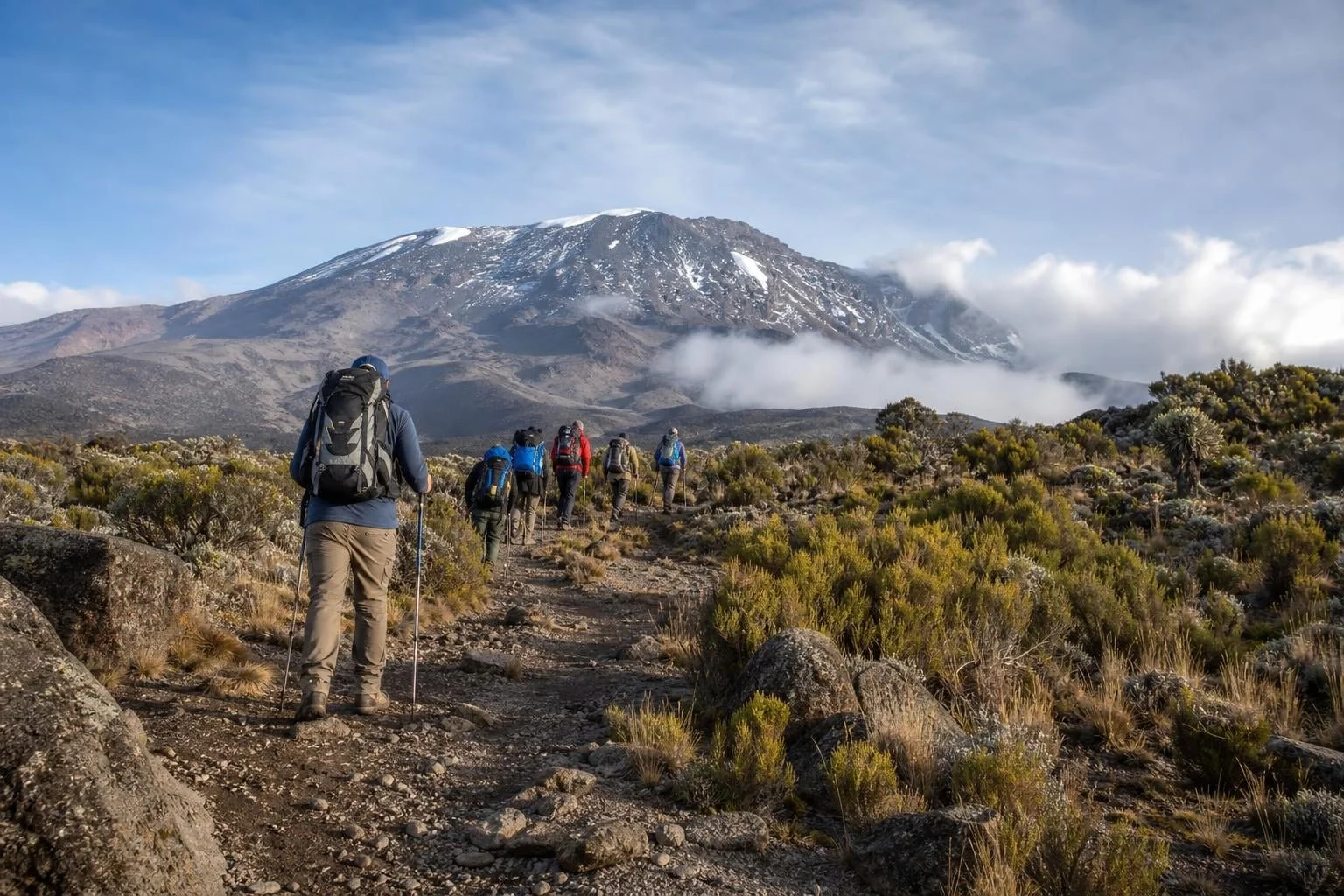
Mount Kilimanjaro, in short.
The essentials our specialists check first when shaping a private itinerary.
Good to know.
- Location
- Kilimanjaro National Park, north-eastern Tanzania, near Moshi
- Elevation
- Uhuru Peak 5,895 m — the highest point in Africa
- Established
- National park since 1973; UNESCO World Heritage Site since 1987
- Getting there
- Kilimanjaro International Airport (JRO), c. 1 hour from Moshi and 1 hour from Arusha; all routes begin with a road transfer to the trailhead
- Permits
- Park entry, camping or hut fees, rescue fees and licensed guide requirements are mandatory and included in every Wildlux climb
- Currency
- Tanzanian shilling and US dollars. Bring sufficient cash for crew tips, which are given at the end of the climb and are a significant, expected part of the crew's income — we provide clear guidance on amounts.
Why visit Mount Kilimanjaro?
The world's highest freestanding mountain
Kilimanjaro rises almost five kilometres straight off the plain with no range around it — a silhouette unlike any other in Africa.
Uhuru Peak, 5,895 metres
The highest point in Africa, reached at sunrise after a long night walk from Barafu or Kibo.
Five climate zones in one week
Farmland, rainforest, moorland, alpine desert and arctic summit — a walk from the equator to the ice.
No technical climbing required
The standard routes need no ropes or crampons; success depends on acclimatisation, pacing and days on the mountain.
Route choice you can tailor
Lemosho, Machame, Northern Circuit, Rongai and Marangu each offer a different length, difficulty and success profile.
The Barranco Wall
A hands-on scramble that most climbers name as the most enjoyable hour of the entire trek.
Retreating summit glaciers
The Rebmann and Furtwängler ice fields, remnants of a far greater ice cap and shrinking every year.
Giant groundsels and lobelias
Otherworldly high-altitude plants found only on East Africa's great mountains.
Species you may encounter.
Wildlife commonly associated with the region. Sightings are always wild and never guaranteed.
Black-and-white colobus
Common in the rainforest zone on the Lemosho and Machame approaches.
Blue monkey
Frequently seen and heard in the lower forest.
Bushbuck
Shy forest antelope glimpsed on early morning forest sections.
Hartlaub's turaco
A flash of crimson wings in the forest canopy.
Kilimanjaro white-eye
A mountain endemic, small and easily overlooked in the heath zone.
White-necked raven
The summit's constant companion, patrolling high camps for scraps.
Four-striped grass mouse
Bold little residents of the moorland camps.
Giant groundsel
Dendrosenecio kilimanjari — a tree-sized plant found only on this mountain and its neighbours.
Giant lobelia
Tall spires on the moorland, closing their leaves overnight against the frost.
Elephant and buffalo
Present in the lower forest reserve, occasionally crossing trails on the Rongai side; sightings are rare.
The right time for Mount Kilimanjaro.
Warmest and clearest: January – February · Driest and busiest: July – September
Warm, generally clear and one of the best months to climb; busy but pleasant.
The warmest and often clearest climbing month of the year.
Good in the first half; the long rains usually set in from the second half of the month.
Long rains. Trails are wet and slippery and summit success drops — Rongai is the only sensible option.
Still wet, particularly on the southern routes; experienced trekkers only.
The rains clear and the dry season begins; cold nights but firm trails.
Peak season — dry, cold and reliable, with the busiest trails of the year.
Dry and popular; book early and expect company at the camps.
Arguably the finest month — dry, clear and marginally quieter than August.
Still dry and pleasant, with cloud building late in the month.
Short rains bring afternoon storms and slippery forest sections.
Conditions improve steadily; the festive period is busy but rewarding.
- Altitude
- Uhuru Peak 5,895 m; trailheads c. 1,800 – 2,100 m
- Average temperature
- 25–30°C at the base; −7 to −20°C at the summit
- Dry season
- January – mid-March and June – October
- Rainy season
- Late March – May (long rains) and November (short rains)
Mount Kilimanjaro on the map.
The park and the places around it — nearby destinations, areas and camps we work with.
Combine Mount Kilimanjaro with…

Mount Meru
A strong acclimatisation climb before Kilimanjaro.
A 4,562 m volcano inside Arusha National Park — a four-day trek through game-rich forest to a dramatic crater rim, and the ideal preparation for Kilimanjaro.
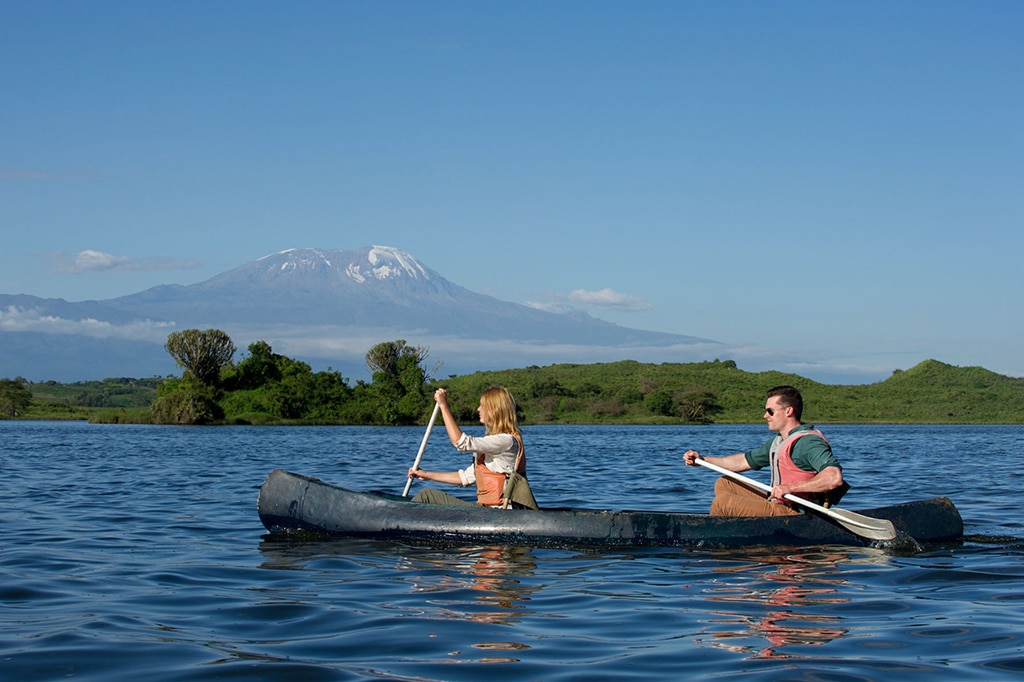
Arusha National Park
The most underrated hour from Kilimanjaro Airport.
A compact, gloriously varied park at the foot of Mount Meru — montane forest, crater grasslands and the alkaline Momella Lakes, with walking safaris, canoeing and colobus monkeys just forty minutes from Arusha.
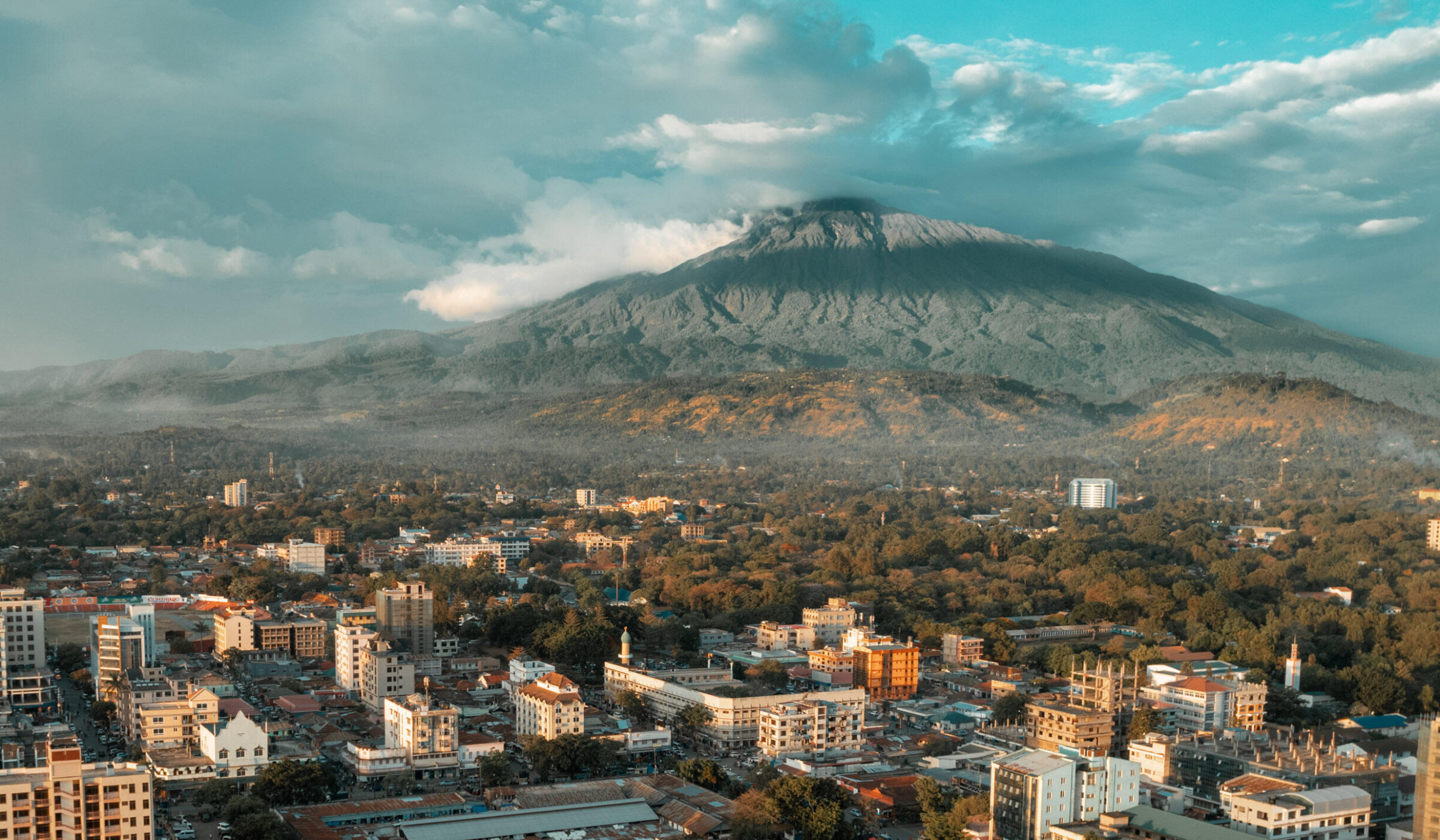
Arusha
The Gateway to Tanzania's Legendary Northern Safari Circuit
Arusha is Tanzania's premier safari gateway, offering easy access to world-famous national parks, Mount Kilimanjaro, rich cultural experiences, luxury lodges and authentic East African hospitality.
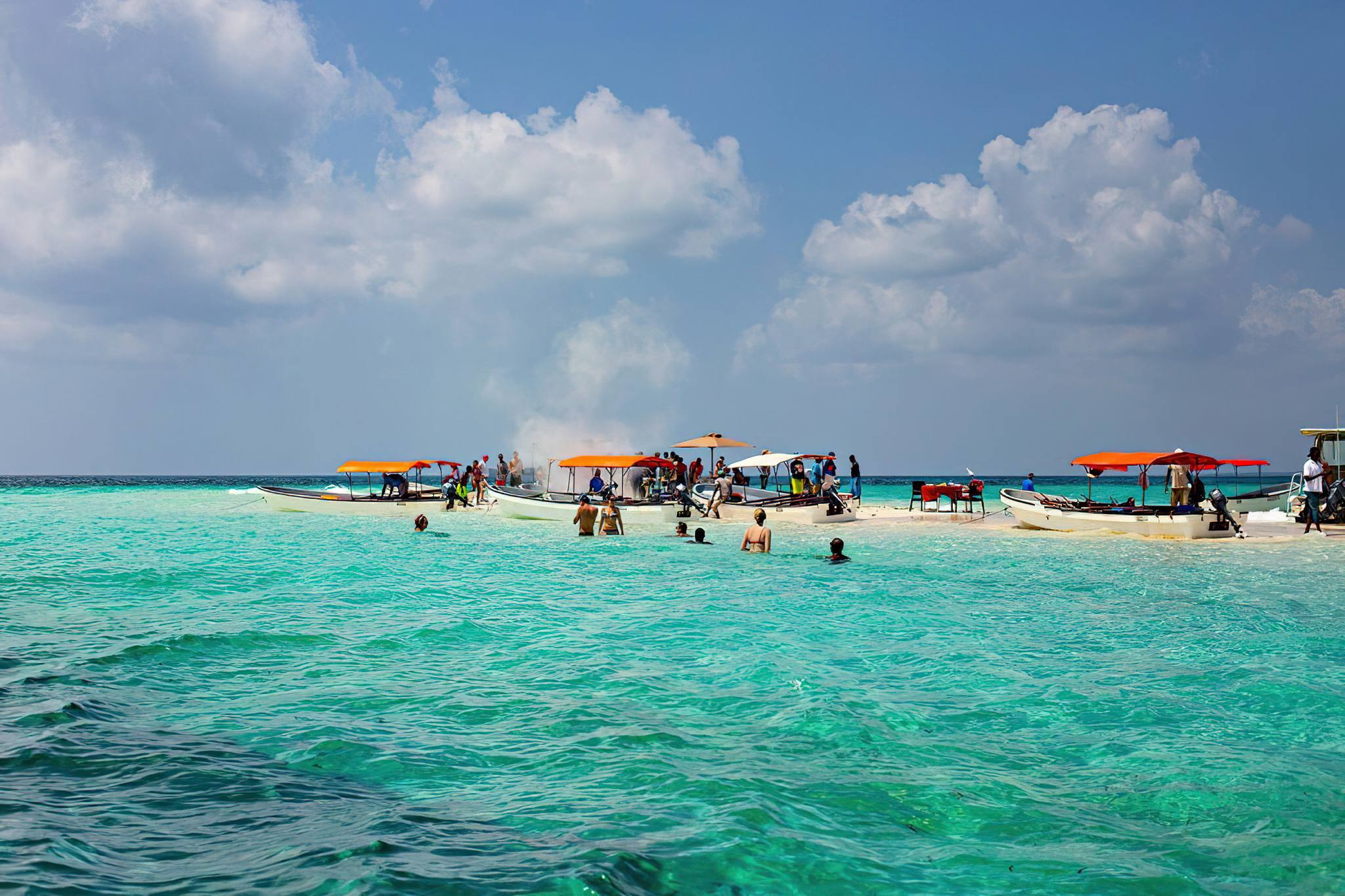
Zanzibar
Indian Ocean island, Swahili soul.
The Spice Island — powder-white beaches and warm turquoise water on one side, the UNESCO-listed labyrinth of Stone Town on the other, and coral reefs, spice farms and dolphin-filled channels in between.
Planning your visit.
Practical guidance from our on-the-ground team, tailored to this destination.
Packing
Layered technical clothing, an insulated down jacket, waterproof shell and trousers, four-season sleeping bag rated to at least −10°C, broken-in waterproof boots, gaiters, thermal base layers, warm hat and liner gloves plus insulated outer gloves, headtorch with spare batteries, trekking poles, sunglasses with high UV protection and high-factor sunscreen. Most kit can be hired in Moshi if you would rather not fly with it.
Health
Altitude is the principal risk. Ascend slowly, drink three to four litres daily, eat even without appetite, and report headache, nausea or breathlessness to your guide immediately. Discuss acetazolamide with your doctor before travelling. Our climbs include twice-daily pulse oximetry, emergency oxygen and a clear evacuation protocol. Comprehensive travel insurance covering trekking above 5,000 m and helicopter evacuation is mandatory.
Safety
Never continue upward with worsening altitude symptoms — descent is the only reliable treatment and your guide's decision is final. Keep to the marked trail, and be honest with your team about how you feel rather than how you would like to feel.
Photography
Keep weight down: one body and a mid-range zoom, or a phone plus compact. Cold destroys batteries, so carry spares against your body and keep one in your sleeping bag overnight. Shira Plateau at dawn and the Barranco groundsels in mist are the best landscapes on the mountain. Drones require TANAPA permits and are not available to general climbers.
Connectivity
Mobile signal is surprisingly good on parts of the mountain, particularly the higher camps, but assume you are offline. Charge devices from power banks; there is no mains power on the trail.
Family advice
The minimum age in Kilimanjaro National Park is 10, and we generally recommend 14 or older for a genuine chance of the summit. For families with younger children, the Shira Plateau day walks, Mount Meru's lower slopes and Arusha National Park are excellent alternatives.
Responsible tourism
Choose an operator that pays fair porter wages, respects load limits, provides proper crew equipment and meals, and carries insurance for every team member. Ask for specifics — good operators answer immediately. Carry out all waste, use provided toilet facilities and stay on the trail to limit erosion.
Frequently asked.
How difficult is it to climb Kilimanjaro?
There is no technical climbing on the standard routes — the difficulty is altitude and endurance. If you can walk five to seven hours a day for a week and you take enough acclimatisation days, you have a realistic chance of the summit.
Which Kilimanjaro route is best?
Lemosho over seven or eight days is our default recommendation for scenery and success rate. The nine-day Northern Circuit has the highest success rate; Machame is scenic and popular; Rongai is best in wetter months; Marangu is shorter and has notably lower success.
How many days do you need to climb Kilimanjaro?
Seven days is the practical minimum and eight is better. Summit success rises sharply with each extra acclimatisation night, and the nine-day Northern Circuit performs best of all.
What is the success rate on Kilimanjaro?
It varies enormously by route length and operator. Five- and six-day climbs see many climbers turn back; eight- and nine-day itineraries with good guiding, careful pacing and daily health monitoring achieve very high summit rates.
What is the best time of year to climb Kilimanjaro?
January to mid-March is warmest and clearest; June to October is driest and busiest. Late March to May and November are the rainy periods and are best avoided on most routes.
How cold does it get on Kilimanjaro?
The base is a warm 25 to 30°C, while summit night typically ranges from −7 to −20°C with wind chill. Proper layering and a four-season sleeping bag are essential.
Do I need previous trekking experience for Kilimanjaro?
No technical experience is needed, but genuine hill-walking fitness helps a great deal. Train with long walks on hills carrying a daypack for three to four months beforehand.
What is altitude sickness and how is it managed on Kilimanjaro?
It results from ascending faster than your body can adapt, and causes headache, nausea and breathlessness. Management is prevention: slow ascent, extra acclimatisation days, three to four litres of water daily, and immediate descent if symptoms worsen. Our climbs include daily oximetry and emergency oxygen.
How much does it cost to climb Kilimanjaro?
Cost depends on route, length, group size and standard of camp. Park fees alone are substantial and non-negotiable. Be wary of unusually cheap operators — the saving almost always comes out of porter wages and safety equipment. Wildlux quotes each climb transparently.
What is the minimum age to climb Kilimanjaro?
Kilimanjaro National Park sets a minimum age of 10. We generally recommend 14 or older for a realistic summit attempt, and can suggest excellent alternatives for younger families.
Do I need to hire porters on Kilimanjaro?
Yes — licensed guides and a support crew are required, and they are what makes the mountain accessible. Ensure your operator pays fair wages, respects load limits and provides proper equipment, meals and insurance for every team member.
Can you see the glaciers on Kilimanjaro?
Yes. The Rebmann and Furtwängler glaciers are visible near the crater rim, though they are remnants of a far larger ice cap and have retreated dramatically over the past century.
Should I climb Mount Meru before Kilimanjaro?
If you have the time, it is the best possible preparation. A four-day Meru trek in Arusha National Park reaches 4,562 m and significantly improves acclimatisation and summit odds.
What happens on summit night?
You typically leave Barafu or Kibo around midnight, walk six to eight hours in the dark and cold to the crater rim at Stella or Gilman's Point, then continue roughly 45 minutes to Uhuru Peak for sunrise before a long descent to a lower camp.
Is travel insurance required for Kilimanjaro?
Yes, and it must specifically cover trekking above 5,000 metres and helicopter evacuation. We ask to see confirmation before departure.
Related reading.
Guides that pair well with a journey to this destination.
Ready to experience Mount Kilimanjaro?
Tell us what draws you here and we'll shape a private journey around the places, experiences and pace that matter to you.