

Kenya vs Tanzania Safari: Which Is Better for You?
Tanzania gets our vote for a classic first safari — but Kenya can be the better choice for shorter trips, conservancy experiences and some cross-border itineraries. Here is the fair comparison.
If you ask Wildlux to choose one country for a classic first safari, Tanzania gets our vote. Not because Kenya is a lesser safari destination — it is not — but because Tanzania combines an unusually broad range of wildlife regions, landscapes and route options within one safari circuit.
That said, the better choice depends on how you want to travel. Kenya can be especially strong for shorter itineraries, Nairobi-linked routing and conservancy-based safari experiences. Tanzania often works better when you want a longer, more immersive journey through several contrasting ecosystems.
For a traveller choosing only one country for a first major East African safari, we would usually recommend Tanzania. For a shorter trip, a conservancy-focused safari or a journey beginning and ending in Nairobi, Kenya may be the better fit.
Kenya vs Tanzania at a glance
| Question | Tanzania | Kenya |
|---|---|---|
| Best for a first big safari? | Our preference: broader classic circuit and more room for a long, varied itinerary. | Excellent, especially when time is limited or Nairobi is the natural gateway. |
| Great Migration? | The Serengeti carries the migration through much of the annual cycle. | The Maasai Mara becomes especially important during the northern migration period. |
| Landscape variety? | Serengeti, Ngorongoro, Tarangire, Rift Valley, Kilimanjaro and Indian Ocean extensions. | Maasai Mara, Amboseli, Rift Valley lakes, highlands and Indian Ocean coast. |
| Short safari? | Strong, but distances can reward a little more time. | Often very practical for compact itineraries from Nairobi. |
| Conservancy safari style? | Available in selected areas, with a strong national-park focus on classic circuits. | A major strength around the greater Maasai Mara, with established community conservancy models. |
| Safari + beach? | Very natural to combine with Zanzibar, Pemba or Mafia. | Very natural to combine with Diani, Watamu or the Kenyan coast. |
1. Wildlife: both are exceptional
There is no meaningful way to call one country “good for wildlife” and the other “less good.” Both can deliver outstanding big-game safaris.
Tanzania's advantage is the scale and continuity of its northern circuit. The Serengeti, Ngorongoro and Tarangire can be combined into one coherent journey, with each region offering a different type of landscape and wildlife experience.
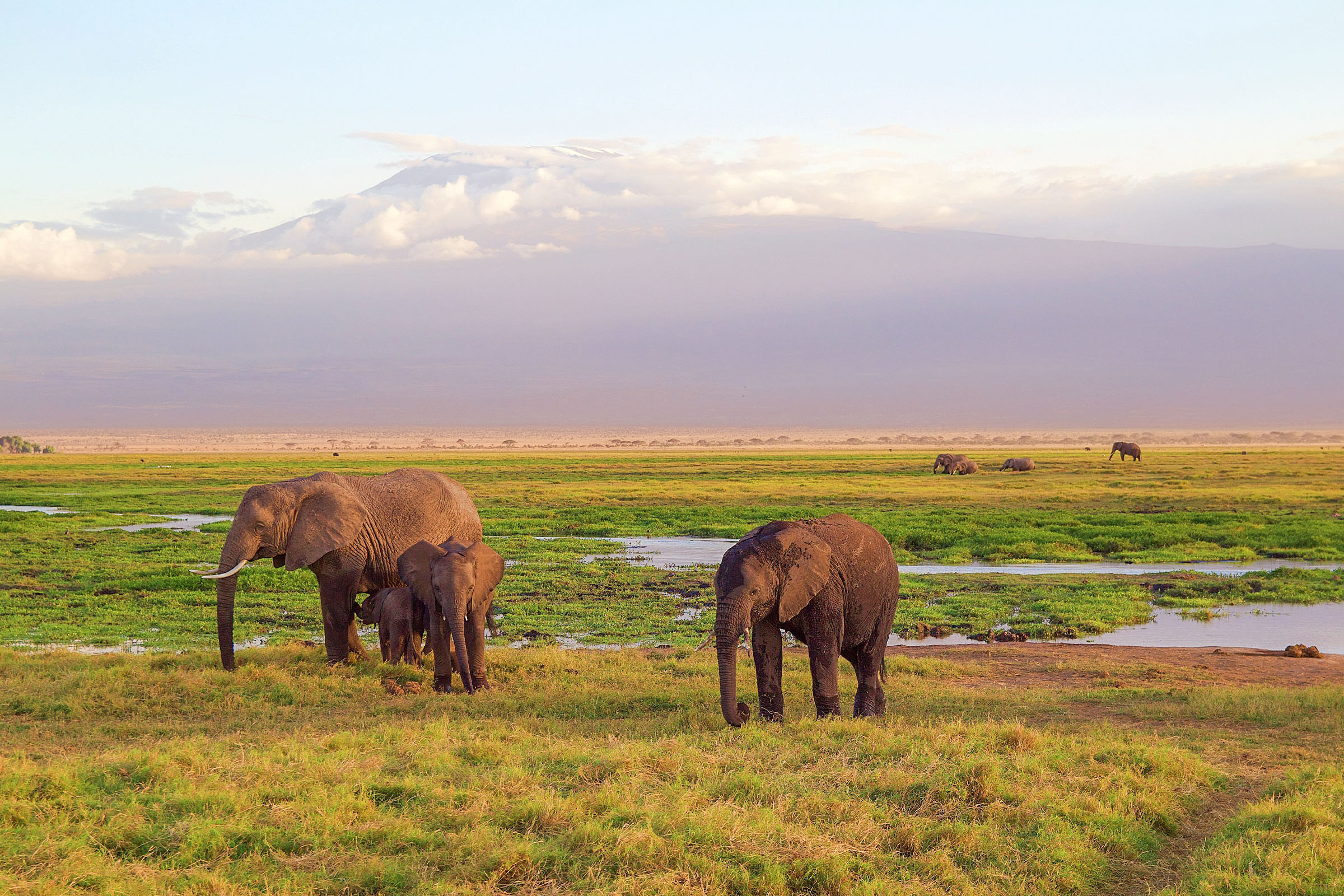
Kenya answers with the Maasai Mara, Amboseli, Rift Valley lakes and other reserves. Kenya Wildlife Service describes Amboseli as one of Africa's premier destinations for large elephant herds, with Mount Kilimanjaro providing its famous backdrop.
2. Great Migration: Tanzania has the longer seasonal story
This is one area where Tanzania has a structural advantage. The migration spends much of its annual cycle within the Serengeti ecosystem: the southern plains and Ndutu area during the calving period, central and western Serengeti during the northward movement, and northern Serengeti during the Mara River season.
Kenya becomes especially important when herds move into the wider Maasai Mara ecosystem. If your dream is specifically a Kenya–Tanzania migration safari, combining both can be more rewarding than treating the countries as competitors.
Use our Great Migration calendar to compare the likely regions month by month. No operator can guarantee a river crossing on a specific day.
3. Tanzania is stronger for a long, classic safari circuit
For travellers with roughly eight to twelve days, Tanzania is particularly easy to shape into a journey that feels progressive rather than repetitive. Tarangire's baobab and elephant landscapes, the Ngorongoro highlands and crater, and multiple Serengeti regions create natural changes of scenery across one route.
That is the main reason Tanzania gets our vote for a first major safari. You can stay within one country and still experience several distinct ecosystems without needing an international border crossing.
Our 10-Day Tanzania Signature Safari is an example of this approach.
4. Kenya can be better when time is limited
Kenya is extremely compelling for travellers working with a shorter schedule, especially when Nairobi is the arrival and departure point. A well-planned itinerary can move quickly into major wildlife areas without requiring a long multi-region circuit.
For example, Amboseli can combine iconic elephant viewing with views toward Kilimanjaro, while the Maasai Mara can anchor a compact wildlife-focused trip.
So if you have only a few safari nights and want to keep the logistics simple, Kenya may be the smarter choice.
5. Conservancies: a genuine Kenyan strength
The private and community conservancies around the greater Maasai Mara are one of Kenya's clearest differentiators. The Maasai Mara Wildlife Conservancies Association describes a landscape of multiple conservancies built around partnerships between landowners and tourism partners, with direct benefits flowing to participating landowners and communities.
Depending on the conservancy and property, this model can create a safari style that feels different from staying only inside a national reserve. For travellers who specifically want a conservancy-based experience, Kenya deserves serious consideration.
6. Photography: Tanzania has breadth; Kenya has iconic compactness
For photographers, Tanzania offers exceptional variety across one journey: open Serengeti plains, kopjes, crater landscapes, Tarangire baobabs, elephant herds and changing migration regions.
Kenya can be equally powerful visually, particularly in the Maasai Mara and Amboseli. Amboseli's elephant herds against the Kilimanjaro skyline are among East Africa's most recognisable safari scenes.
The better choice depends on whether you want broader landscape variety over a longer journey or a more concentrated photographic focus. See our Safari Photography Seasons guide.
7. Luxury safari: neither country automatically wins
Both Tanzania and Kenya have excellent high-end lodges, tented camps and private safari options. “Luxury” should not be judged only by room design. Location, guiding, privacy, vehicle setup and how much time the itinerary gives you in the field matter just as much.
Tanzania's advantage is that a luxury journey can move through several very different regions without leaving the country. Kenya's conservancy system can offer a particularly attractive form of low-density, high-touch safari in the right area.
Our Tanzania lodges vs tented camps guide explains how accommodation style affects the safari experience.
8. Family safari: both work, but pace matters more than country
For families, the most important questions are usually transfer length, number of camp changes, room configuration, age restrictions and how flexible the guide can be with the day's pace.
Tanzania works especially well when the itinerary is slowed down with two-night stays rather than changing accommodation every night. Kenya can work very well for a shorter family safari with fewer long transfers.
So we would not choose between Kenya and Tanzania for a family based on wildlife alone. We would choose based on the child's age, total trip length and how much moving around the family actually wants.
9. Honeymoon: Tanzania gets a slight edge for variety
For honeymooners who want a safari followed by the Indian Ocean, Tanzania has a particularly smooth story: safari through the northern circuit, then continue to Zanzibar, Pemba or Mafia.
Kenya can also pair safari with Diani, Watamu or other coastal destinations. The choice comes down to the style of safari you prefer and the beach experience you want afterwards.
10. Cost: compare the itinerary, not the country label
Neither Tanzania nor Kenya is automatically “cheaper.” Safari cost depends on season, exact accommodation, park or conservancy fees, private vehicle arrangements, flights, party size and route design.
A short Kenya itinerary may cost less overall simply because it is shorter. A longer Tanzania route may cost more because it includes more nights or regions. The reverse can also be true with premium camps or private conservancies.
For Tanzania specifically, see our Tanzania Safari Costs guide. The useful comparison is always like-for-like: same number of nights, similar accommodation level, same party size and equivalent inclusions.
So, which is better?
For most first-time Wildlux guests choosing one country, we would choose Tanzania.
The reason is not that Kenya lacks wildlife, scenery or excellent camps. Tanzania simply gives us more room to build a long, varied private safari around several world-class ecosystems while staying within one country.
Choose Tanzania if:
- you want a classic first safari with several distinct wildlife regions;
- the Serengeti and Ngorongoro are major priorities;
- you have around eight days or more for safari;
- you want to follow different stages of the Great Migration within Tanzania;
- you want an easy safari + Zanzibar combination.
Choose Kenya if:
- you have a shorter safari window;
- the Maasai Mara or Amboseli is your main priority;
- you specifically want a Mara conservancy-style experience;
- Nairobi is the most practical gateway for your wider trip;
- you want to combine safari with the Kenyan coast.
Choose both if: you have enough time and want the contrast between the Maasai Mara and Serengeti rather than forcing yourself to pick one. Our 7-Day Kenya & Tanzania Great Migration Safari shows one compact approach, while a longer tailor-made itinerary can slow the border crossing and add more nights in each ecosystem.
Our recommendation
If this is your first major East African safari and you have the time, start with Tanzania. If you later return to East Africa, Kenya will not feel like a repetition — its landscapes, conservancies and safari rhythm give it a character of its own.
If you are still undecided, tell us your dates, number of safari nights, priorities and preferred pace. We can compare a Tanzania-only route with a Kenya or Kenya–Tanzania alternative using the same accommodation level and party size, so the decision is based on the actual journeys rather than broad country stereotypes.
Official reference points

Moses James Aron
Founder, Managing Director & Tour Consultant — Wildlux Expeditions LTD
For Moses Aron, Tanzania is more than a destination—it is home.
View author profile →Our Arusha-based team will answer your questions and shape an itinerary around them.
A practical month-by-month guide to where the Great Migration is likely to be across the…
A transparent guide to what drives Tanzania safari prices — accommodation, private vehicl…
A season-by-season guide to photographing East Africa — from Ndutu calving and Mara River…