
Wildlife Safaris
The reason you came.
Private, guided game viewing across the great ecosystems of East Africa — the Serengeti, Ngorongoro, Tarangire, the Maasai Mara and beyond — with your own vehicle and guide on tailor-made journeys, and shared departures only where specifically stated.
- Available in
- Tanzania · Kenya
- Best time
- Peak game viewing: June – October · Calving and green season: January – March · Value and solitude: April – May
- Type
- wildlife
What a Wildlux wildlife safari actually feels like.
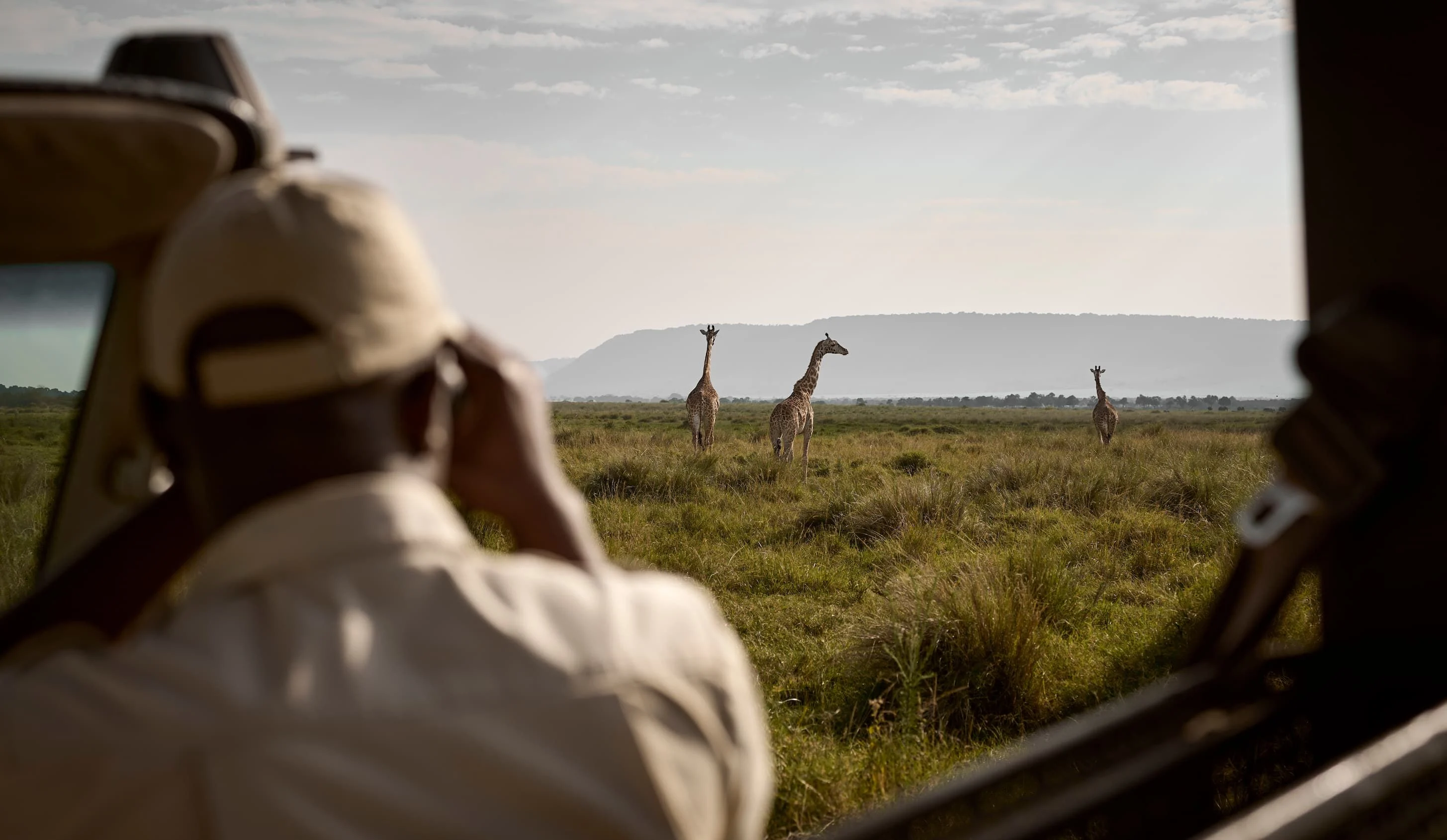
A wildlife safari is not a checklist. The best mornings begin before the light does, with coffee in the dark and the sound of the camp waking up, and they end hours later somewhere you did not plan to be, because your guide followed a set of tracks instead of a schedule.
Our tailor-made safaris are private unless we specifically state a sharing departure. You travel in your own extended-body 4x4 with a roof hatch, window seats for everyone and a guide who stays with you for the whole journey rather than being reassigned each morning. That continuity is the single biggest difference between a good safari and a memorable one — by day three your guide knows whether you want to sit with a leopard for an hour or keep moving.
We build days around animal behaviour and light rather than distance. Long transfers are broken up or flown, picnic breakfasts replace rushing back to camp, and the middle of the day belongs to you. In the great ecosystems that means genuinely different experiences month to month: calving on the southern plains, river crossings in the north, elephants gathering along a shrinking river in Tarangire.
Sightings are never guaranteed and we will not pretend otherwise. What we can promise is time, patience, a guide who reads the bush, and a route matched to the season you are travelling in.

Why Wildlife Safaris?
A private vehicle as standard
Your own 4x4 and guide for the whole journey on tailor-made safaris — sharing departures only where specifically stated.
Guides who stay with you
One professional guide from arrival to departure, so every day builds on the last.
Seasonal routing
Where you go is chosen for the month you travel, not fixed by a brochure map.
Unhurried days
Full-day drives with picnic meals when the wildlife justifies it, rather than fixed return times.
The great ecosystems
Serengeti, Ngorongoro, Tarangire, Lake Manyara, the Maasai Mara and the wilder southern and western parks.
Photography-aware
Positioning for light and background, bean bags on request, and no jostling for the best angle.
Where to experience Wildlife Safaris.
Tanzania
Explore Tanzania →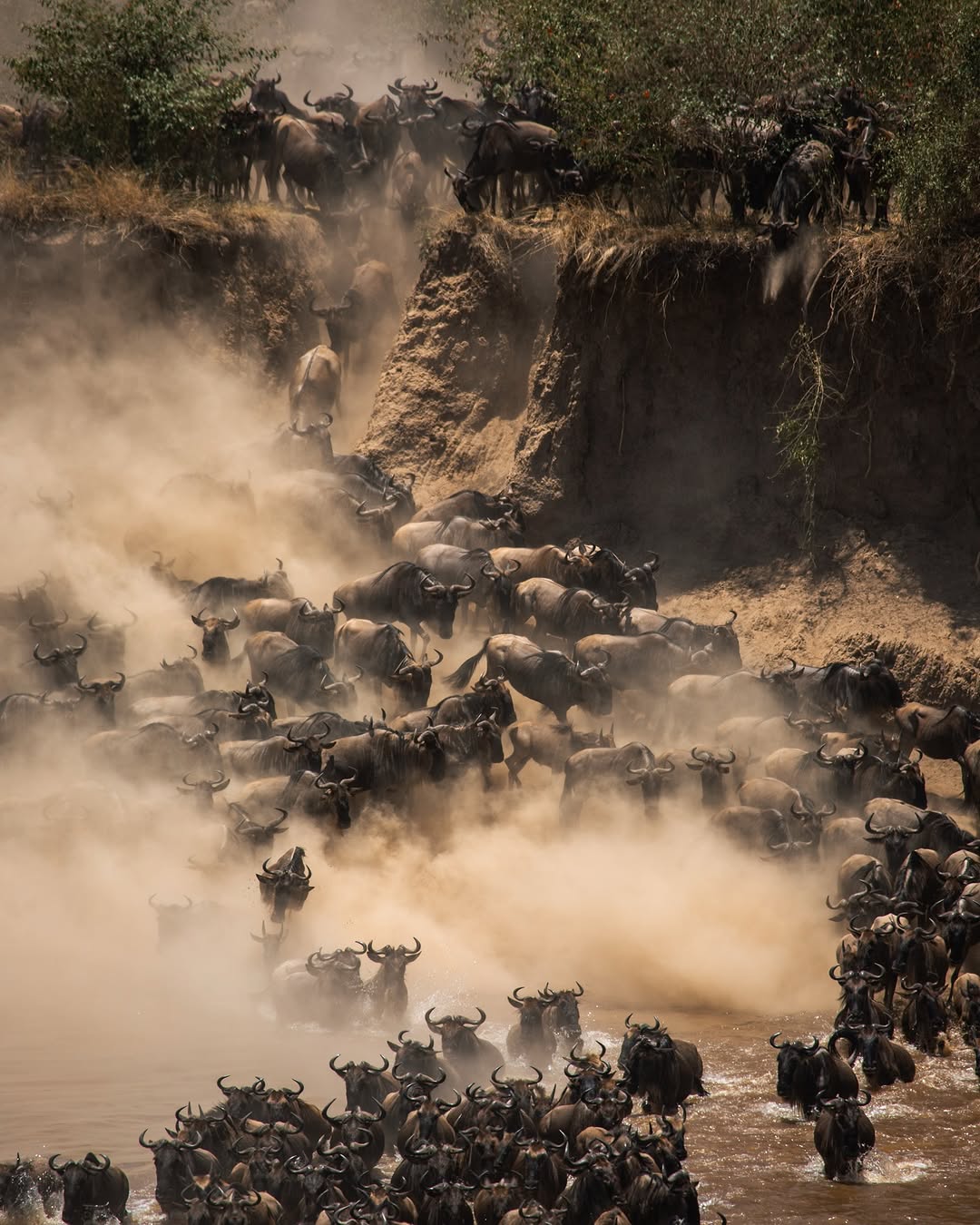
Serengeti National Park
The endless plains.
Fourteen thousand square kilometres of grassland, kopjes and riverine forest carrying the largest land migration on earth — and, outside the migration, the densest population of big cats in Africa.
Ngorongoro Conservation Area & Crater
The world's greatest natural wildlife amphitheatre.
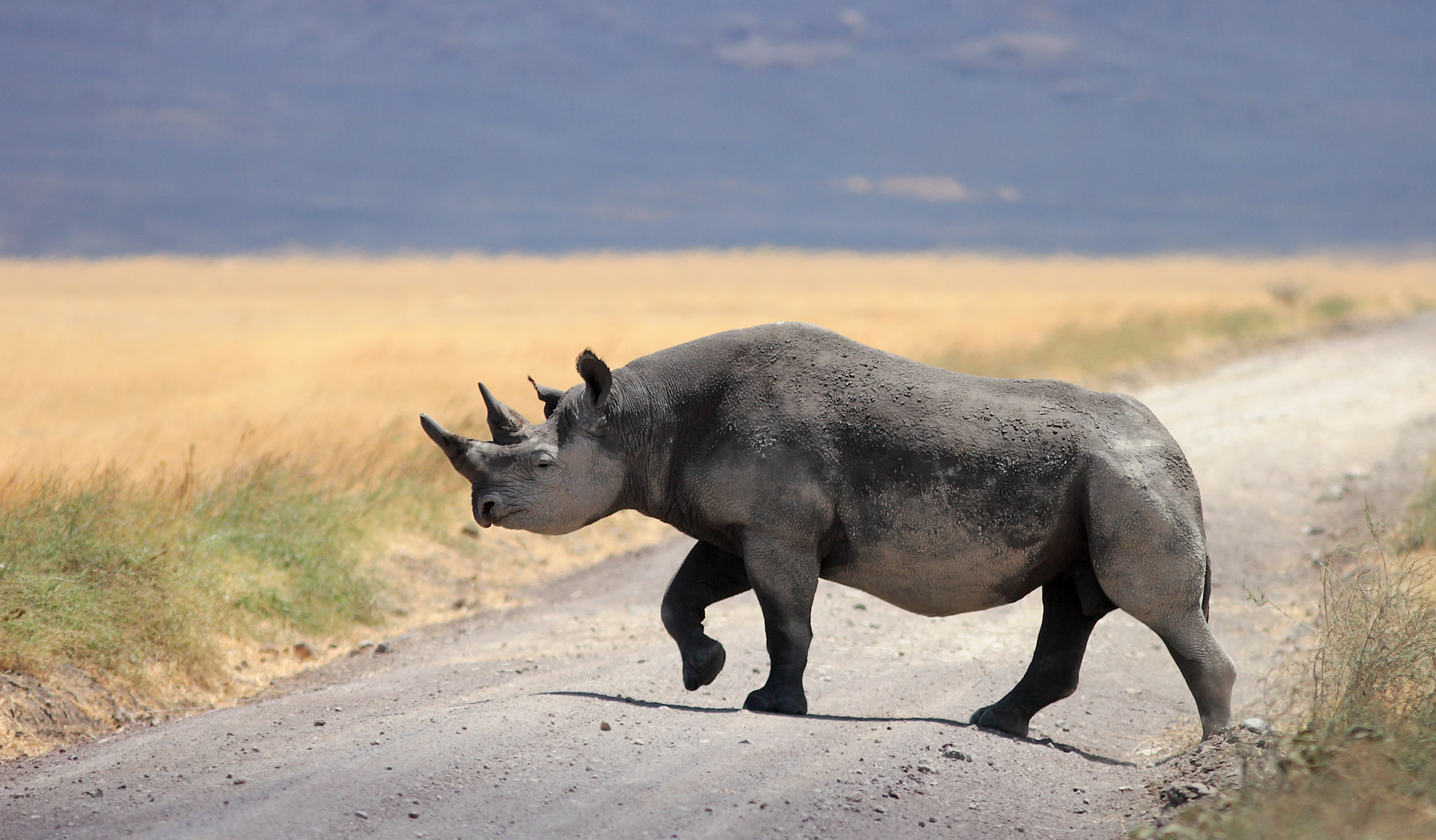
A UNESCO World Heritage Site where 260 square kilometres of crater floor hold lion, elephant, buffalo, leopard and one of Africa's last populations of black rhino — all beneath a 600-metre volcanic rim shared with Maasai herders.
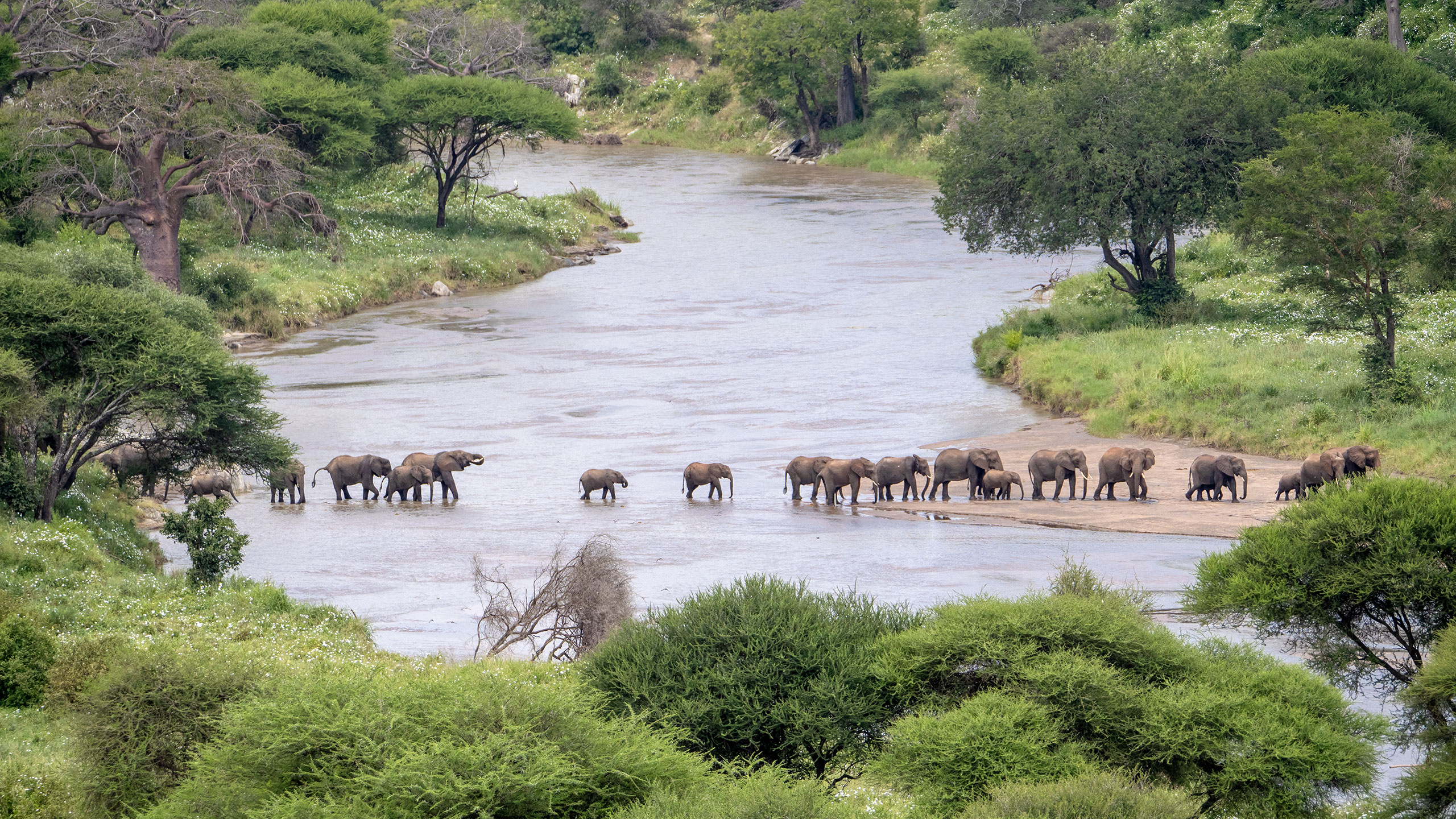
Tarangire National Park
Elephant country, written in baobab.
A baobab-studded valley along the Tarangire River, drawing Tanzania's largest dry-season elephant concentrations between June and October.

Lake Manyara National Park
Small park, extraordinary variety.
A compact park of astonishing range — spring-fed forest, open floodplain and a shallow alkaline lake beneath the 600-metre wall of the Great Rift Valley, famous for tree-climbing lions, elephants and flamingo.
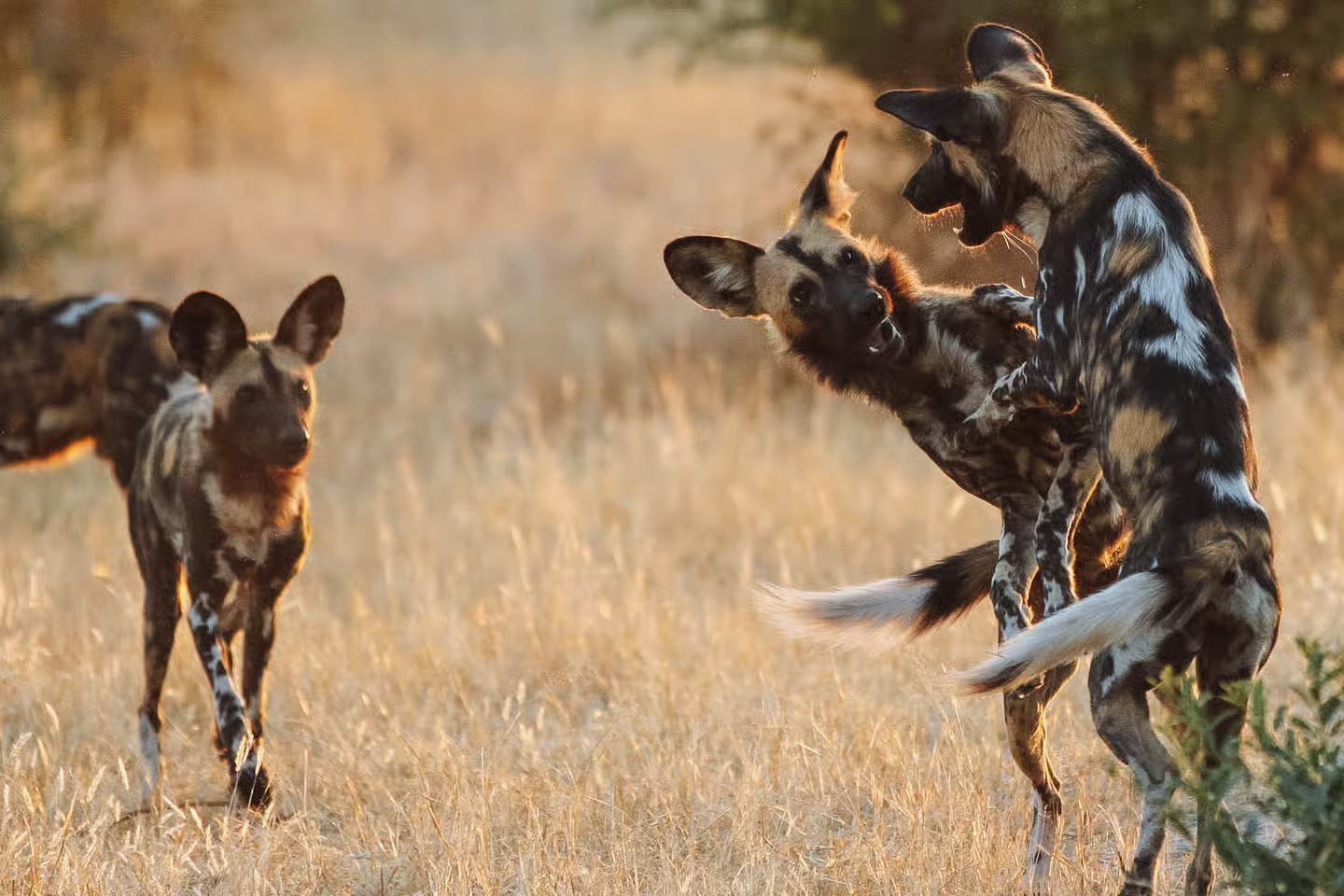
Ruaha National Park
The wildest big park in East Africa.
One of Africa's largest national parks — a remote southern wilderness of baobabs, sand rivers and rocky escarpments, with exceptional lion densities, huge elephant herds and fly-in camps that see a fraction of the northern circuit's visitors.
Kenya
Explore Kenya →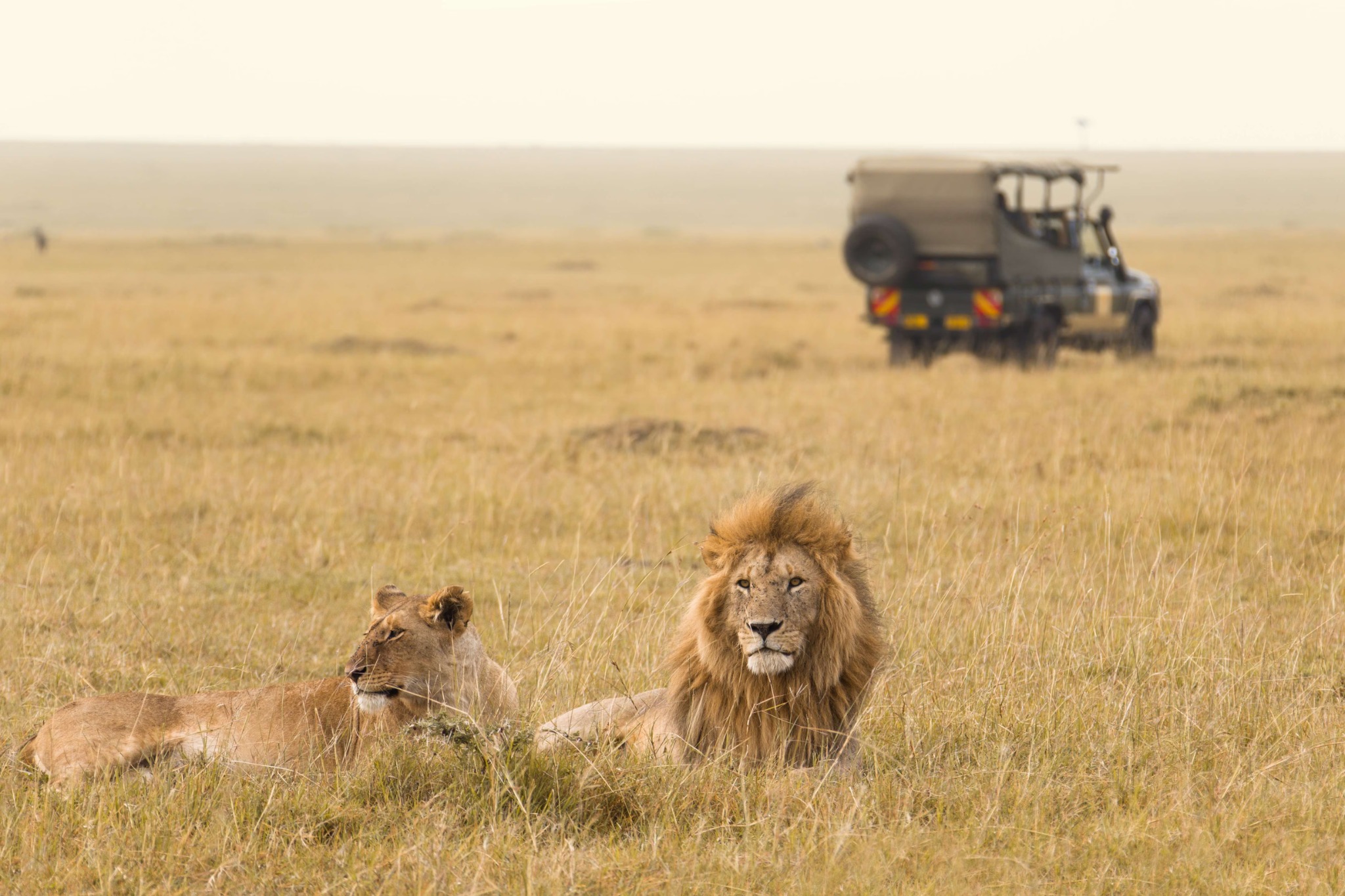
Maasai Mara National Reserve
Kenya's greatest wildlife theatre.
Rolling grassland on the Kenyan side of the Serengeti ecosystem, holding one of Africa's strongest lion populations and the Mara River crossings from July to October.
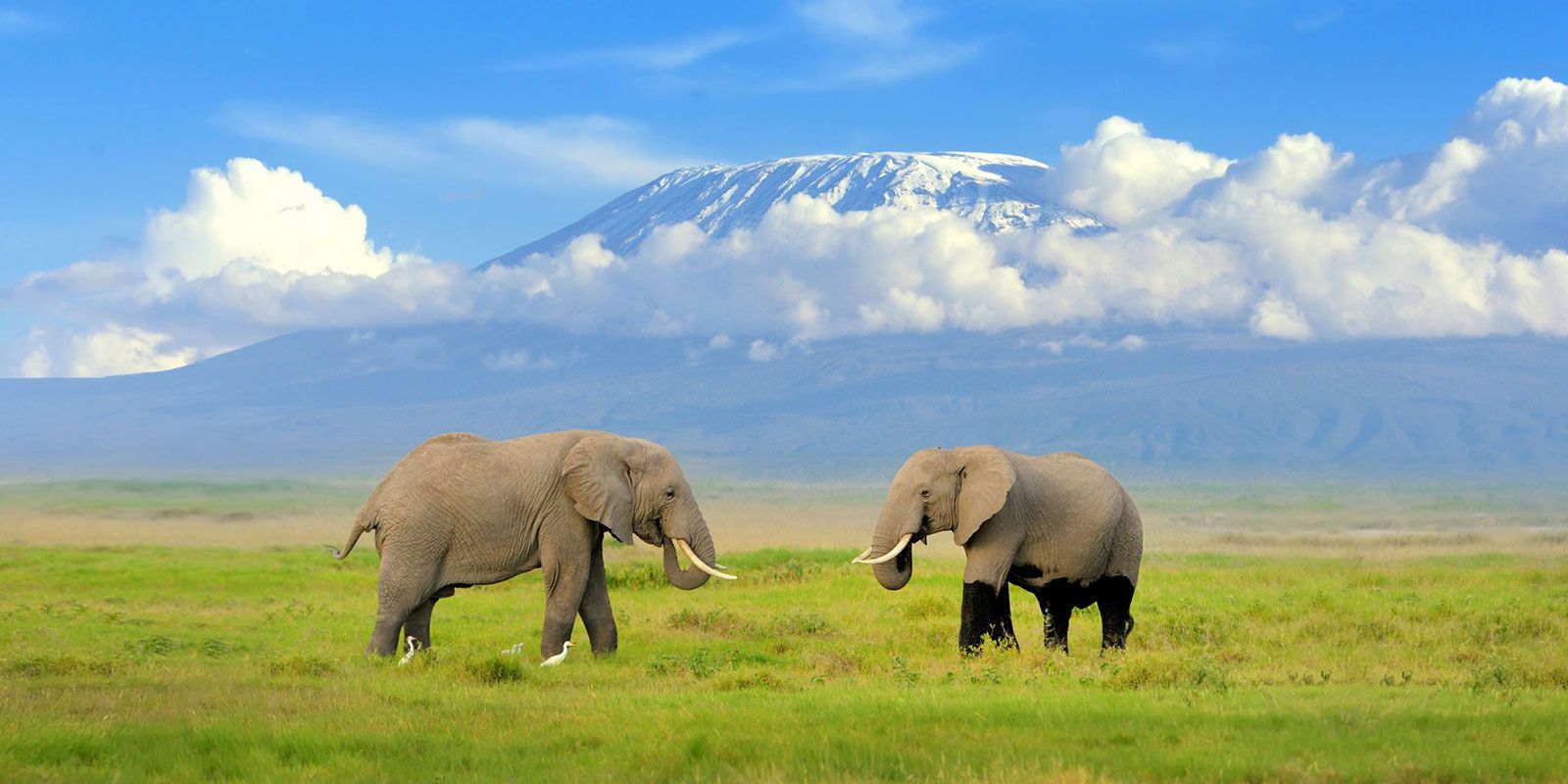
Amboseli National Park
Elephants beneath Kilimanjaro.
Kenya's classic elephant park, set on dusty plains and swamps beneath the north face of Mount Kilimanjaro.
When to experience it.
June to October gives the driest tracks and the most concentrated game viewing. January to March brings the calving season on the southern Serengeti plains and superb light. April and May are wettest, quietest and best value.
Calving season builds on the southern plains; predator action is at its most intense.
Peak calving in the Ndutu area — the single best month for predator behaviour.
Green, warm and quieter as the herds begin to drift north-west.
Long rains. Some roads soften and a few camps close, but value and solitude are exceptional.
Wet early, improving late; the herds move through the western corridor.
Dry season opens. Tracks firm up, grass shortens and game viewing sharpens quickly.
Classic safari conditions and the start of the northern river-crossing window.
Peak season — crossings in the north, excellent conditions everywhere. Book far ahead.
Dry, uncrowded relative to August, and outstanding for predators.
Hot and very dry; game concentrates hard around remaining water.
Short rains freshen the landscape and the herds return south.
Warm and mostly clear; herds spread across the southern plains by month end.
What to expect.
A typical day
An early game drive at first light when predators are still active, brunch back at camp or in the field, a slow middle of the day, then a long afternoon drive until the gate or golden hour closes it.
Your vehicle
A private extended-body Land Cruiser with a pop-up or open roof, charging points, cool box, binoculars and reference books. Window seat for every guest on our standard private safari vehicle configuration.
Your guide
A licensed professional guide, not a driver — trained in ecology and bird identification, and the person who quietly makes the whole trip work.
Distances
East Africa is large. We fly the longest legs where a scheduled airstrip makes sense and keep road days scenic rather than punishing.
Who it suits
First-time safari travellers, couples, families with children who can manage full days, photographers and returning guests wanting the wilder parks.
Journeys featuring Wildlife Safaris.
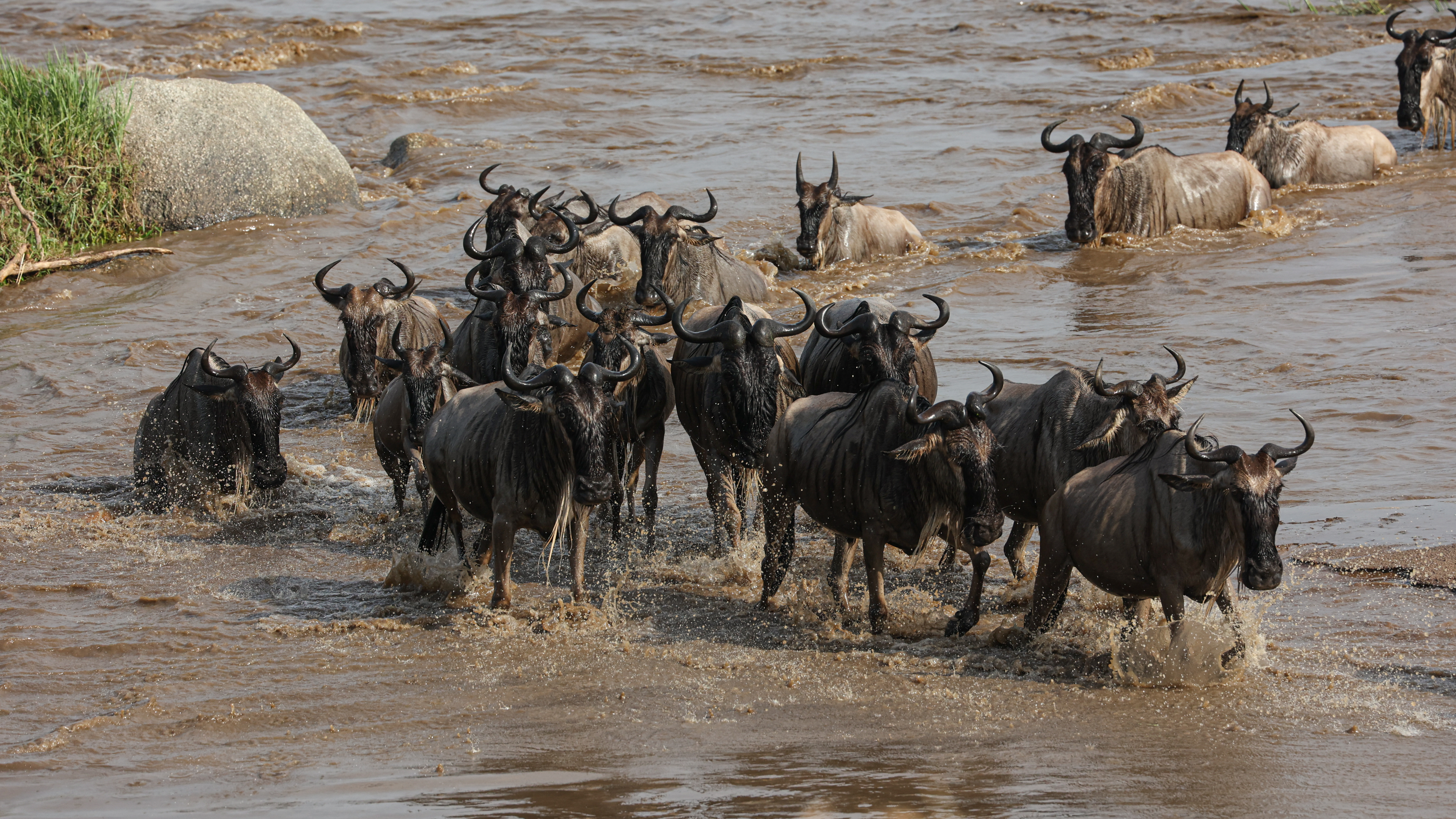
8-Day Luxury Grumeti Migration & Fly-Out Safari
Discover northern Tanzania on a private safari that brings together Tarangire's baobab landscapes, the wildlife-rich Ngorongoro Crater and four nights in the Serengeti.
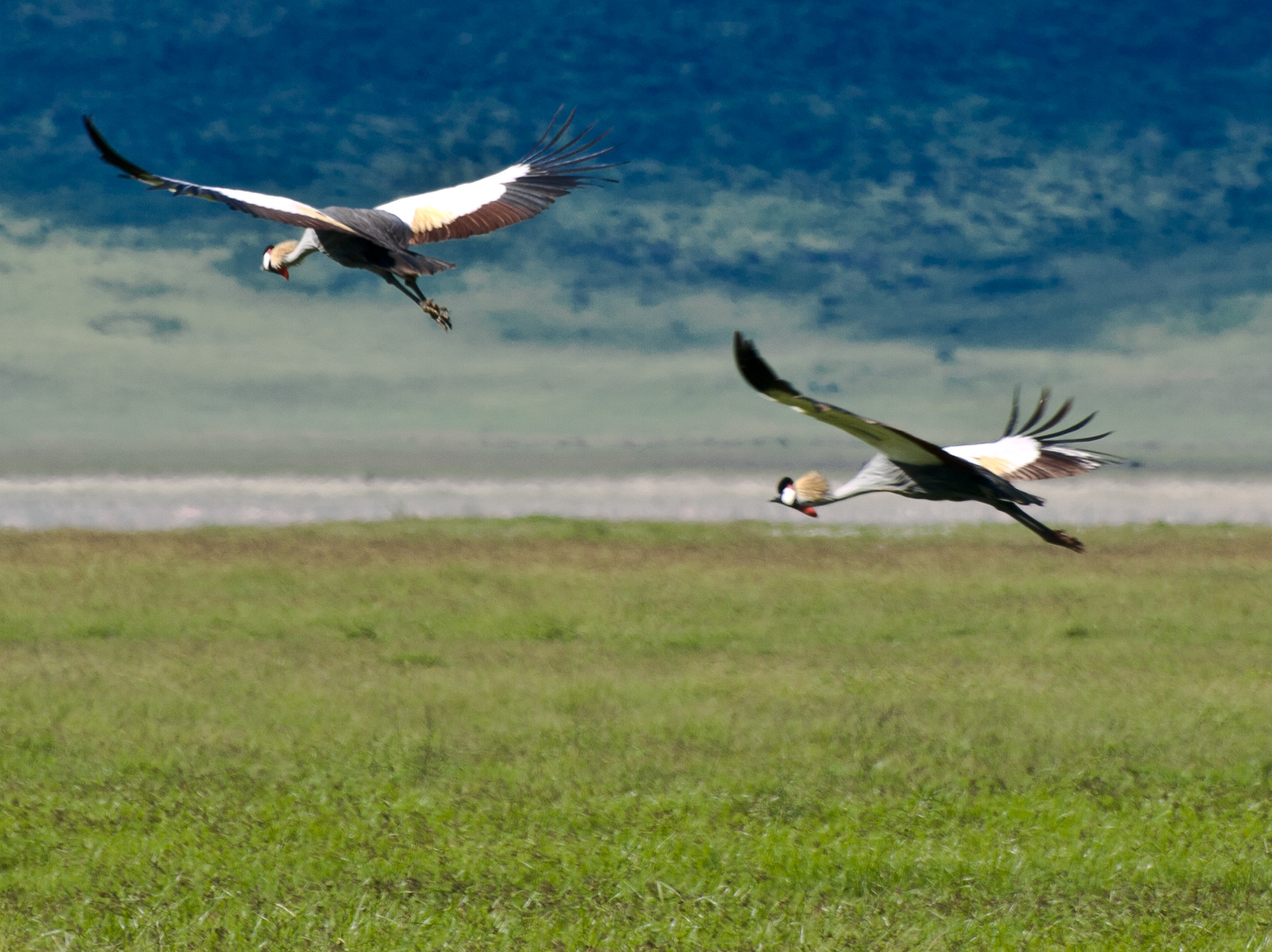
The East Africa Classic
Five landscapes across Kenya and Tanzania on one private safari.
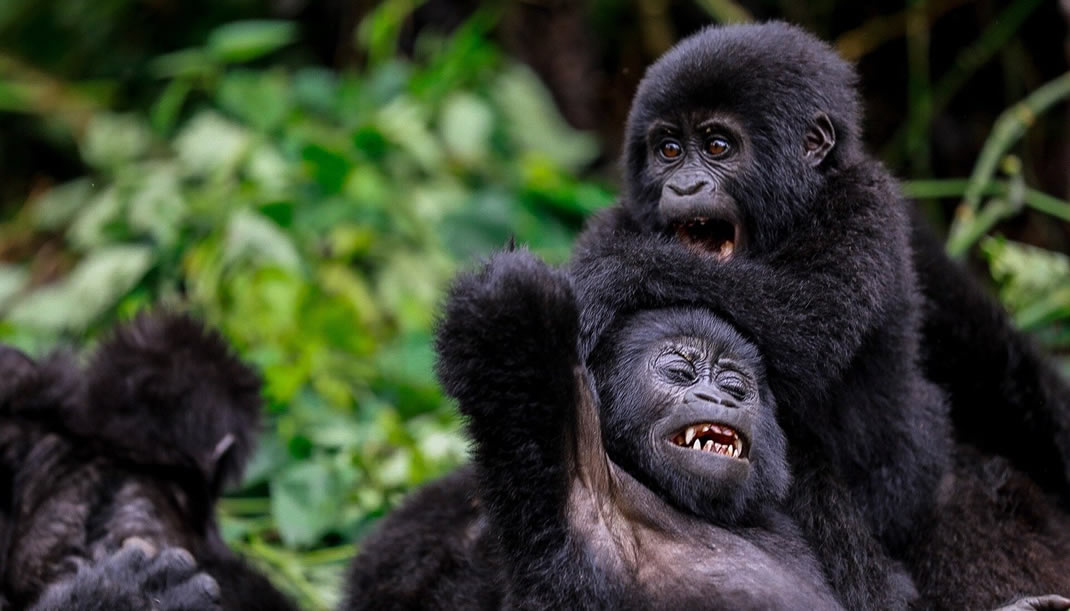
Primates & Plains
From the great savannahs to the forests of the mountain gorillas.
Wildlife Safaris in pictures.


Planning this experience.
- Vehicle
- Private extended-body 4x4 with pop-up roof, cool box and charging points.
- Group size
- Up to six guests per vehicle; four when photography is the priority.
- Fitness
- None required — everything is vehicle-based with short optional walks.
- Typical length
- Seven to ten days is the sweet spot for a first safari.
- Best paired with
- Zanzibar or the Kenyan coast, gorilla trekking, or a Kilimanjaro climb.
- Family suitability
- Excellent from around age five; we shorten drives and add pool time for younger children.
Explore more experiences.

Hot Air Balloon Safaris
One hour, no engine.
A dawn flight over the Serengeti, Tarangire or the Maasai Mara — drifting at treetop height as the plains wake, followed by a bush breakfast where you land.
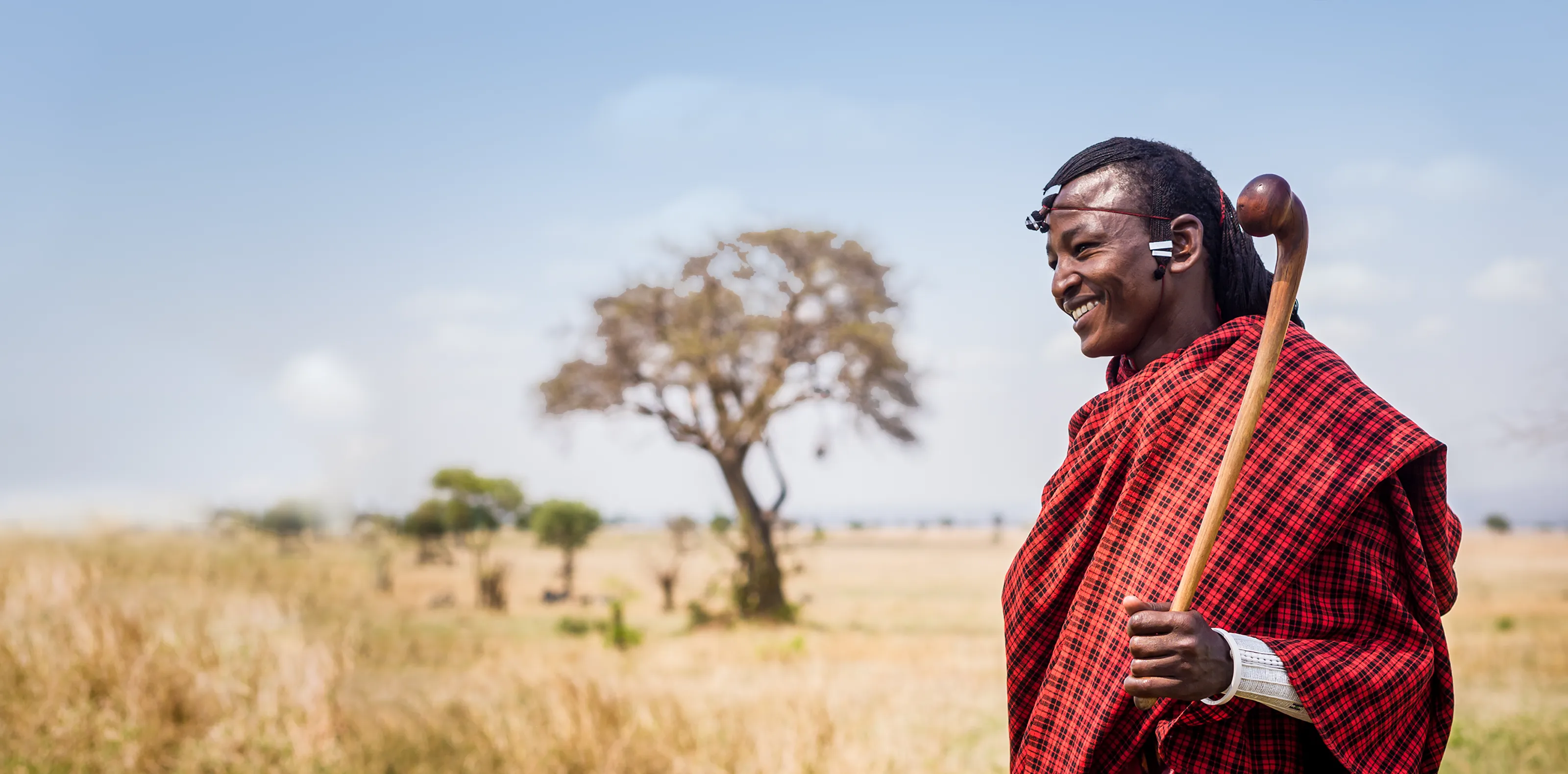
Cultural Experiences
Meet the people, not a performance.
Time with Maasai, Hadzabe, Datoga, Chagga and Swahili communities arranged directly and paid fairly — conversation and craft rather than staged dancing at the gate.

Beach Holidays
The other half of the journey.
Zanzibar, Pemba, Mafia and the Kenyan coast — the Indian Ocean finish that turns a safari into a holiday, with reef, dhows and nothing to do before lunch.
Frequently asked.
Will the vehicle be shared with other travellers?+
On tailor-made safaris, no — you have a private vehicle and a private guide, so you decide when to leave, when to stay and when to head back. On the rare occasions we offer a sharing departure, we say so clearly before you book.
How many days do I need?+
Seven days is the shortest itinerary we would call a proper safari; ten allows a wilder park or a coastal finish. Four or five days works for a focused Northern Circuit visit.
Will I see the Big Five?+
Most guests on a week-long northern itinerary see four of the five easily. Rhino depends on visiting the right areas, and no wild sighting can be guaranteed — we plan routes to maximise the odds and tell you honestly where they are lower.
Is it safe for children?+
Yes, with planning. We choose camps with family units and fences where appropriate, shorten drives, and brief children properly. Some camps set minimum ages, which we will flag before booking.
Dry season or green season?+
Dry season for the clearest game viewing and the migration crossings; green season for calving, photography, low rates and having places almost to yourself.
How much walking is involved?+
Almost none unless you want it. Walking safaris, guided by an armed ranger, can be added in the areas where they are permitted.
Build this experience into your journey.
Tell us what draws you to wildlife safaris and we'll design a private journey around your dates, pace and interests.