
Ruaha National Park
“In Ruaha you can drive all day and never see another vehicle, and then find twenty-five lions on a sand river at dusk.”
One of Africa's largest national parks — a remote southern wilderness of baobabs, sand rivers and rocky escarpments, with exceptional lion densities, huge elephant herds and fly-in camps that see a fraction of the northern circuit's visitors.
About Ruaha National Park.
Ruaha is the park experienced safari travellers talk about when they want to explain what has been lost elsewhere. It is enormous — over 20,000 square kilometres, among the largest national parks in Africa — and it receives a tiny fraction of the visitors who pass through the northern circuit each year. You fly in over hundreds of kilometres of unbroken bush, land on a dirt strip, and for the next few days you simply do not encounter other people. That is the product. Everything else, extraordinary as it is, follows from it.
The park sits at a biological crossroads. Southern African miombo woodland meets East African acacia savannah here, and the result is a species list that includes animals from both worlds — greater and lesser kudu together, sable and roan antelope, both black-backed and side-striped jackal. Over 570 bird species have been recorded. The landscape shifts constantly as you drive: baobab-studded hills, open plains, dense miombo, rocky kopjes, and the Great Ruaha River itself, which in the dry season shrinks to a chain of pools in a broad sand bed and becomes the focus of everything alive.
Lions are the headline. Ruaha and the surrounding Rungwa–Kizigo ecosystem hold one of the most significant lion populations left on earth — a figure often cited as around ten percent of the world's remaining wild lions. Prides here are unusually large, sometimes over twenty animals, and they hunt buffalo and giraffe rather than the smaller prey that sustains prides elsewhere. Watching a Ruaha pride work a buffalo herd along the sand river at last light is as raw as African wildlife viewing gets.
The other great predator story is the African wild dog. Ruaha and the neighbouring Nyerere ecosystem form one of the last strongholds for this critically endangered species, and denning season between June and August offers a genuine chance of extended sightings — pups outside the den, adults returning to regurgitate, the whole complicated social machinery on display. Leopard are common along the rocky ridges and riverine woodland. Cheetah hunt the open plains. Spotted hyena are everywhere.
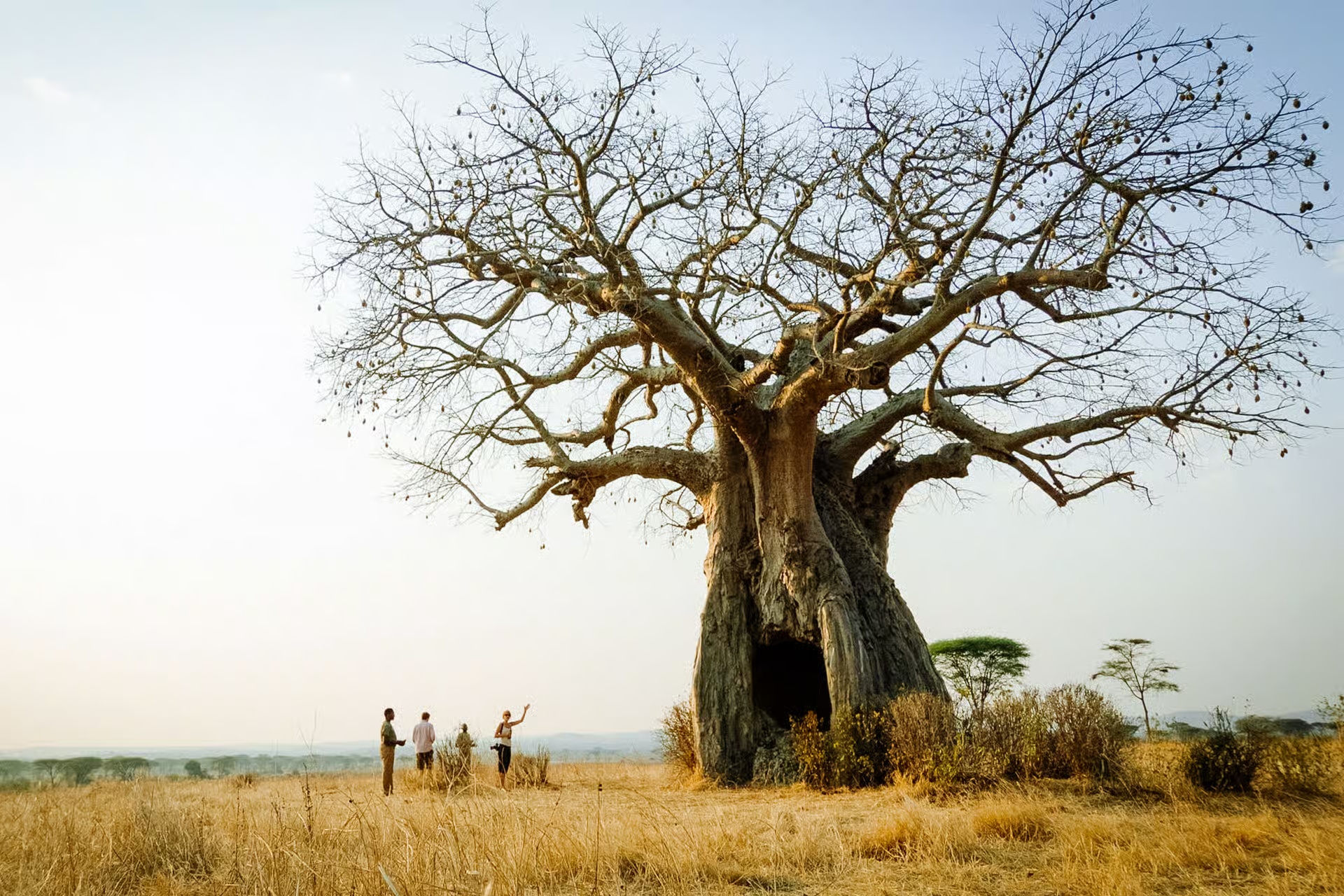
Elephants gather in large numbers along the Great Ruaha in the dry months, digging for water in the sand — a behaviour that also creates water for everything else, which is why they are keystone animals here in the truest sense. The park's baobabs, twisted and immense, are among the finest in Africa, and the combination of elephant, baobab and low golden light is what fills photographers' cards.
Ruaha is a dry-season park, and the pattern is unusually stark. From June the country browns and empties; by September and October the Great Ruaha is a sand bed with scattered pools, and every animal in the ecosystem must come to them. Game viewing in October is astonishing and the heat is punishing — 35°C and above, daily. Between January and April the rains transform everything: the miombo greens, migrant birds arrive in their thousands, antelope calve, and many camps close entirely because the tracks become impassable.
Access is by air. Scheduled and charter flights run from Dar es Salaam, Arusha, Zanzibar, Selous/Nyerere and Iringa, and the flight itself is part of the appeal — an hour or more with nothing but bush below. The drive from Iringa is possible but long, and few luxury travellers choose it.
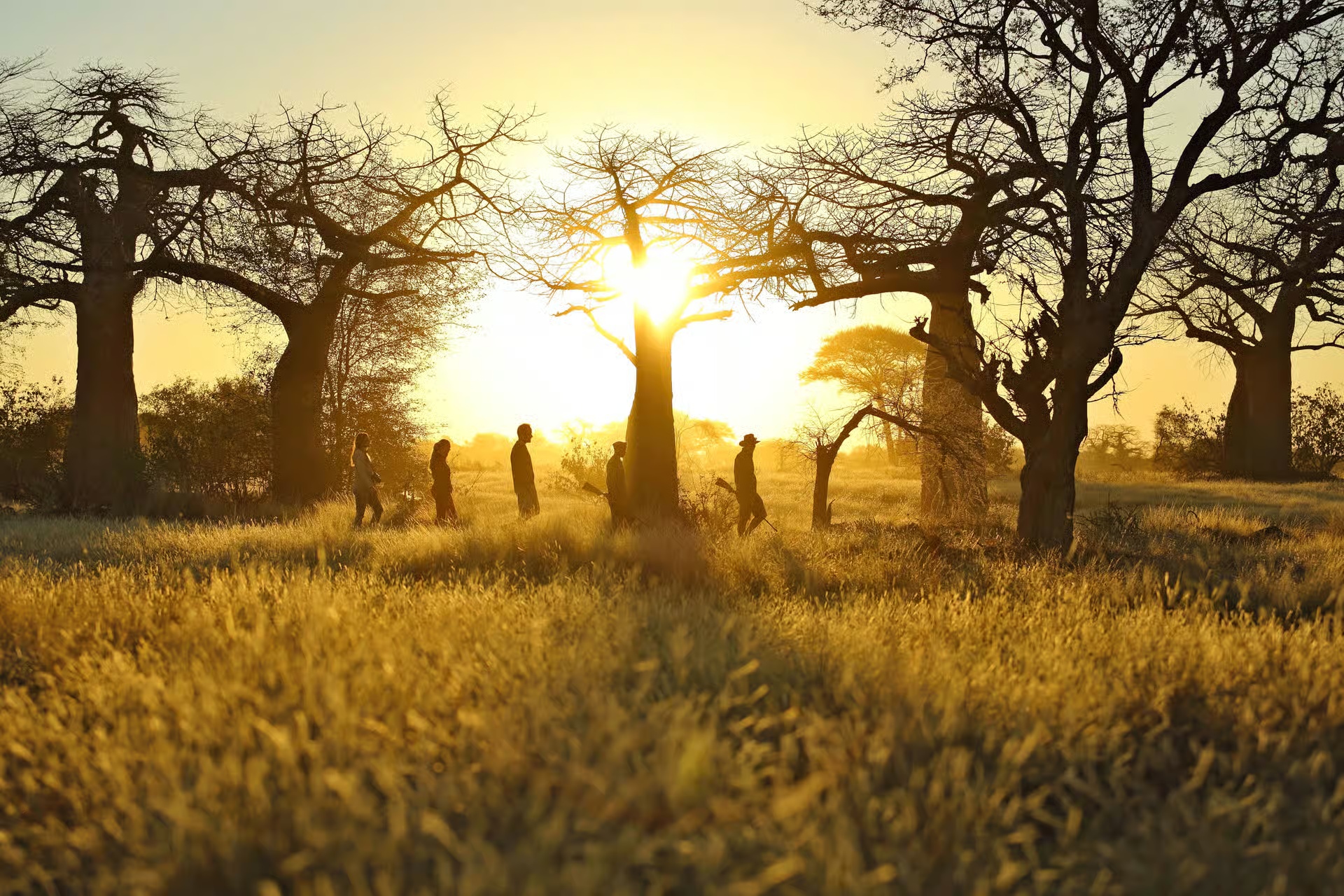
Camps here are small, owner-run and quietly excellent: a handful of tents on a bend of the sand river, guides who have spent decades in this ecosystem, and no fixed schedule beyond the movement of animals. Walking safaris and night drives are permitted, which they are not in most of the north. Fly-camping under the stars is available. This is the safari for travellers who have already done the Serengeti and want to know what came before mass tourism arrived — or for first-timers bold enough to skip the famous parks entirely.
Wildlife & nature
Ruaha's position between southern and eastern African ecosystems produces an unusually rich list. Predators are the standout: one of the world's most significant lion populations, with prides frequently exceeding twenty animals; critically endangered African wild dog denning between June and August; leopard along the ridges and riverine forest; cheetah on the open plains; spotted and striped hyena.
Elephants concentrate along the Great Ruaha in the dry season in herds of hundreds. Buffalo, giraffe, zebra, impala and waterbuck are abundant. The antelope list is exceptional — greater and lesser kudu, sable, roan, eland, hartebeest and the tiny Kirk's dik-dik. Over 570 bird species have been recorded, including Eleonora's falcon on migration, the localised ashy starling, racket-tailed roller, pale-billed hornbill and Dickinson's kestrel. Crocodile and hippo hold the remaining river pools through the dry months.
Signature experiences
- Sand river game drives along the Great Ruaha, especially in the last two hours of light when predators move.
- Walking safaris with an armed guide — permitted here and among the finest in East Africa.
- Night drives for genet, civet, porcupine, aardvark and hunting lion and leopard.
- Wild dog denning between June and August, one of Africa's great wildlife privileges.
- Fly-camping under mosquito nets in a dry riverbed, with only a fire between you and the ecosystem.
- Full-day drives with a picnic into the remote Mwagusi and Mdonya areas.
- Birding in the miombo, particularly between November and April when migrants arrive.
- Sundowners on a kopje, with baobabs going black against an orange sky.
Photography guide
Ruaha is a big-lens park and a wide-lens park in equal measure. For wildlife bring 400mm and up — the sand river gives you distance and clean backgrounds, and predator sightings are often unhurried enough to work properly. For landscape, the baobabs demand a wide lens and low sun; the classic frame is a lone baobab on a ridge with the sky burning behind it.
Dust and heat haze define the dry season: shoot in the first and last hour and use the haze deliberately at midday for layered, atmospheric telephoto compositions. Night drives with a spotlight require high ISO comfort and a fast lens. The miombo in the green season is a birding photographer's paradise but is dense and dark, so fast glass matters. Drone use requires TANAPA permits and is not available to general visitors.
Where to stay
Ruaha's camps are among the most characterful in Tanzania — small, owner-run tented properties on the banks of sand rivers, with a handful of tents, open-fronted mess areas, and guiding teams who have spent their careers in this one ecosystem. Some close entirely during the long rains. The luxury here is exclusivity and expertise rather than marble and spa menus: a private guide, a fly-camp under the stars, and the certainty that whatever you find, you will have it to yourself. Our specialists match you to camps by river position, walking programme and guiding depth.
How long to stay
- 3 nights — the practical minimum given the flights involved; enough for the river circuit and one long day.
- 4–5 nights — our recommendation, allowing walking, a night drive, a fly-camp and time in the remoter areas.
- 6+ nights — for photographers and repeat safari travellers, particularly during wild dog denning season.
- Longer combinations — Ruaha pairs beautifully with Nyerere (Selous) for a southern-Tanzania circuit, finishing on Zanzibar or Mafia Island.
Nearby destinations
Nyerere National Park (the former Selous) is the natural companion, a short flight east and a completely different landscape of lakes and river channels. Zanzibar and Mafia Island are both easy onward flights for a coastal finish. Travellers combining north and south can connect through Arusha to the Serengeti and Ngorongoro, though we usually recommend giving the south its own dedicated trip.
Conservation & community
Ruaha was gazetted in 1964 and expanded substantially in 2008, and forms the core of the vast Rungwa–Ruaha–Kizigo ecosystem. Its importance for lion and African wild dog is difficult to overstate — both species have declined catastrophically across Africa, and large, connected wildernesses like this one are what remain of their future.
The principal threats are human–wildlife conflict on the boundaries, where lions kill livestock and are killed in retaliation, poaching for bushmeat and ivory, and water abstraction upstream on the Great Ruaha River, which has in some years reduced the river to a dry bed for months. Organisations such as the Ruaha Carnivore Project work directly with pastoralist communities on livestock protection and conflict mitigation, with measurable results. Visitor fees fund anti-poaching and park management, and because Ruaha receives so few visitors, each one matters disproportionately. Choose camps that support local conservation initiatives, keep to tracks, follow your guide's lead on predator distance, and consider a direct contribution to carnivore conservation while you are here.
Ruaha is the answer to travellers who ask where Africa still feels genuinely wild. Fly in for four nights, walk in the mornings, and find out what a safari felt like before anyone called it that.
Ruaha National Park, in short.
The essentials our specialists check first when shaping a private itinerary.
Good to know.
- Location
- Iringa Region, southern Tanzania, in the Rungwa–Ruaha–Kizigo ecosystem
- Park size
- Over 20,000 km² — among the largest national parks in Africa
- Established
- Gazetted in 1964 and substantially expanded in 2008
- Elevation
- c. 750 – 1,900 m
- Getting there
- By air: scheduled and charter flights from Dar es Salaam, Arusha, Zanzibar, Nyerere/Selous and Iringa to Msembe and Jongomero airstrips. Road access from Iringa is possible but long and rarely chosen.
- Best time
- June to October for dry-season concentrations; June to August for wild dog denning; December to April for birding
- Currency
- Tanzanian shilling and US dollars. Carry cash for tips and camp extras — card facilities are unreliable and ATMs do not exist in the park.
Why visit Ruaha National Park?
One of the world's great lion populations
The Ruaha–Rungwa ecosystem is estimated to hold around a tenth of the world's remaining wild lions, in prides that can exceed twenty animals.
African wild dog
A stronghold for one of Africa's most endangered predators, with denning season from June to August offering exceptional sightings.
Genuine remoteness
Over 20,000 km² with a fraction of the northern circuit's visitors — you can drive all day and meet nobody.
The Great Ruaha River
In the dry season it shrinks to pools in a broad sand bed, drawing every animal in the ecosystem to a handful of places.
Ancient baobabs
Immense, twisted trees across the hills, at their most photogenic against a burning sky.
A crossroads of ecosystems
Southern miombo meets East African savannah, producing greater and lesser kudu, sable and roan in one park.
Walking safaris and night drives
Both permitted here, unlike most northern parks — including fly-camping under the stars.
570+ bird species
From racket-tailed roller and Dickinson's kestrel to migrant Eleonora's falcon.
Species you may encounter.
Wildlife commonly associated with the region. Sightings are always wild and never guaranteed.
Lion
Exceptional densities and unusually large prides that hunt buffalo and giraffe.
African wild dog
Critically endangered and a Ruaha speciality, denning between June and August.
Leopard
Common along rocky ridges and riverine woodland; night drives improve your odds considerably.
Cheetah
Hunt the open plains in the park's more accessible western sectors.
African elephant
Large dry-season herds along the Great Ruaha, digging for water in the sand bed.
Greater kudu
Ruaha is one of the best places in East Africa to see these magnificent spiral-horned antelope.
Lesser kudu
Occurs alongside its larger cousin — a combination found in very few parks.
Sable antelope
A southern African species at the northern edge of its range in the miombo.
Roan antelope
Rare and localised, favouring open woodland in the park's remoter reaches.
Cape buffalo
Enormous herds concentrate on the river in the dry season, and are the lions' preferred prey.
Hippopotamus and crocodile
Crowd the last river pools as the Great Ruaha dries through September and October.
Racket-tailed roller
A miombo specialist among the park's 570-plus recorded bird species.
Experiences in Ruaha National Park.
The right time for Ruaha National Park.
Peak: July – October · Wild dog denning: June – August · Green season birding: December – April
Green season. Lush miombo, migrant birds and newborn antelope; some tracks become difficult.
Wet and green with excellent birding; several camps are closed.
Heavy rains. Access is limited and most camps are closed for the season.
Rain continues; the park is beautiful but largely inaccessible.
Rains end and camps begin reopening; grass is long but the country is fresh and green.
Dry season begins, the bush thins, and wild dog denning starts.
Cool, dry and superb — the river is drawing animals and predators are active.
Peak conditions with concentrated game and the last of the denning season.
Hot and very dry; wildlife crowds the remaining pools of the Great Ruaha.
The most dramatic month — punishing heat and extraordinary game viewing on a dry sand river.
First rains break the heat; the bush greens fast and migrant birds pour in.
Green, warm and lively, with good general game viewing before the heavier rains.
- Altitude
- c. 750 – 1,900 m
- Average temperature
- 20–35°C; October frequently exceeds 35°C
- Dry season
- June – October
- Rainy season
- December – April
Ruaha National Park on the map.
The park and the places around it — nearby destinations, areas and camps we work with.
- Ruaha National Park-7.600°, 34.600°
- ZanzibarNearby destination
- Mafia IslandNearby destination
- Serengeti National ParkNearby destination
Combine Ruaha National Park with…
Zanzibar
Indian Ocean island, Swahili soul.
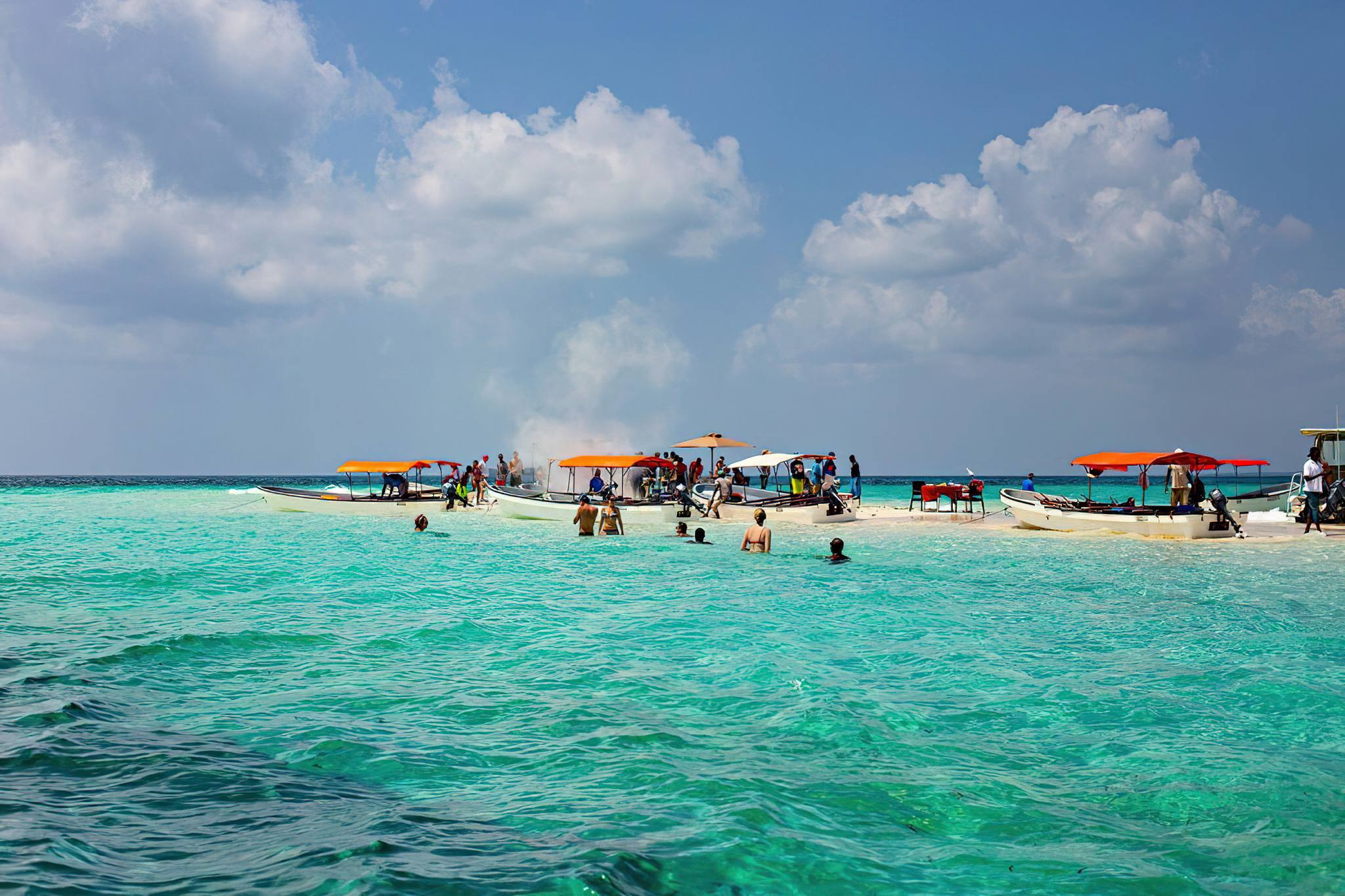
The Spice Island — powder-white beaches and warm turquoise water on one side, the UNESCO-listed labyrinth of Stone Town on the other, and coral reefs, spice farms and dolphin-filled channels in between.
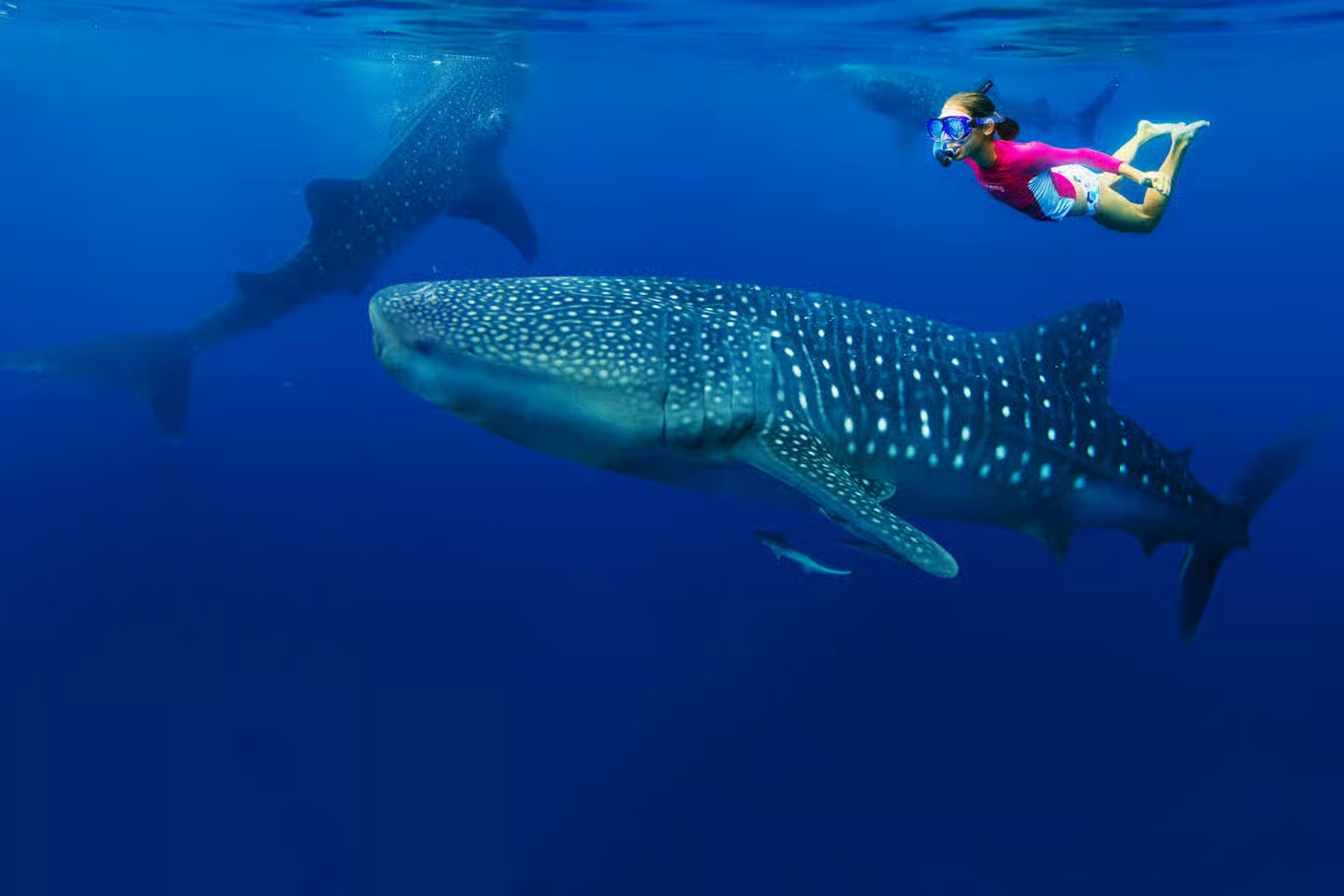
Mafia Island
Whale sharks and no crowds.
A low-key island south of Zanzibar with Tanzania's first marine park, seasonal whale sharks, excellent diving and very limited development.
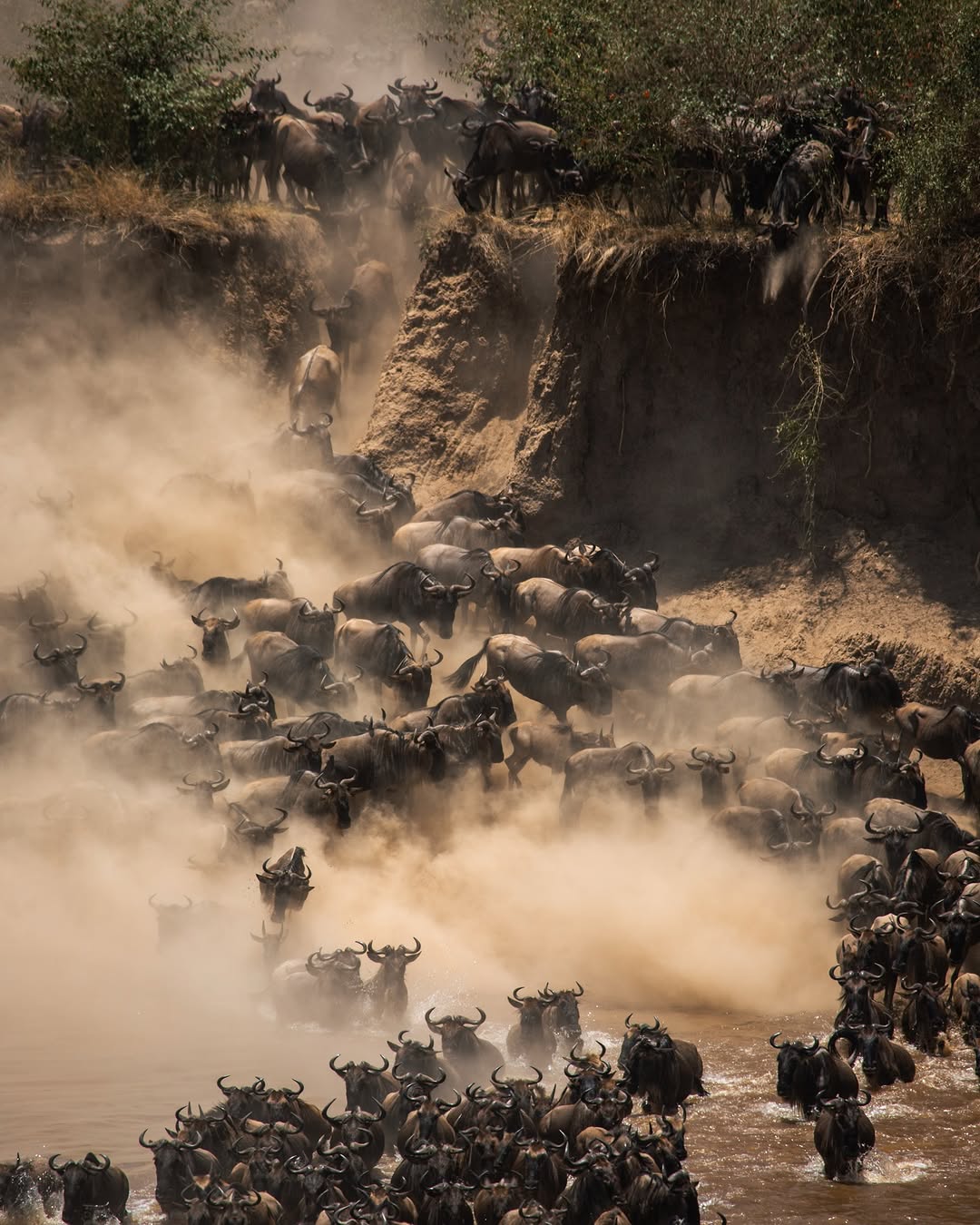
Serengeti National Park
The endless plains.
Fourteen thousand square kilometres of grassland, kopjes and riverine forest carrying the largest land migration on earth — and, outside the migration, the densest population of big cats in Africa.
Planning your visit.
Practical guidance from our on-the-ground team, tailored to this destination.
Packing
Neutral bush colours, long sleeves and trousers for walking and evenings, a warm fleece for early morning drives in June and July, a wide-brimmed hat, high-factor sunscreen and closed walking shoes. October is extremely hot, so lightweight breathable fabrics matter.
Health
Malaria is present year-round — prophylaxis, repellent and long sleeves at dusk are essential. Tsetse flies occur in the miombo; avoid dark blue and black clothing. The park is remote, so comprehensive insurance including air evacuation is required and camps carry medical kits.
Safety
Walking safaris are conducted with an armed guide; stay in single file, remain silent when signalled and never run. Do not walk unaccompanied in camp after dark — camps are unfenced and animals move through them nightly.
Photography
Bring 400mm and up for wildlife and a wide lens for baobabs and river landscapes. Dust is severe in the late dry season, so limit lens changes and carry a blower. Night drives need high-ISO capability. Drones require TANAPA permits and are not available to general visitors.
Connectivity
Very limited. Some camps offer intermittent Wi-Fi in the main area; mobile coverage is largely absent. Ruaha is a genuinely offline destination.
Family advice
Better suited to families with older children and teenagers. Flights are small, camps are unfenced, heat is significant and walking safaris carry minimum ages, typically 12 to 16 depending on camp.
Responsible tourism
Choose camps supporting the Ruaha Carnivore Project or similar community programmes that reduce lion–livestock conflict on the park boundary. Keep strictly to tracks, respect predator distances, limit vehicles at sightings, and carry out all waste.
Frequently asked.
Why is Ruaha National Park special?
Scale and solitude. Over 20,000 square kilometres with a fraction of the northern circuit's visitors, exceptional lion densities, wild dog, giant baobabs and camps where you can drive all day without meeting another vehicle.
How do you get to Ruaha National Park?
By light aircraft. Scheduled and charter flights operate from Dar es Salaam, Arusha, Zanzibar, Nyerere/Selous and Iringa to the Msembe and Jongomero airstrips. Road access from Iringa is possible but long.
How many lions are in Ruaha?
The Ruaha–Rungwa ecosystem is widely cited as holding around ten percent of the world's remaining wild lions, in prides that are unusually large and frequently hunt buffalo.
When is the best time to visit Ruaha?
June to October, when the Great Ruaha River shrinks to pools and wildlife concentrates there. June to August is best for wild dog denning; December to April is green, excellent for birds, and many camps close.
Can you see African wild dog in Ruaha?
Yes — Ruaha is one of the last strongholds for this critically endangered predator, and denning season between June and August offers a genuine chance of prolonged sightings.
How many days do you need in Ruaha?
Three nights is the practical minimum given the flights involved. Four or five is our recommendation, allowing walking safaris, a night drive and time in the remoter sectors.
Are walking safaris allowed in Ruaha?
Yes, with an armed guide, and they are among the best in East Africa. Night drives and fly-camping are also permitted, unlike in most northern-circuit parks.
Is Ruaha better than the Serengeti?
It is wilder and far quieter, with better predator densities per vehicle and no migration. The Serengeti offers the migration and sheer numbers; Ruaha offers solitude. Experienced safari travellers often prefer Ruaha.
Is Ruaha good for a first safari?
It can be excellent, provided you are comfortable with light aircraft, unfenced camps and remoteness. Many first-timers pair it with Nyerere and finish on Zanzibar.
How hot does Ruaha get?
Very. October regularly exceeds 35°C, which is exactly why game viewing at the remaining river pools is so extraordinary. June and July mornings, by contrast, can be genuinely cold.
What animals can you see in Ruaha?
Lion, leopard, cheetah, wild dog and hyena; large elephant and buffalo herds; greater and lesser kudu, sable, roan and eland; hippo and crocodile; and over 570 bird species.
Do camps in Ruaha close during the rains?
Many do, typically from around March to May, when tracks become impassable. We plan around each camp's operating dates when building your itinerary.
Is there malaria in Ruaha?
Yes, year-round. Take prophylaxis as advised by your doctor, use repellent and cover up at dusk, and sleep under the nets provided.
Can you combine Ruaha with Nyerere or Zanzibar?
Yes, and it is the classic southern circuit. A short flight links Ruaha and Nyerere, and both connect onward to Zanzibar or Mafia Island for a coastal finish.
Related reading.
Guides that pair well with a journey to this destination.
Ready to experience Ruaha National Park?
Tell us what draws you here and we'll shape a private journey around the places, experiences and pace that matter to you.