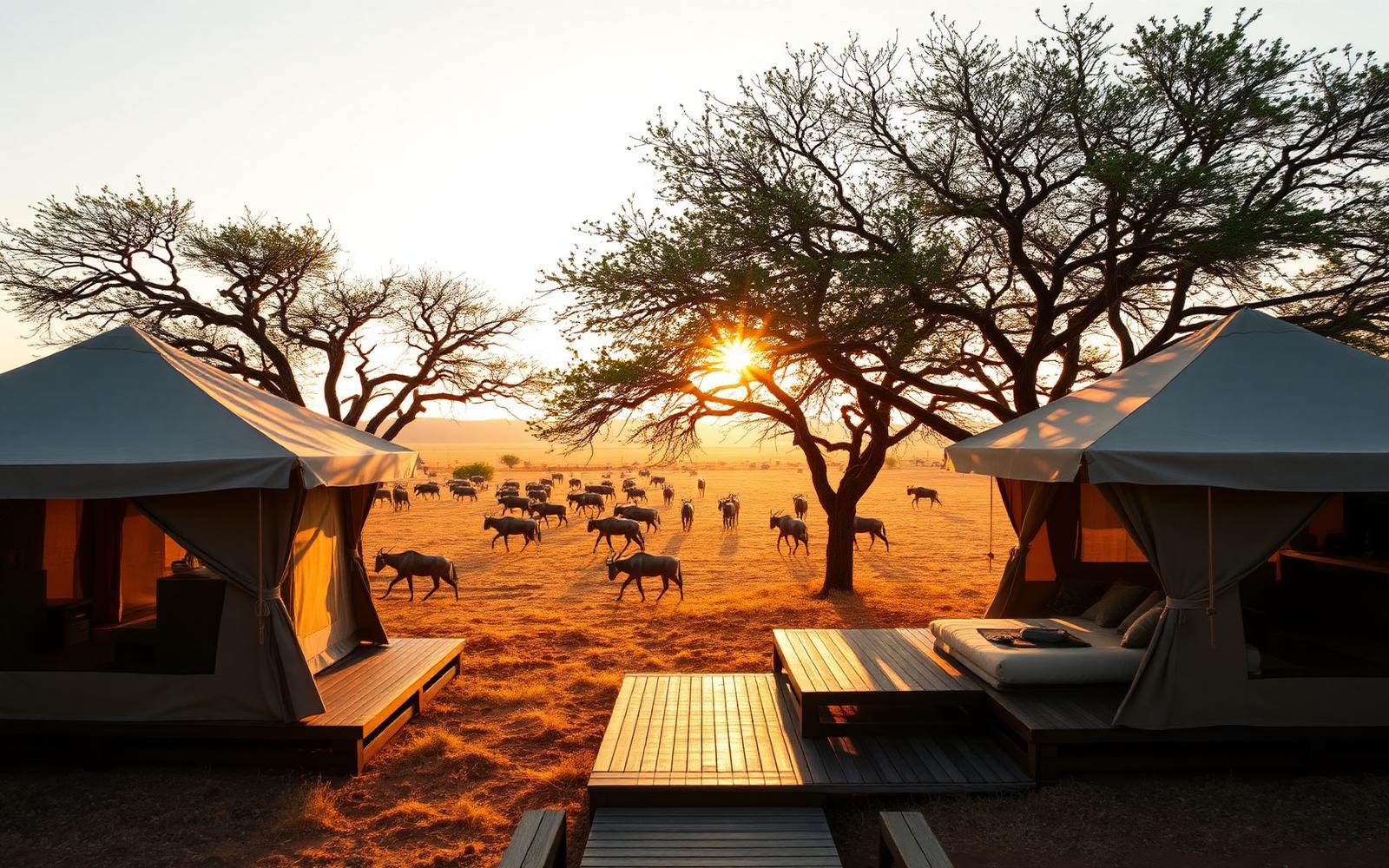
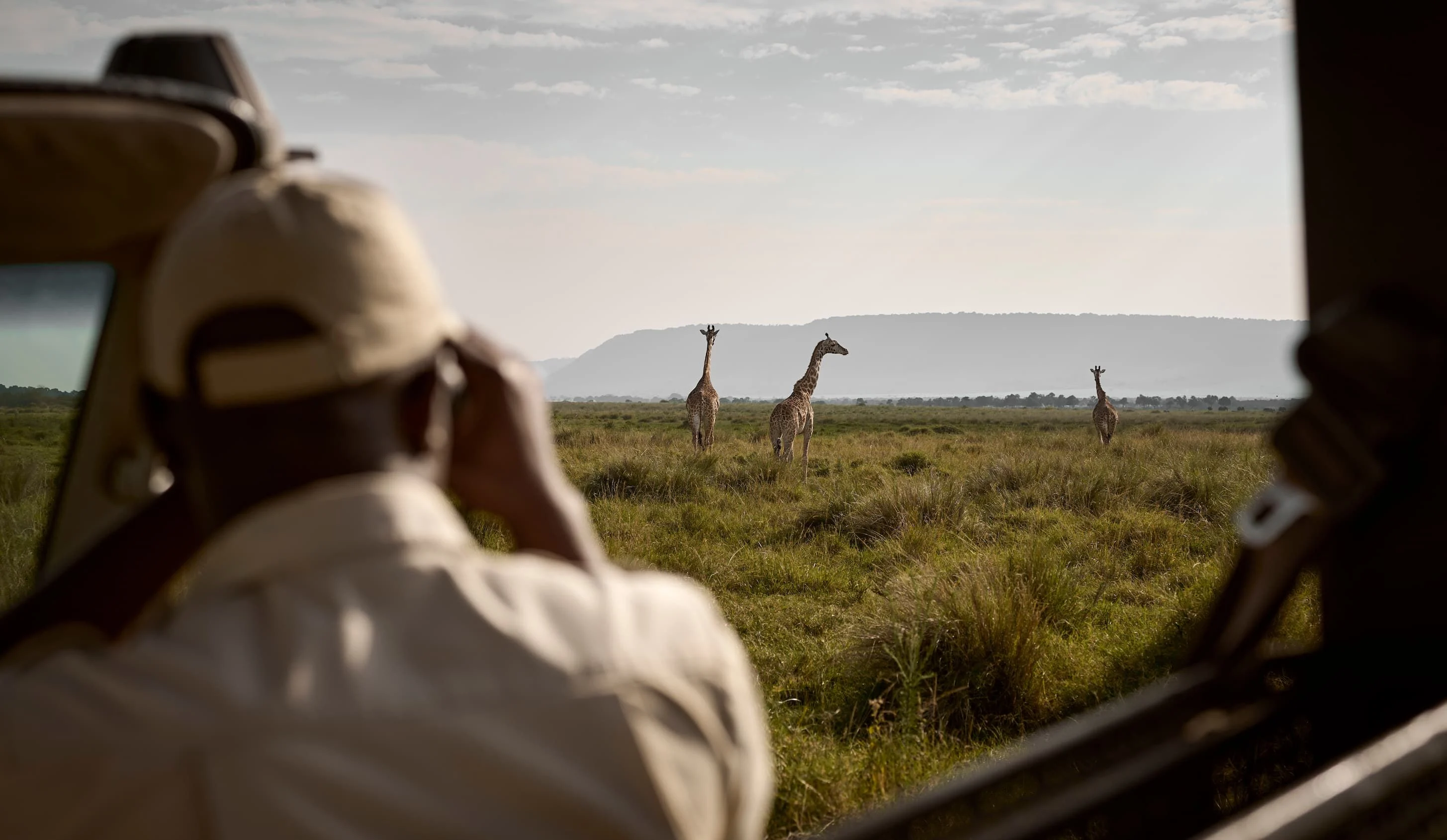
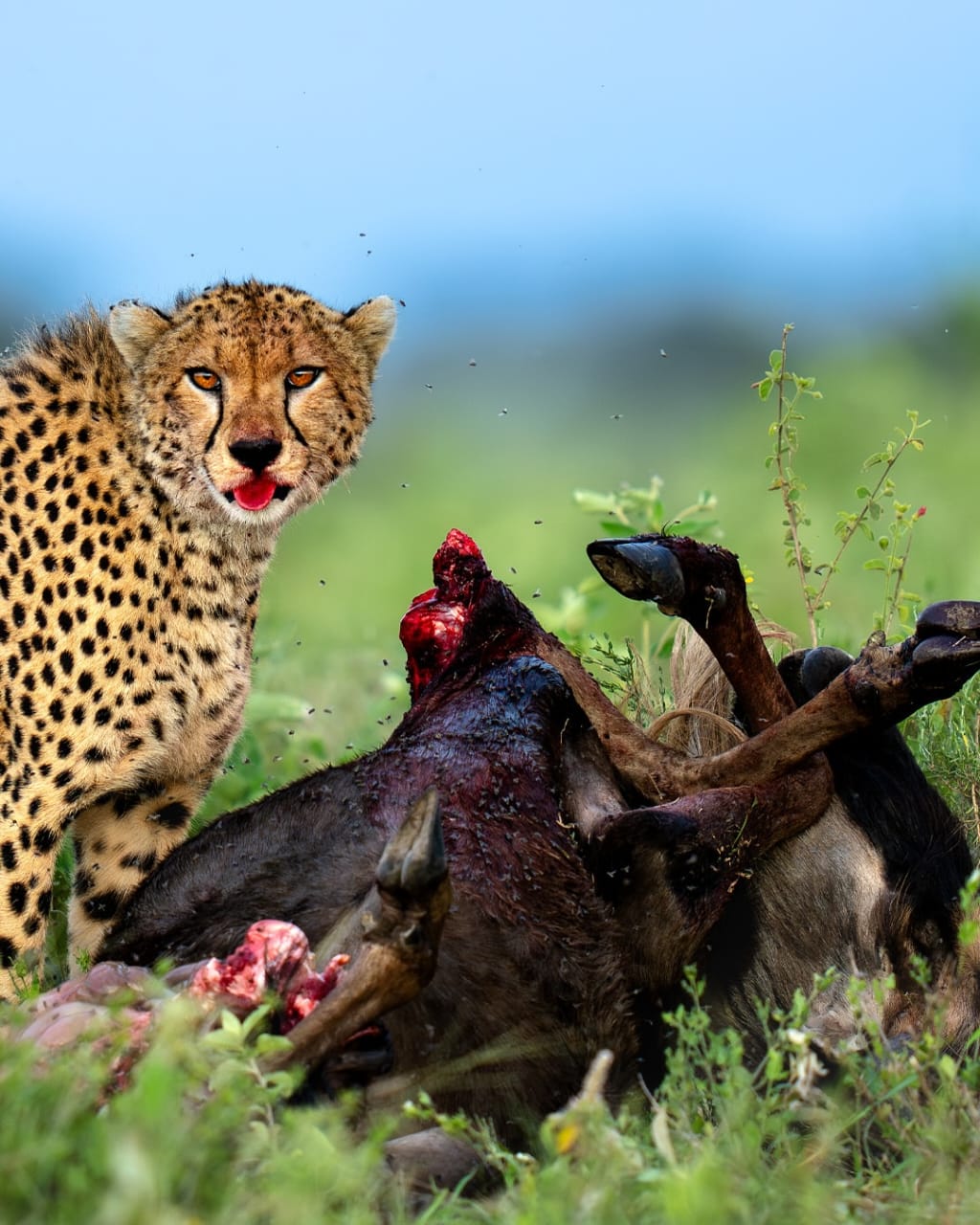
Between December and March the southern plains around Ndutu carry the greatest concentration of wildebeest and zebra in East Africa. The grass is short, the horizons are open, and the calving draws lion, cheetah and hyena into constant view. A camp here is not about architecture — it is about being inside that landscape when the light comes up.
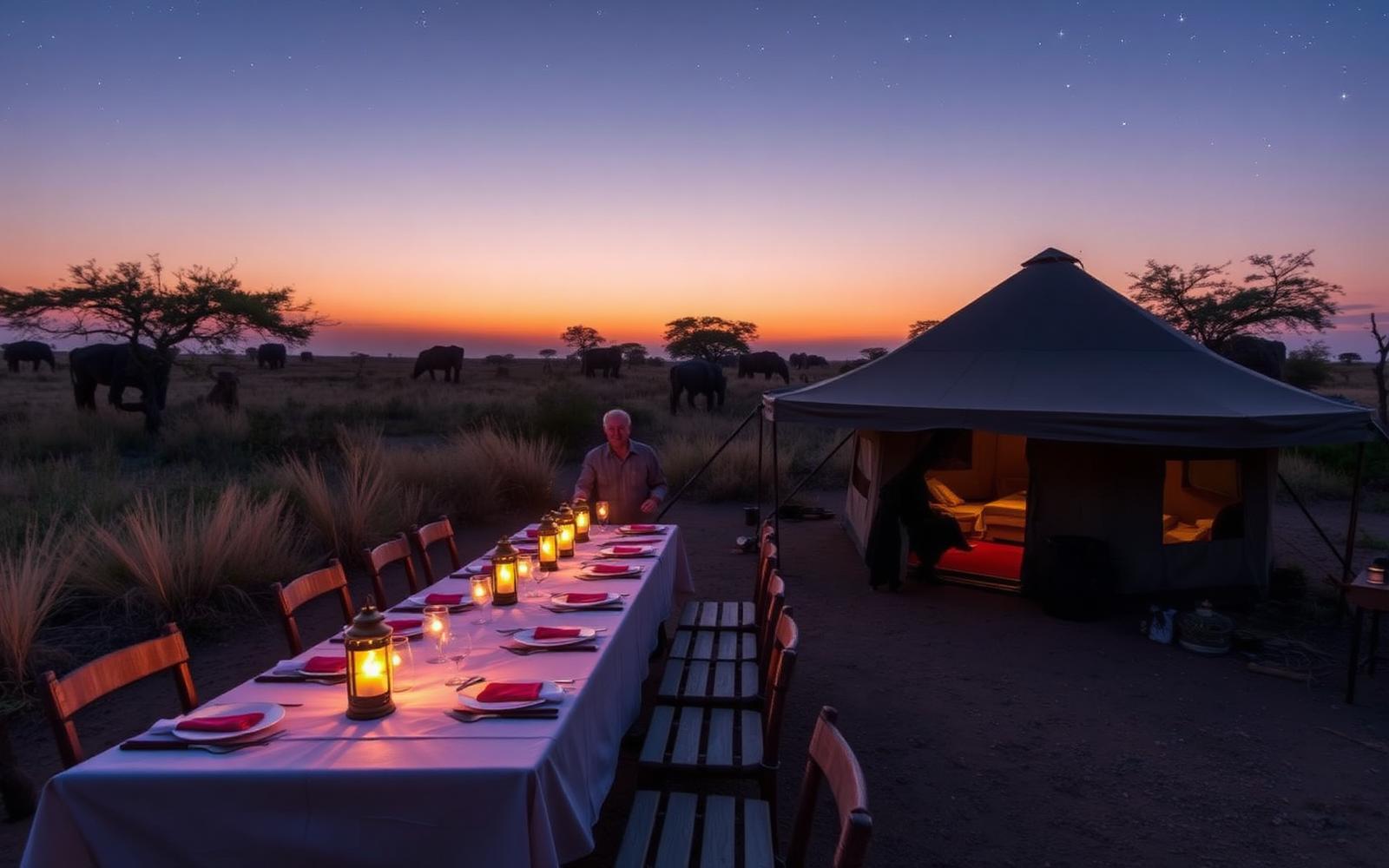
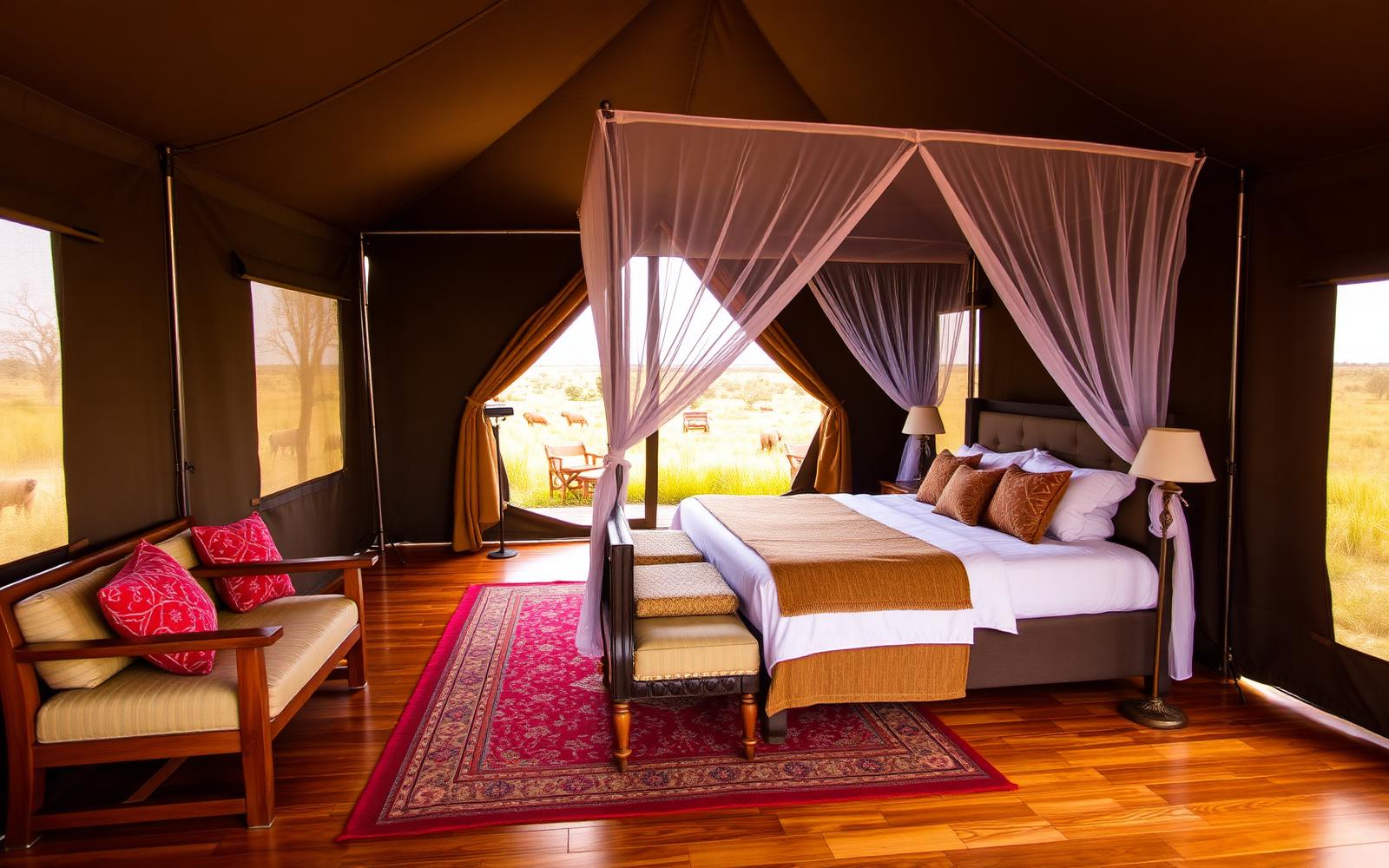
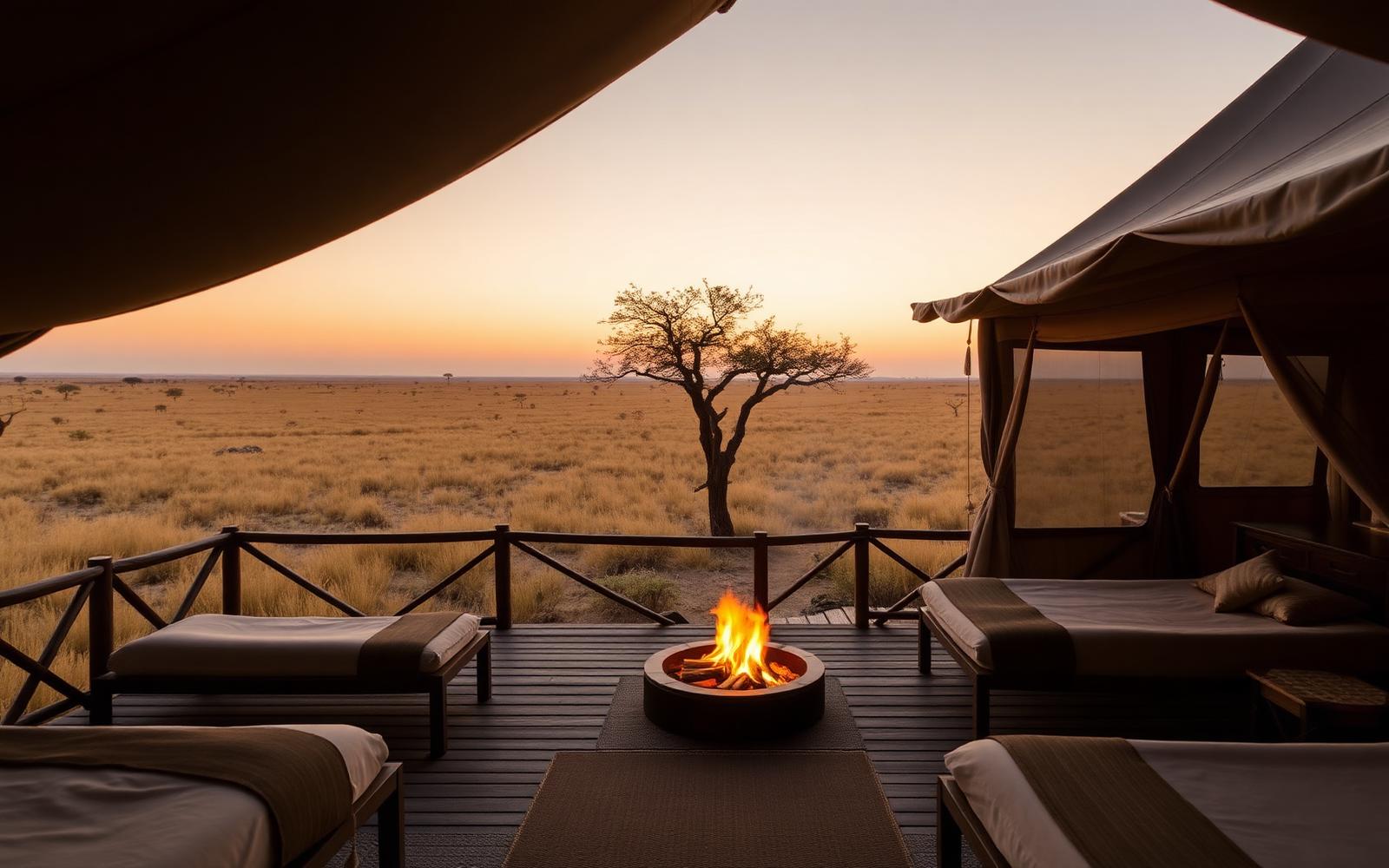
Tents are proper safari canvas: raised beds, en-suite bucket-style hot showers, flush toilets, solar lighting and a private veranda facing the plains. Meals are taken together in the mess tent or outside under lanterns. Because the herds move, the camp is seasonal and its exact position shifts year to year — which is precisely why it works.
What a night under canvas feels like
The generator does not hum, because there is not one. You read by solar light, listen to the plains, and wake before dawn to a voice outside the tent and a jug of hot water. Breakfast is often eaten in the field, on a folding table, with wildebeest strung out to the horizon in every direction.