
Arusha National Park
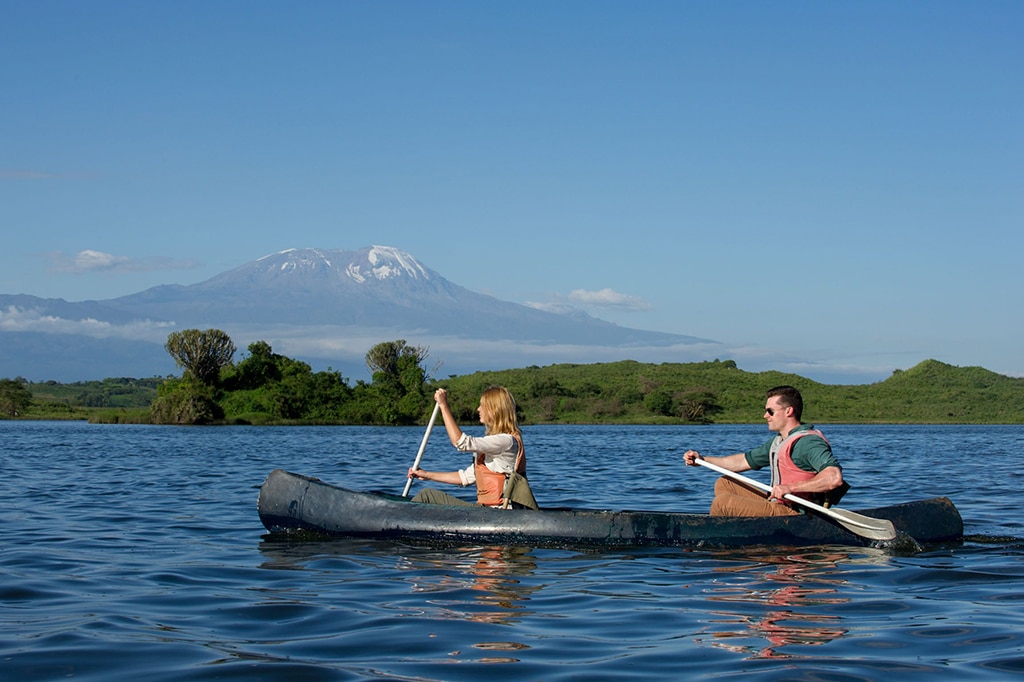
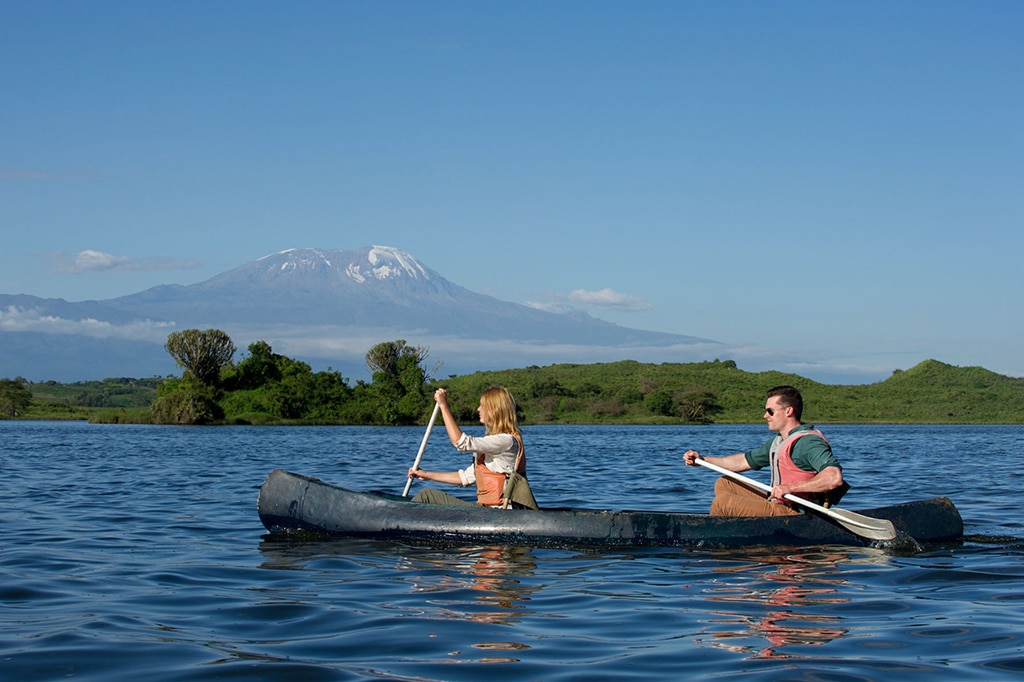
“Nowhere else in Tanzania can you paddle a canoe past waterbuck in the morning and be standing on a volcano ridge by afternoon.”
A compact, gloriously varied park at the foot of Mount Meru — montane forest, crater grasslands and the alkaline Momella Lakes, with walking safaris, canoeing and colobus monkeys just forty minutes from Arusha.
About Arusha National Park.
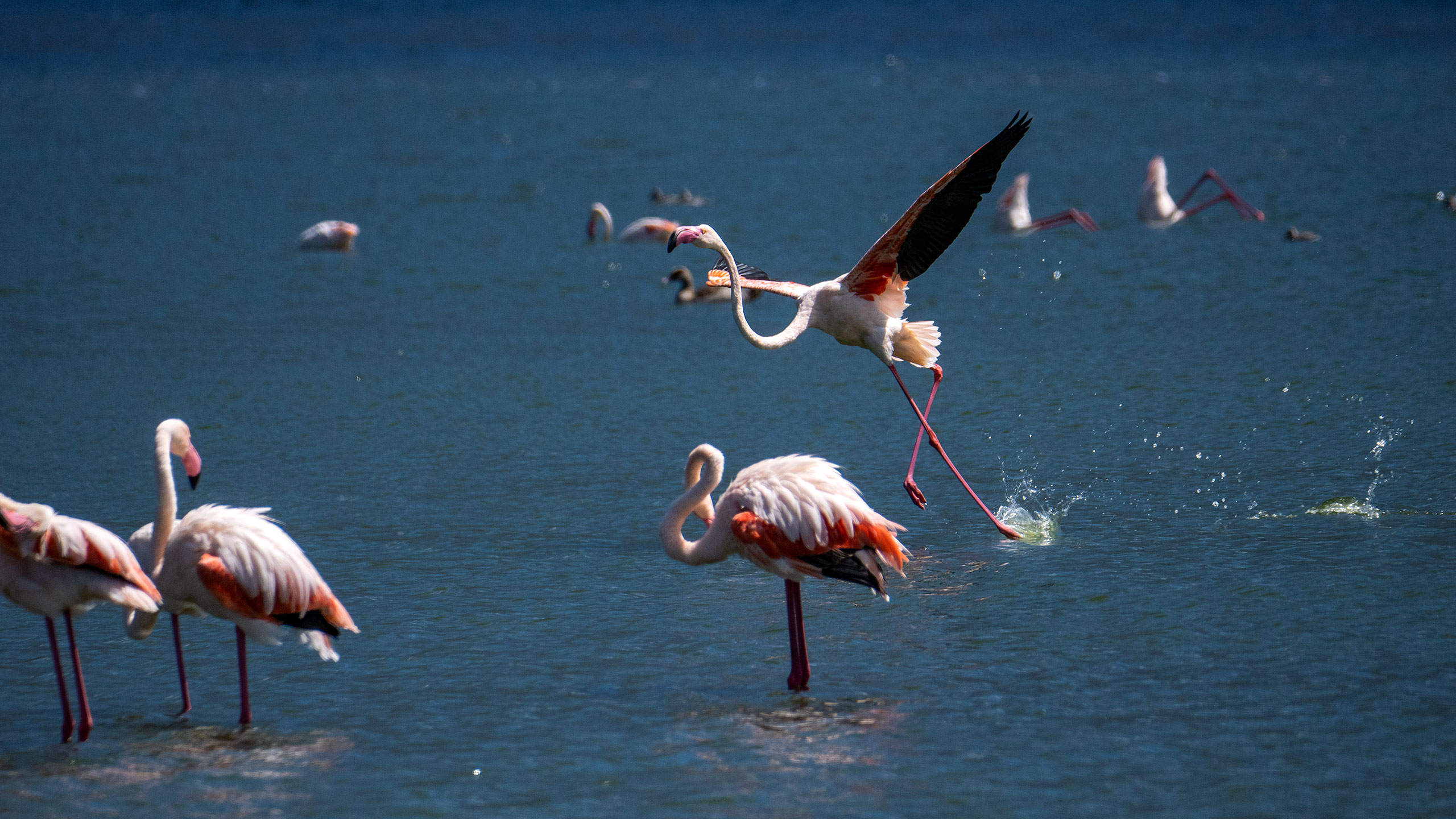
Arusha National Park is the one every itinerary skips and every guide privately loves. It sits barely forty minutes from Kilimanjaro International Airport, wrapped around the eastern flank of Mount Meru, and it packs more habitat into 550 square kilometres than parks ten times its size. In a single morning you can move through cloud forest hung with lichen, out onto the grassy floor of an extinct crater, and down to a chain of alkaline lakes where flamingo stand in water the colour of pewter, with Kilimanjaro floating on the horizon beyond.
What makes it unusual is not just the scenery but what you are allowed to do. Because there are no lion or rhino here, the park permits activities the great game parks cannot. You can walk with an armed ranger through forest and along the crater rim. You can canoe on the Small Momella Lake, drifting past waterbuck at the shoreline, buffalo grazing in the shallows and giraffe silhouetted on the ridge behind — the only canoe safari in northern Tanzania. You can climb Mount Meru itself, a serious three- or four-day trek up an active stratovolcano that many climbers rate more beautiful than Kilimanjaro and use as acclimatisation for it.
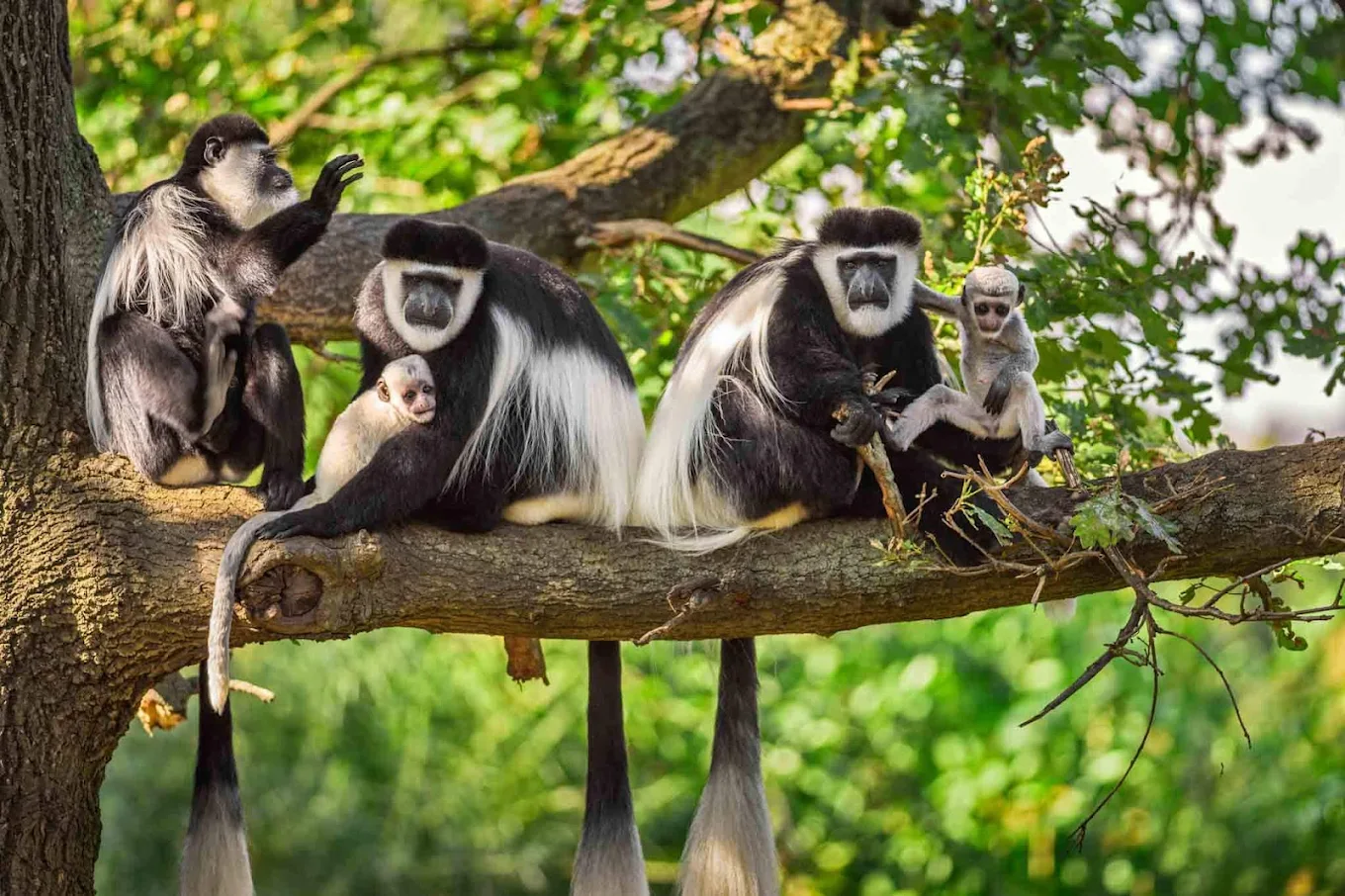
The forest is the park's soul. This is proper montane rainforest, dense and dripping, and it holds the black-and-white colobus monkey in numbers seen almost nowhere else in northern Tanzania — extraordinary animals with long white capes and plumed tails that leap between crowns with a flourish that never gets old. Blue monkeys chatter in the understorey. Trogons, turacos and the hammer-blow call of the silvery-cheeked hornbill fill the canopy. The Ngurdoto Crater, a smaller cousin of Ngorongoro often called the 'Little Ngorongoro', drops away beneath viewpoints on the rim; visitors cannot descend, which means the buffalo, warthog and baboon on the floor are watched from above, undisturbed.
North of the forest, the Momella Lakes are shallow, alkaline, and each a slightly different colour thanks to differing mineral content. Flamingo gather here, along with an exceptional cast of waterbirds. Giraffe are everywhere and remarkably relaxed — Arusha has one of the highest giraffe densities in Tanzania. Bushbuck, waterbuck, reedbuck, dik-dik, warthog and buffalo are common; leopard and spotted hyena are present but rarely seen.
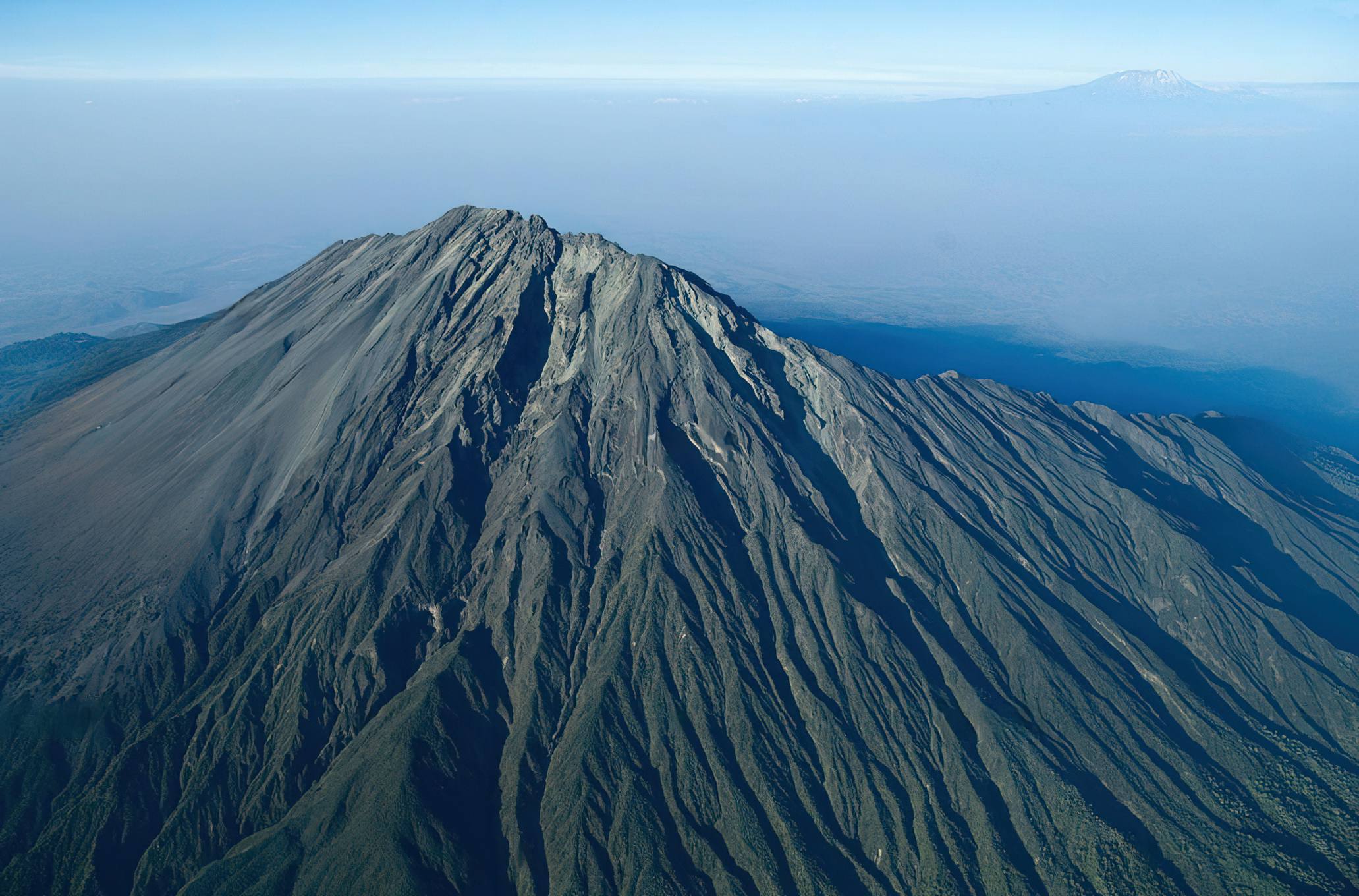
Above it all is Meru. At 4,562 metres it is Tanzania's second highest mountain and Africa's fifth, and its collapsed eastern side gives it a dramatic horseshoe profile with the Ash Cone sitting inside the caldera. The Momella Route to the summit is a genuinely beautiful climb — through forest with giraffe on the lower slopes, along Rhino Ridge, up the knife-edge crater rim to Socialist Peak for a sunrise that puts Kilimanjaro directly in front of you across the plain. Most climbers use it as a four-day acclimatisation trek before Kilimanjaro; a good few come away preferring it.
For luxury travellers, Arusha National Park solves two problems elegantly. It turns an arrival or departure day — usually dead time — into a genuine wildlife experience. And it offers walking and canoeing at the start of a safari, so that by the time you reach the Serengeti you have already had your feet on the ground and your hands in the water. Add a coffee-farm lunch on the slopes below the park, and it is one of the most civilised days in northern Tanzania.
Arusha National Park, in short.
The essentials our specialists check first when shaping a private itinerary.
Good to know.
- Location
- Arusha Region, northern Tanzania — c. 25 km from Arusha and c. 40 minutes from Kilimanjaro International Airport
- Park size
- c. 552 km², wrapped around the eastern flank of Mount Meru
- Established
- Gazetted in 1960, originally as Ngurdoto Crater National Park
- Elevation
- c. 1,400 m at the Momella Lakes rising to 4,562 m at Socialist Peak
- Getting there
- Under an hour by road from Arusha or Kilimanjaro International Airport, making it ideal for arrival and departure days
- Permits
- Park entry plus separate fees for walking safaris, canoeing and Meru trekking, all quoted transparently within your itinerary
- Currency
- Tanzanian shilling, with US dollars accepted at the gate and lodges. Carry small notes for ranger, porter and guide tips.
Why visit Arusha National Park?
Mount Meru
Tanzania's second-highest mountain at 4,562 m, with a dramatic horseshoe caldera and a summit trek many climbers prefer to Kilimanjaro.
Canoe safaris on the Momella Lakes
The only canoe safari in northern Tanzania — waterbuck at the shoreline, buffalo in the shallows, flamingo ahead of the bow.
Walking safaris with a ranger
No lion or rhino means you can explore on foot, through forest and along the crater rim.
Black-and-white colobus
The best place in northern Tanzania to watch these spectacular caped monkeys at close range.
Ngurdoto Crater
The 'Little Ngorongoro' — a perfectly formed extinct crater viewed from forested rim lookouts.
Kilimanjaro views
On clear mornings, Africa's highest mountain floats above the Momella Lakes to the east.
Forty minutes from the airport
Turns an arrival or departure day into a genuine safari experience rather than dead time.
Exceptional giraffe density
One of the highest concentrations of Maasai giraffe anywhere in Tanzania.
Species you may encounter.
Wildlife commonly associated with the region. Sightings are always wild and never guaranteed.
Black-and-white colobus
Long-caped monkeys leaping between forest crowns — the park's signature primate.
Maasai giraffe
Exceptionally dense and relaxed populations around the Momella Lakes.
Cape buffalo
Common on the crater floor and lake margins; the reason walks are ranger-escorted.
Blue monkey
Abundant in the montane forest understorey.
Waterbuck
Frequently seen from the canoe at the water's edge.
Bushbuck
Shy forest antelope, most often glimpsed at dawn along the trails.
Kirk's dik-dik
Tiny, paired antelope in the drier scrub near the northern gate.
Plains zebra
Graze the open grasslands of Serengeti Ndogo in the park's north.
Leopard
Resident in the forest but rarely seen; tracks are more common than sightings.
Spotted hyena
Present throughout, mostly heard at night from the lodges below the park.
Lesser flamingo
Gather on the alkaline Momella Lakes, numbers varying with water level.
Hartlaub's turaco
A brilliant crimson-winged forest bird, one of over 400 species recorded here.
Experiences in Arusha National Park.
The right time for Arusha National Park.
Clearest views: June – October · Green and quiet: January – March
Warm, clear and dry between the rains — among the best months for mountain views.
Reliably clear and comfortable; ideal for walking, canoeing and Meru treks.
Rains build late in the month; forest is lush and birding excellent.
Long rains. Trails are muddy and cloud sits low on Meru for much of the day.
Wet early, clearing later; wonderfully green and almost empty.
Dry season begins with crisp air and firming trails; cool in the forest.
Cold at altitude, dry and clear below — prime for Meru treks.
Peak trekking season with excellent visibility and dependable game viewing.
Dry, golden and quiet — arguably the finest month in the park.
Warm and dry with building afternoon cloud towards month end.
Short rains bring afternoon showers, fresh green forest and arriving migrants.
Green and pleasant with clearing skies late in the month.
- Altitude
- c. 1,400 m at the lakes to 4,562 m at Meru's summit
- Average temperature
- 14–26°C; cool and often misty in the forest
- Dry season
- June – October
- Rainy season
- November – December (short rains) and March – May (long rains)
Arusha National Park, in pictures.
Arusha National Park on the map.
The park and the places around it — nearby destinations, areas and camps we work with.
Journeys featuring Arusha National Park.
Combine Arusha National Park with…

Mount Meru
A strong acclimatisation climb before Kilimanjaro.
A 4,562 m volcano inside Arusha National Park — a four-day trek through game-rich forest to a dramatic crater rim, and the ideal preparation for Kilimanjaro.
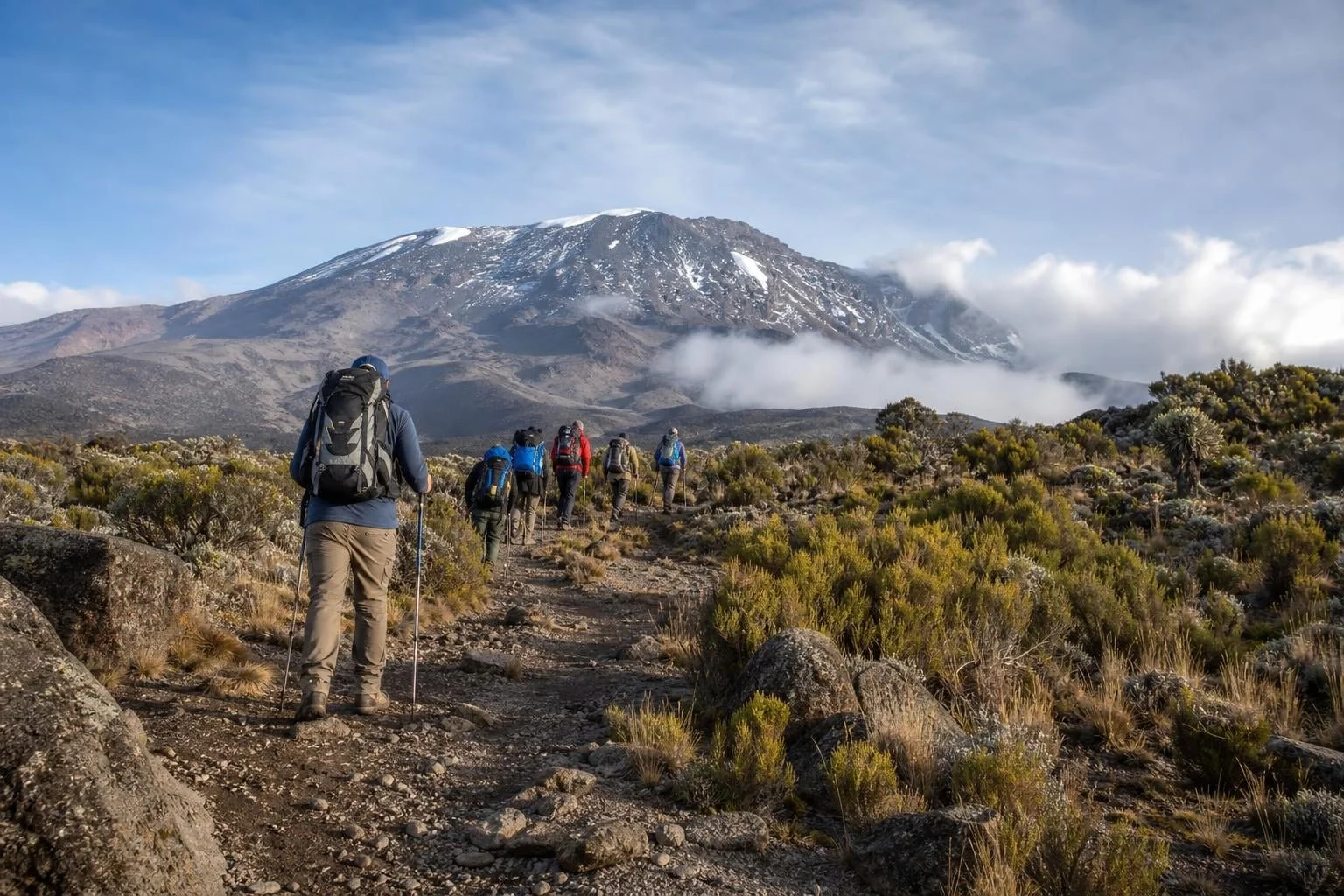
Mount Kilimanjaro
The highest walk in Africa.
Africa's highest peak and the world's tallest freestanding mountain — a non-technical trek through rainforest, moorland, alpine desert and glacial ice to Uhuru Peak at 5,895 metres.
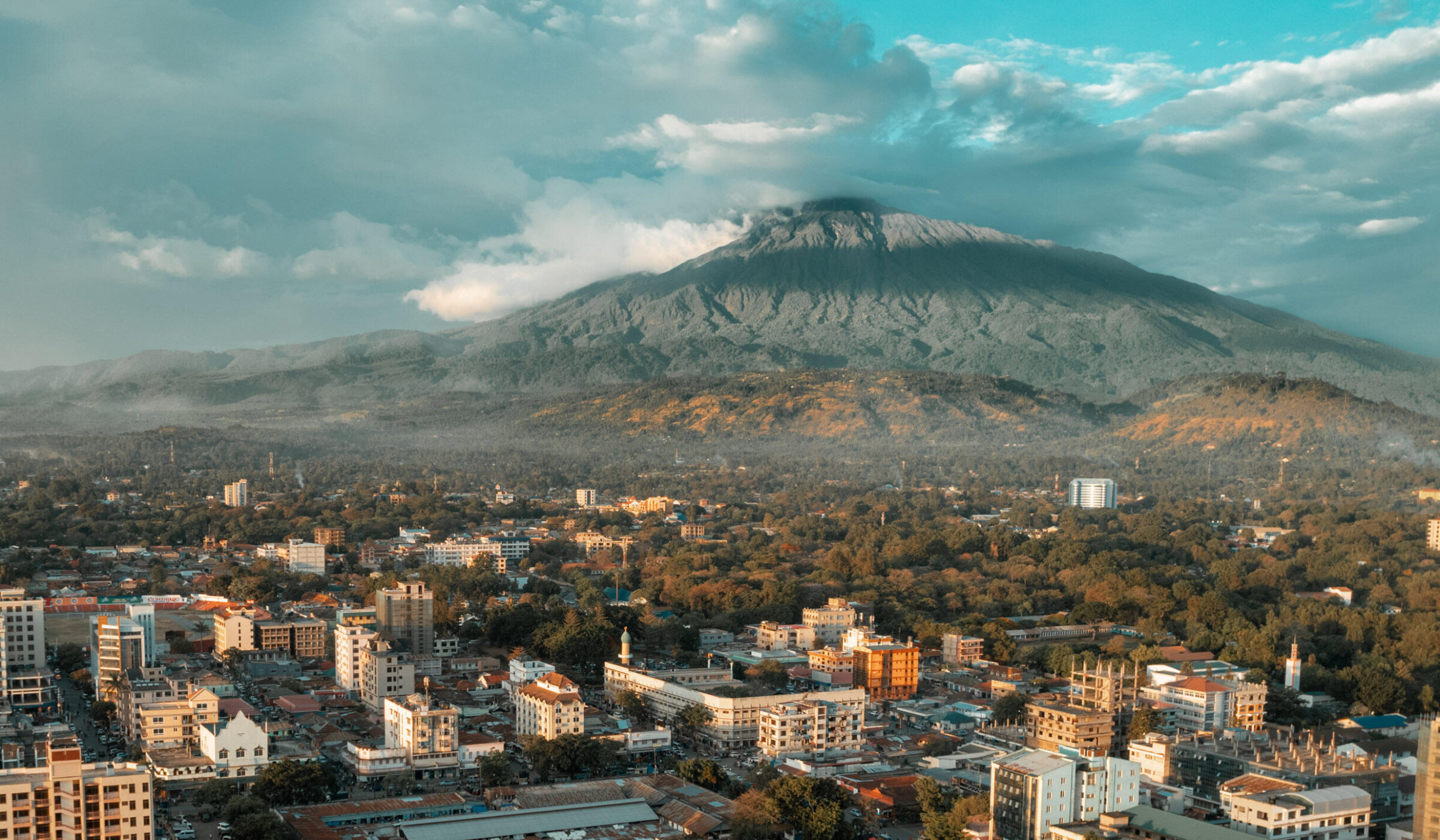
Arusha
The Gateway to Tanzania's Legendary Northern Safari Circuit
Arusha is Tanzania's premier safari gateway, offering easy access to world-famous national parks, Mount Kilimanjaro, rich cultural experiences, luxury lodges and authentic East African hospitality.
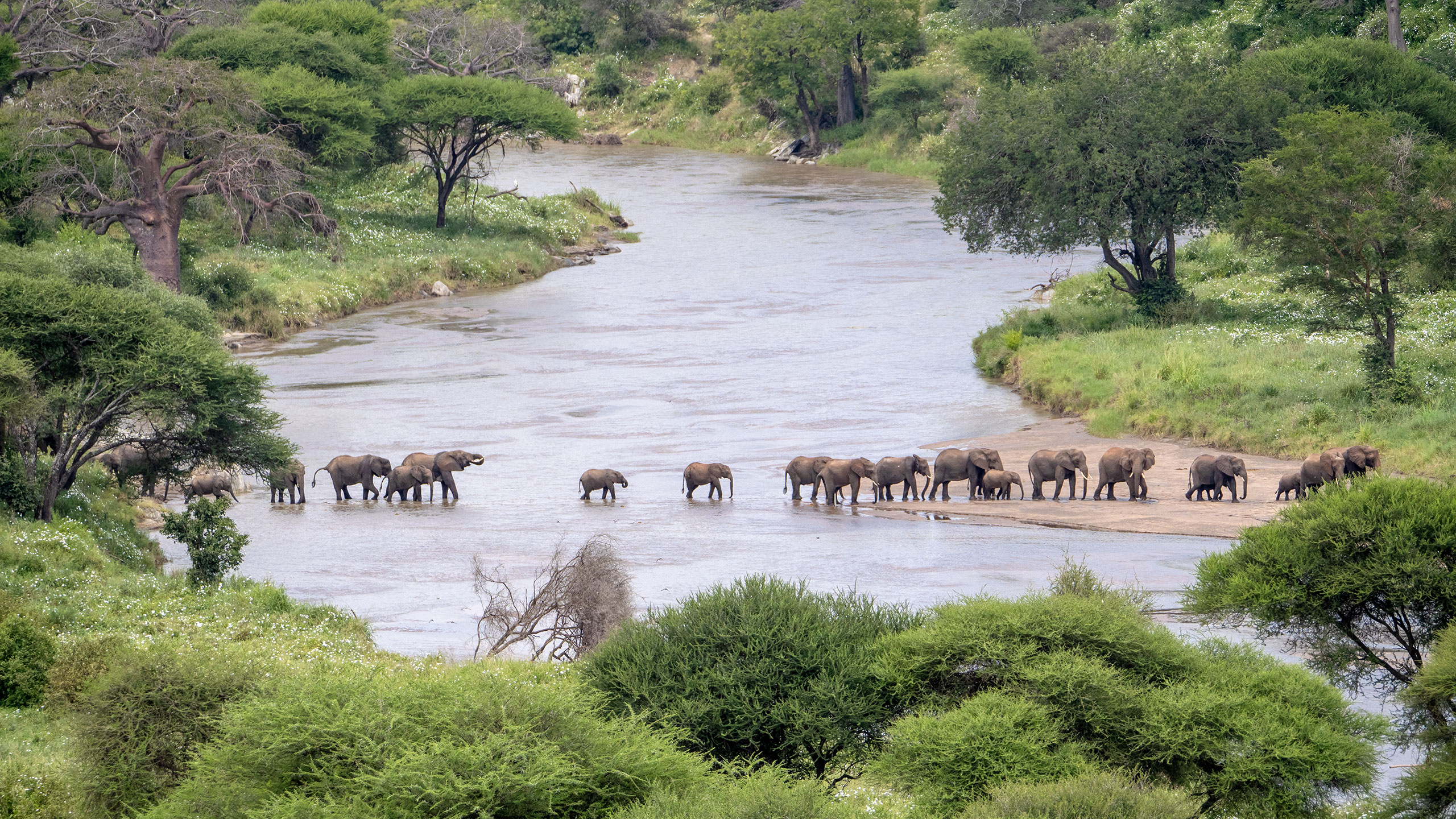
Tarangire National Park
Elephant country, written in baobab.
A baobab-studded valley along the Tarangire River, drawing Tanzania's largest dry-season elephant concentrations between June and October.
Planning your visit.
Practical guidance from our on-the-ground team, tailored to this destination.
Packing
A warm mid-layer and waterproof shell — the forest is cool and damp year-round. Closed walking shoes or light boots, insect repellent, sunglasses and a dry bag for the canoe. For Meru, full trekking kit including a four-season sleeping bag and headtorch.
Health
Malaria risk is low at this altitude but not zero; follow your doctor's advice. Meru reaches 4,562 m, so altitude acclimatisation matters — ascend slowly, hydrate and tell your guide immediately about headaches or nausea.
Safety
All walking is accompanied by an armed ranger, principally because of buffalo. Keep the group tight, never run, and wear a life jacket on the canoe. Forest trails can be slippery after rain.
Photography
Be out by six for cloud-free Meru and Kilimanjaro. Fast glass helps in the forest, a wide lens serves the crater viewpoints and lakes, and a waterproof housing or dry bag is essential on the water. Drones require TANAPA permits and are not available to general visitors.
Connectivity
Good mobile coverage near the gates and lodges, patchy in the forest and absent on the upper mountain. Lodges on the southern slopes generally have reliable Wi-Fi.
Family advice
Excellent for families — canoeing, short forest walks and near-certain giraffe and colobus sightings hold children's attention far better than long drives. Minimum ages apply to walking and canoeing activities; we confirm these when planning.
Responsible tourism
Use licensed park rangers and local guides, buy coffee directly from the cooperatives on the southern slopes, stay on marked trails to protect fragile forest, and carry all waste out with you.
Frequently asked.
Is Arusha National Park worth visiting?
Emphatically yes — particularly on an arrival or departure day. In one morning you can canoe on an alkaline lake, walk in montane forest and watch colobus and giraffe, forty minutes from the airport.
Can you walk in Arusha National Park?
Yes. Because there are no lion or rhino, guided walking safaris with an armed ranger are permitted through the forest, along the Ngurdoto rim and around the Momella Lakes.
Is there a canoe safari in Arusha National Park?
Yes — on Small Momella Lake, the only canoe safari in northern Tanzania, passing waterbuck, buffalo and flamingo at eye level.
How long does it take to climb Mount Meru?
Three to four days by the Momella Route. Four days is strongly recommended for acclimatisation and enjoyment, and it is the best possible preparation for Kilimanjaro.
Is Mount Meru harder than Kilimanjaro?
It is shorter but steeper, with an exposed knife-edge crater rim near the summit. It is less demanding in altitude terms but more technical underfoot, and many climbers find it more beautiful.
Are there elephants and lions in Arusha National Park?
Lion and rhino are absent and elephant are rare, which is exactly why walking and canoeing are allowed here. Leopard and hyena are present but seldom seen.
Can you see Kilimanjaro from Arusha National Park?
On clear mornings, yes — particularly from the Momella area between June and October, and again in January and February. Cloud usually builds by mid-morning.
How far is Arusha National Park from Kilimanjaro Airport?
Around forty minutes by road, which makes it the most convenient park in Tanzania for a first or last day.
What monkeys live in Arusha National Park?
Black-and-white colobus are the highlight, alongside blue monkey and olive baboon. The colobus here are among the most easily observed in East Africa.
Is Arusha National Park good for families?
Outstanding. Canoeing, short walks and dependable giraffe and monkey sightings suit children far better than long game drives. Age minimums apply to some activities.
When is the best time to visit Arusha National Park?
June to October and January to February give the clearest mountain views and driest trails. The green season is lush, quiet and excellent for birding.
Can you do a day trip to Arusha National Park?
Yes, and it works well. A full day allows a game drive, a ranger-led walk and a canoe session with time for a coffee-farm lunch on the way back.
Are there flamingo in Arusha National Park?
Yes. Lesser flamingo gather on the alkaline Momella Lakes, with numbers varying according to water levels and algae blooms.
Related reading.
Guides that pair well with a journey to this destination.
Ready to experience Arusha National Park?
Tell us what draws you here and we'll shape a private journey around the places, experiences and pace that matter to you.