
Hiking & Trekking
On foot, at last.
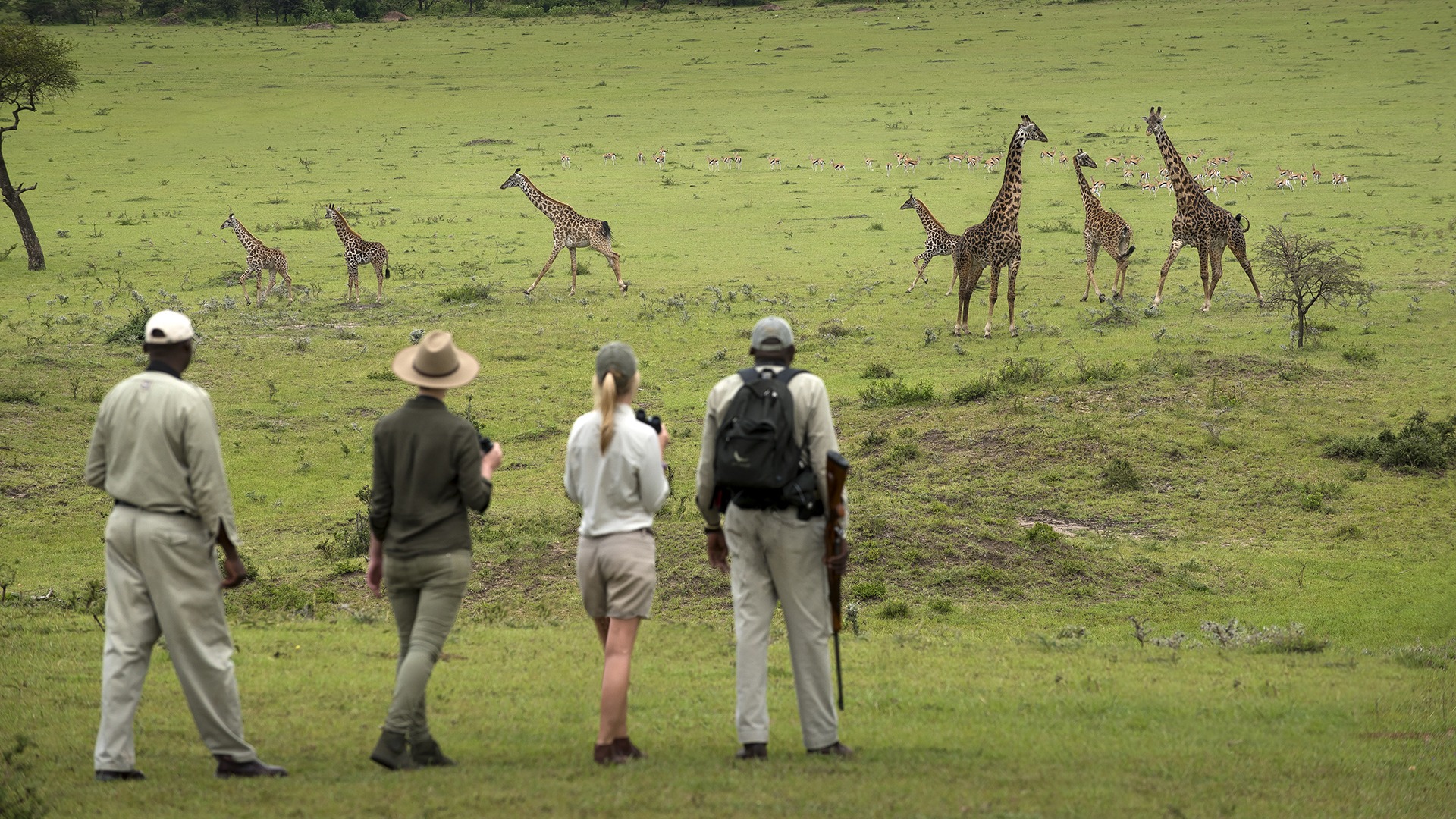
Day hikes and multi-day walks away from the vehicle — crater rims, forest waterfalls, Rift Valley escarpments, the Usambara Mountains and guided walking safaris with an armed ranger.
- Available in
- Tanzania
- Best time
- Best trails: June – October · Warm and dry: December – February · Slippery and restricted: March – May
- Type
- active
Getting out of the vehicle.
A game drive shows you animals. A walk shows you the place they live in — the smell of crushed wild basil, dung beetles at work, a track that was made an hour ago rather than yesterday. It rescales the whole landscape.
Northern Tanzania has an unusual amount of good walking for a safari region. There are the Empakaai and Olmoti crater descents in the Ngorongoro highlands, the Ngare Sero waterfall gorge at Lake Natron, the forest trails and canopy walkway at Lake Manyara, the Momella lakes and Ngurdoto Crater in Arusha National Park, and multi-day village-to-village walking in the Usambara Mountains, one of the oldest forest ecosystems in Africa.
Inside wildlife areas, walking is permitted only in designated zones and always with an armed ranger and a licensed walking guide. Groups are small, distances are modest, and the pace is deliberately slow — the point is not to cover ground.
None of this requires technical skill. Reasonable fitness, decent boots and a tolerance for altitude between roughly 1,500 and 3,200 metres cover almost everything short of Kilimanjaro or Meru.

Why Hiking & Trekking?
Empakaai Crater
A steep forest descent to a soda lake in the Ngorongoro highlands, often pink with flamingo.
Ngare Sero gorge
Wading a narrow volcanic slot canyon at Lake Natron to reach cool plunge pools.
Walking safari with a ranger
Small-group bush walks in designated areas, tracking on foot with an armed ranger.
Usambara Mountains
Multi-day village-to-village walking through ancient Eastern Arc rainforest.
Arusha National Park on foot
Momella lakes, giraffe and buffalo country and the rim of Ngurdoto Crater.
Lake Manyara canopy walkway
A suspended walkway through the groundwater forest — excellent for birding and families.
Where to experience Hiking & Trekking.
Tanzania
Explore Tanzania →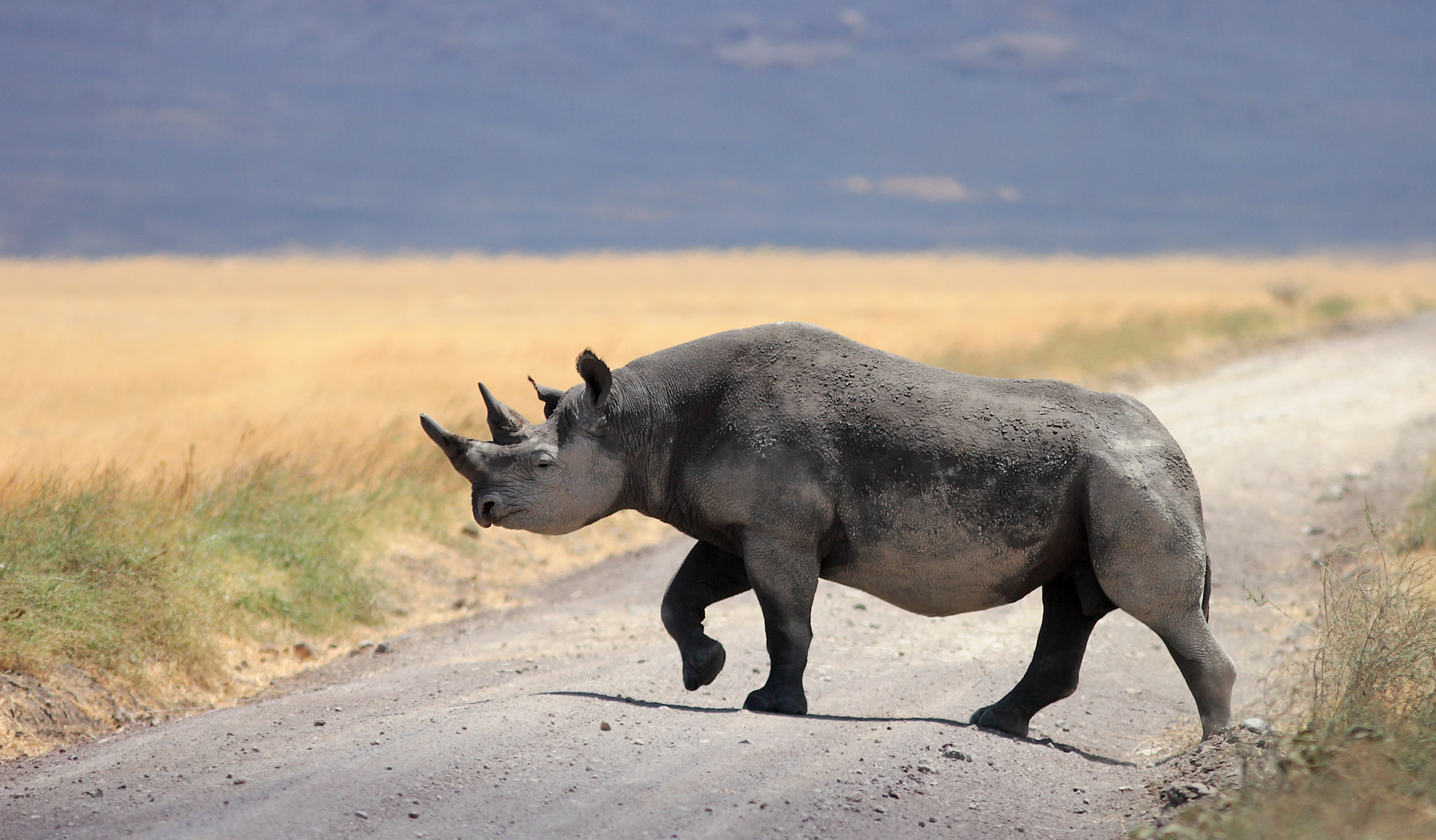
Ngorongoro Conservation Area & Crater
The world's greatest natural wildlife amphitheatre.
A UNESCO World Heritage Site where 260 square kilometres of crater floor hold lion, elephant, buffalo, leopard and one of Africa's last populations of black rhino — all beneath a 600-metre volcanic rim shared with Maasai herders.
Lake Natron
Tanzania's most otherworldly landscape.
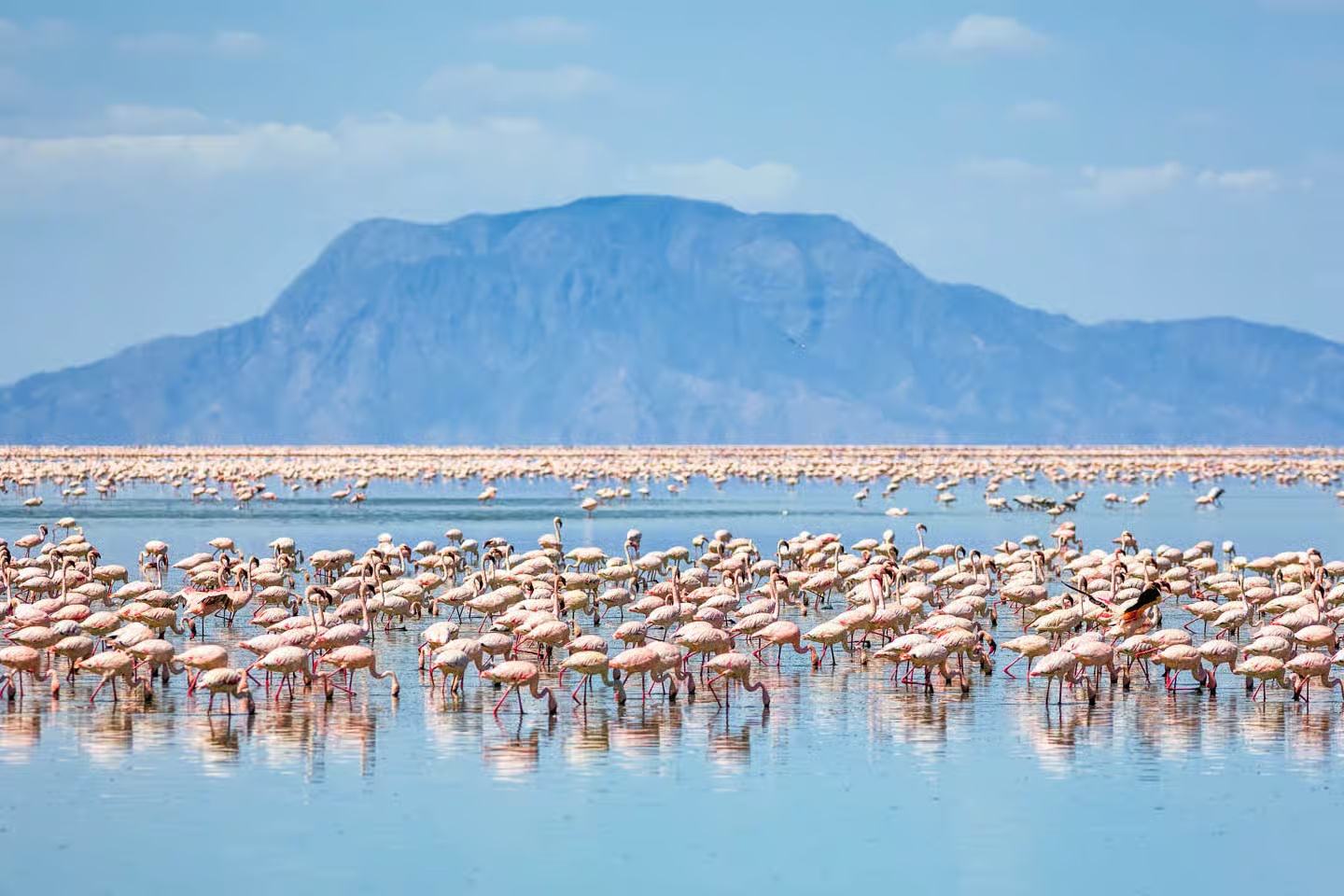
A caustic, shallow soda lake in the Rift Valley below the active volcano Ol Doinyo Lengai — the sole regular breeding site for East Africa's 2.5 million lesser flamingo, and one of the most photographed landscapes in Africa.
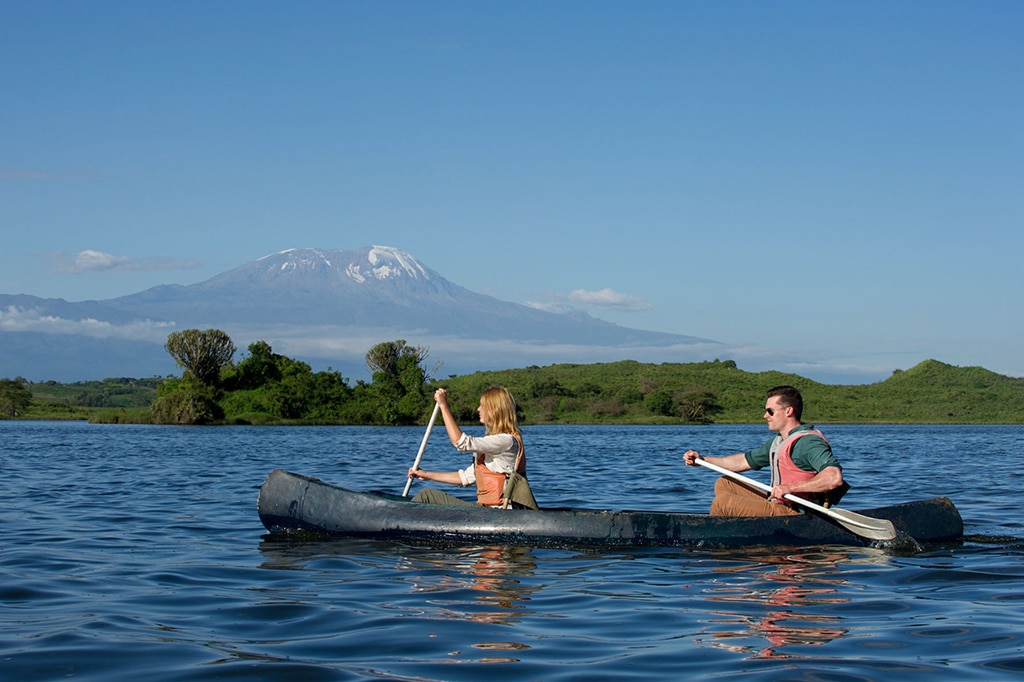
Arusha National Park
The most underrated hour from Kilimanjaro Airport.
A compact, gloriously varied park at the foot of Mount Meru — montane forest, crater grasslands and the alkaline Momella Lakes, with walking safaris, canoeing and colobus monkeys just forty minutes from Arusha.

Lake Manyara National Park
Small park, extraordinary variety.
A compact park of astonishing range — spring-fed forest, open floodplain and a shallow alkaline lake beneath the 600-metre wall of the Great Rift Valley, famous for tree-climbing lions, elephants and flamingo.

Usambara Mountains
Ancient mountains of remarkable endemism.
Ancient forested mountains in north-eastern Tanzania with extraordinary levels of endemism, cool walking trails, tea and spice villages and almost no tourism.

Mount Meru
A strong acclimatisation climb before Kilimanjaro.
A 4,562 m volcano inside Arusha National Park — a four-day trek through game-rich forest to a dramatic crater rim, and the ideal preparation for Kilimanjaro.
When to experience it.
June to October gives dry, firm trails and clear highland views. December to February is warm and generally dry. Trails in the long rains, particularly March to May, become slippery and some crater descents close.
Warm, mostly dry and good underfoot; clear highland views.
Hot at low altitude — start early at Natron; highlands excellent.
Rains begin; steep descents become slippery.
Long rains — several crater and gorge walks are unsafe or closed.
Improving late; forest walking is beautiful but wet.
Dry season opens with firm trails and cool mornings.
Cool, dry and clear — the best month for highland walking.
Dry and reliable across every trail.
Warm, dry and quiet on the trails.
Hot and dusty at low altitude; highlands still excellent.
Short rains; trails soften but forest walking is at its best.
Warm with occasional showers and generally good footing.
What to expect.
Distances
Most day hikes run two to five hours. Usambara traverses cover 10 – 18 km a day with luggage moved for you.
Altitude
Between about 600 m at Natron and 3,200 m on the Empakaai rim. Nothing that needs acclimatisation, but expect to feel the highlands.
Who walks with you
A licensed walking guide always, plus an armed ranger inside wildlife areas — a legal requirement, not a formality.
Wildlife on foot
Encounters are usually plains game, giraffe and birds. Your guide will brief you on distance, wind and what to do if larger animals are close.
Fitness
Moderate. If you can walk briskly for two hours at home on uneven ground, you will enjoy almost all of these.
Journeys featuring Hiking & Trekking.
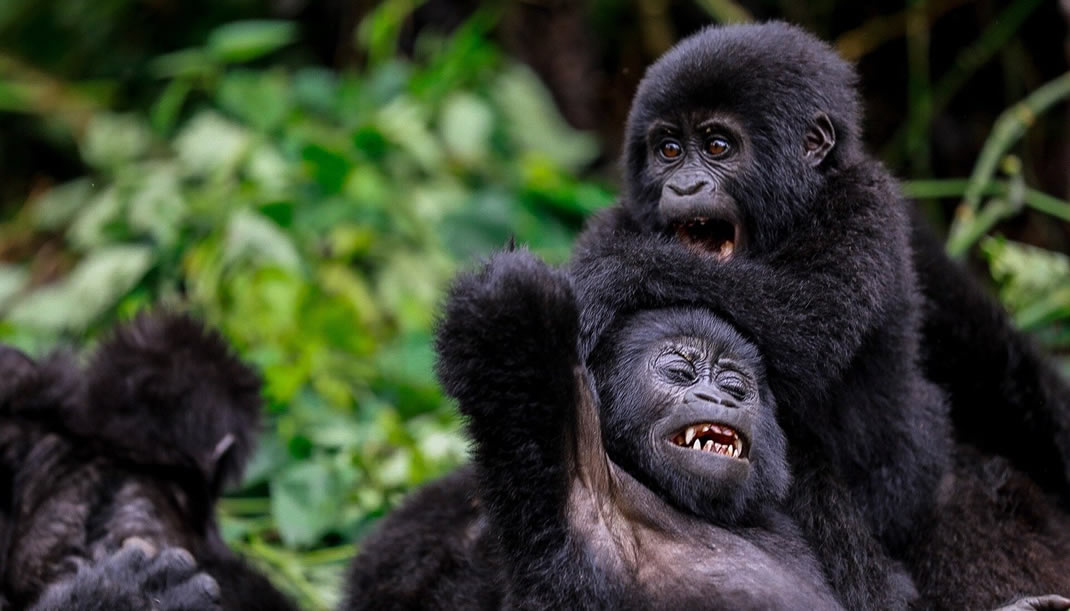
Hiking & Trekking in pictures.
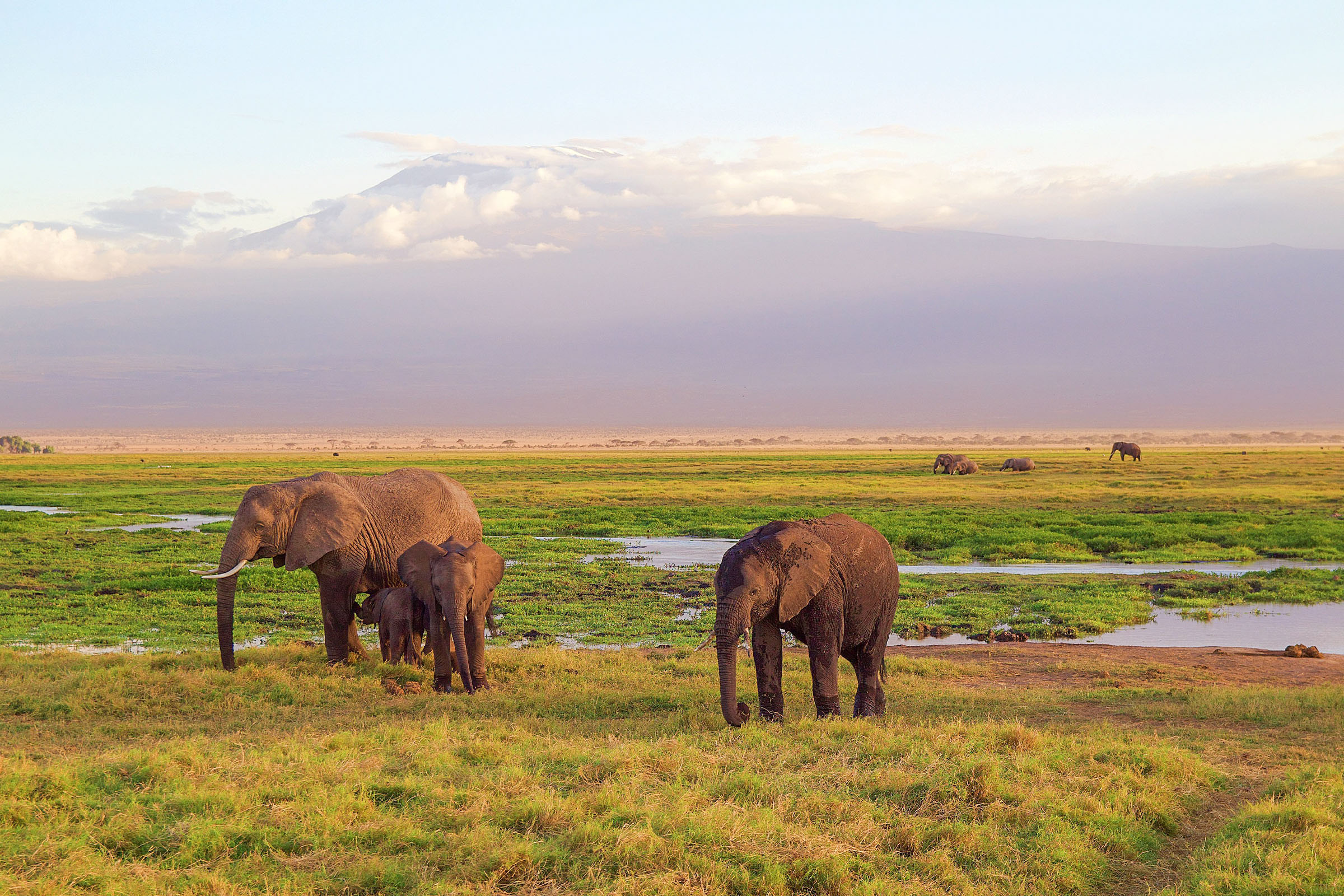
Planning this experience.
- Typical day
- Two to five hours walking, at a deliberately slow pace.
- Altitude range
- 600 m at Lake Natron to 3,200 m on the Empakaai rim.
- Group size
- Six to eight walkers per guide.
- Escort
- Armed ranger required in wildlife areas; included in the quote.
- Best paired with
- Any Northern Circuit safari, Lake Natron, or a Kilimanjaro climb.
Explore more experiences.

Mountain Climbing
Pole pole.
Kilimanjaro, Mount Meru and Mount Kenya — non-technical high-altitude climbs where success comes down to route choice, acclimatisation days and the strength of your crew.
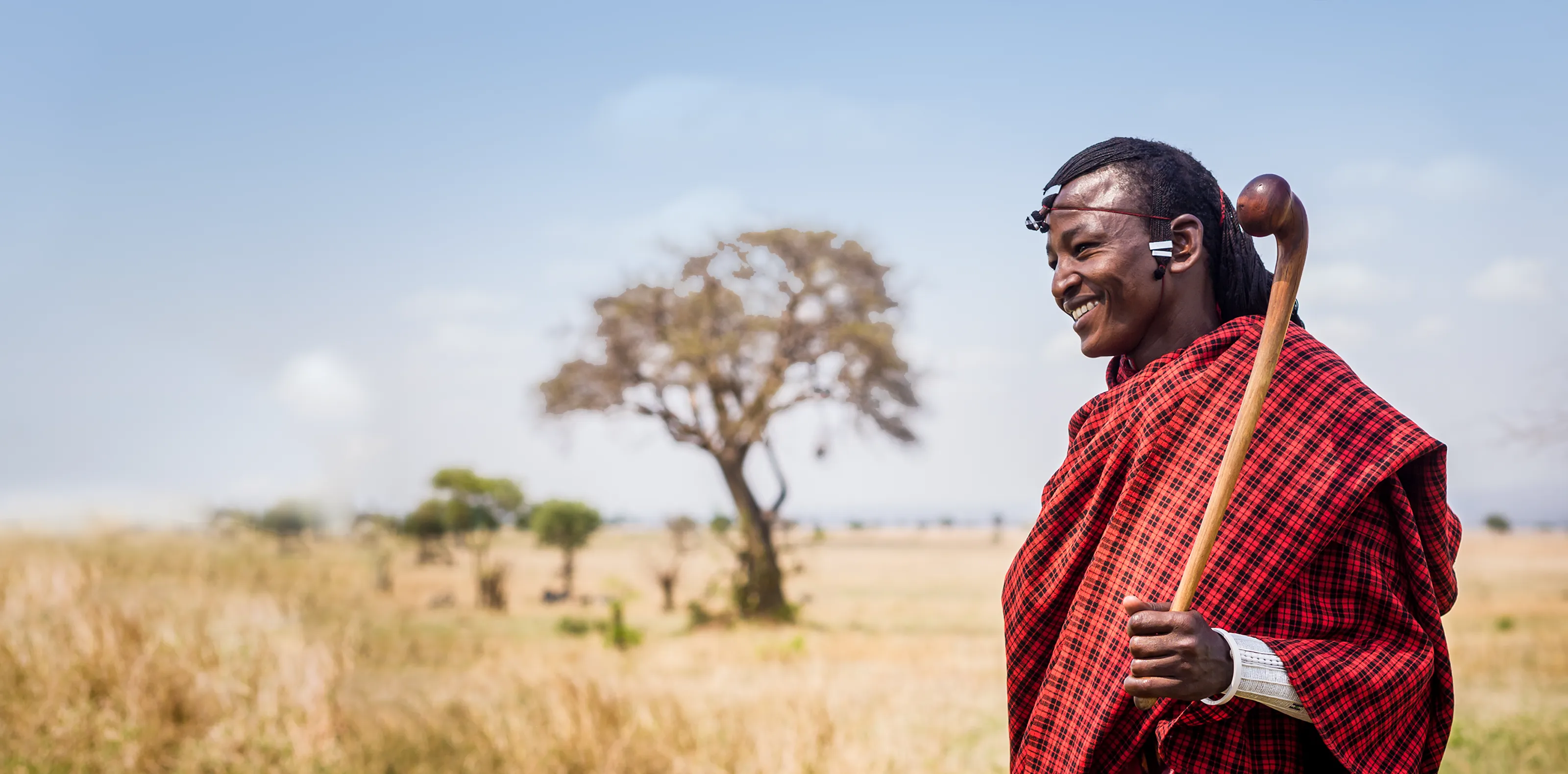
Cultural Experiences
Meet the people, not a performance.
Time with Maasai, Hadzabe, Datoga, Chagga and Swahili communities arranged directly and paid fairly — conversation and craft rather than staged dancing at the gate.
Wildlife Safaris
The reason you came.
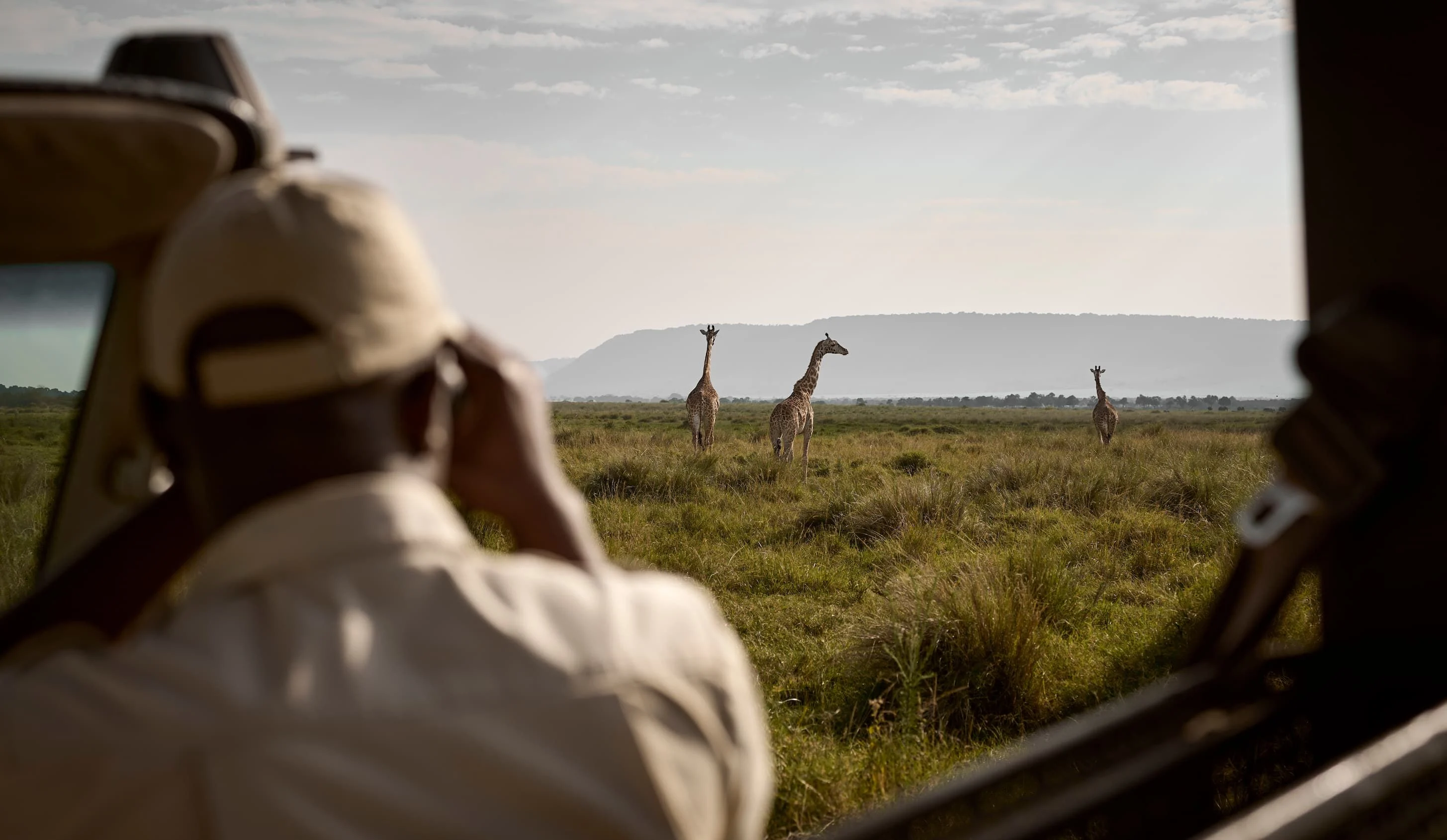
Private, guided game viewing across the great ecosystems of East Africa — the Serengeti, Ngorongoro, Tarangire, the Maasai Mara and beyond — with your own vehicle and guide on tailor-made journeys, and shared departures only where specifically stated.
Frequently asked.
Is walking allowed in the national parks?+
Only in designated areas and always with a licensed walking guide and an armed ranger. Where walking is not permitted we will say so rather than improvise.
How fit do I need to be?+
Moderately. If you can walk for two hours on uneven ground at home you will manage nearly all of these. The Empakaai descent and its climb back out are the most demanding.
Can children come?+
From around eight for day hikes and the canopy walkway. Walking safaris inside wildlife areas usually set a minimum of twelve.
Do I need my own gear?+
Boots and layers, yes. Walking poles, day packs and water bottles can be provided on request.
Is this the same as climbing Kilimanjaro?+
No — these are day walks and gentle multi-day routes. Kilimanjaro and Meru are separate, altitude-dependent climbs with their own preparation.
Build this experience into your journey.
Tell us what draws you to hiking & trekking and we'll design a private journey around your dates, pace and interests.