
Lake Natron
“From the shoulder of Ol Doinyo Lengai at dawn, Natron looks less like a lake than a wound in the earth — and then the flamingos lift, and the whole thing turns pink.”
A caustic, shallow soda lake in the Rift Valley below the active volcano Ol Doinyo Lengai — the sole regular breeding site for East Africa's 2.5 million lesser flamingo, and one of the most photographed landscapes in Africa.
About Lake Natron.
Lake Natron is not a comfortable place, and that is precisely the point. It sits in the hottest, lowest, most geologically restless corner of Tanzania's Rift Valley, a shallow sheet of water barely three metres deep at its fullest, so alkaline that it can reach pH 12 and so hot in the dry season that surface temperatures exceed 40°C. Almost nothing survives in it. What does survive — a specialised cyanobacterium — turns the water deep red and pink from the air, and feeds the single most important flamingo population on the continent.
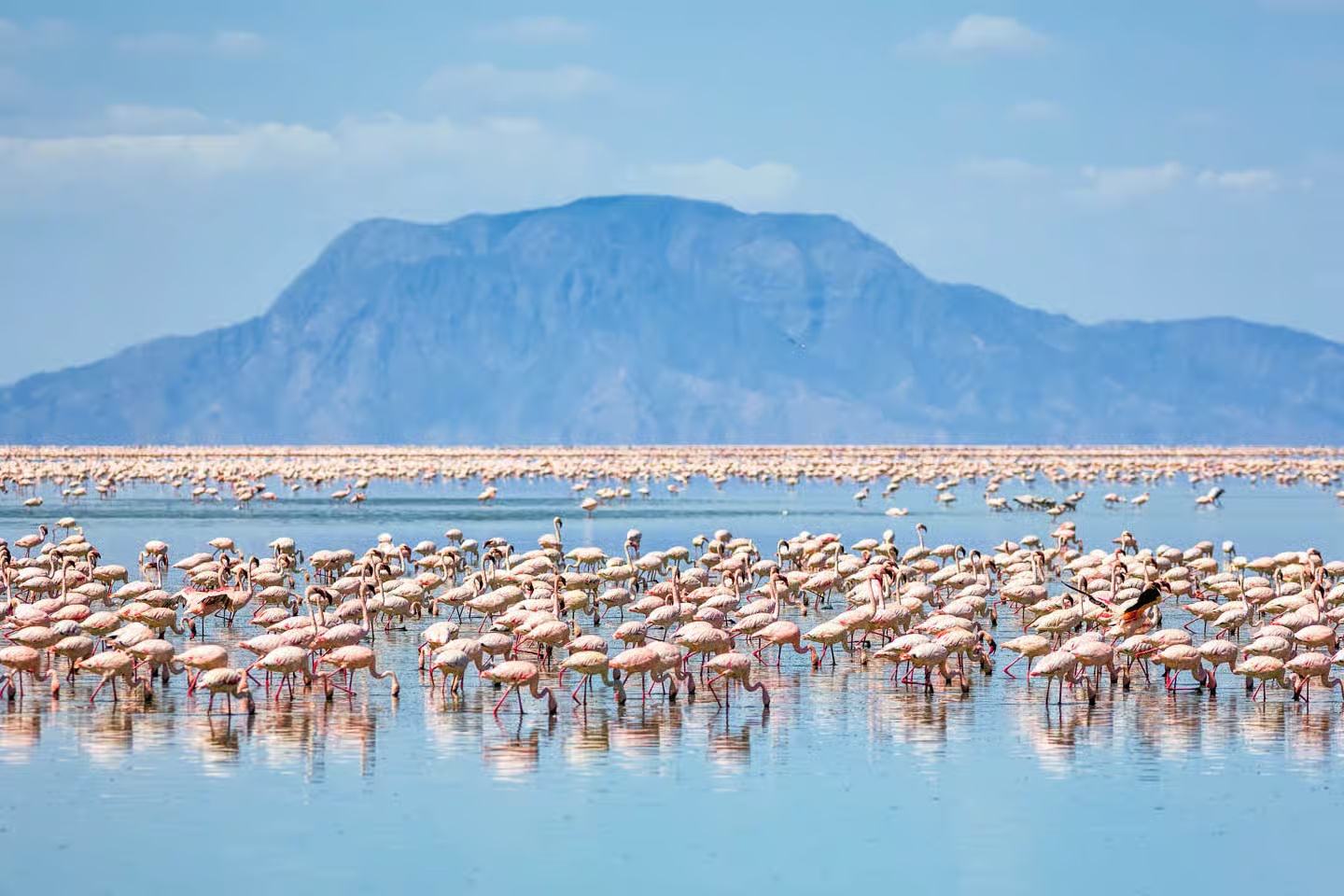
Roughly two and a half million lesser flamingo, essentially the entire East African population, depend on this one lake to breed. They nest on mud cones out on the caustic flats, protected by water that no predator will cross. It is a strategy of extraordinary boldness, and it means that if Natron were to be lost — to a soda-ash plant, to a hydroelectric scheme upstream, to changes in water flow — the species would face an existential problem across the whole region. There is nowhere else for them to go.
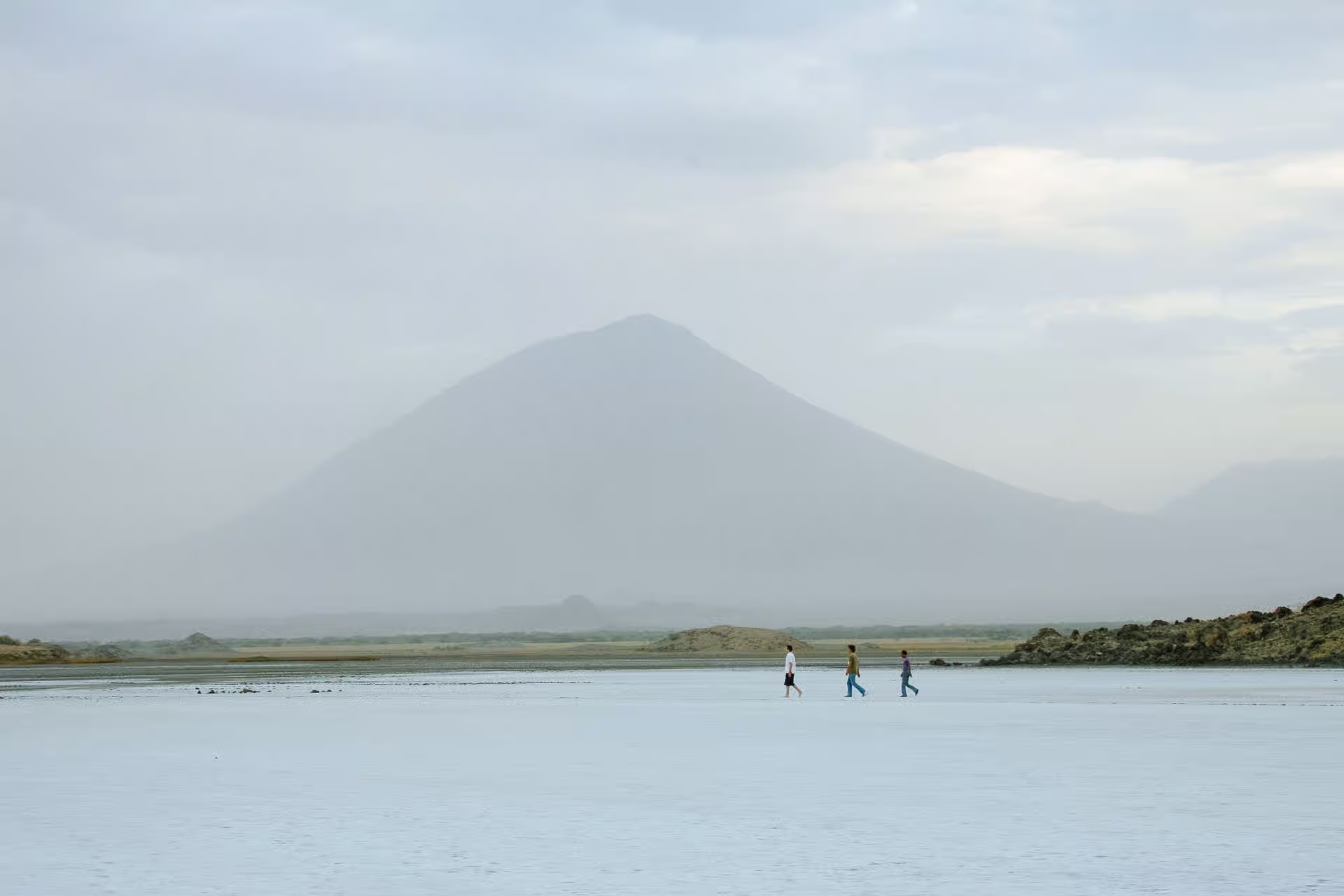
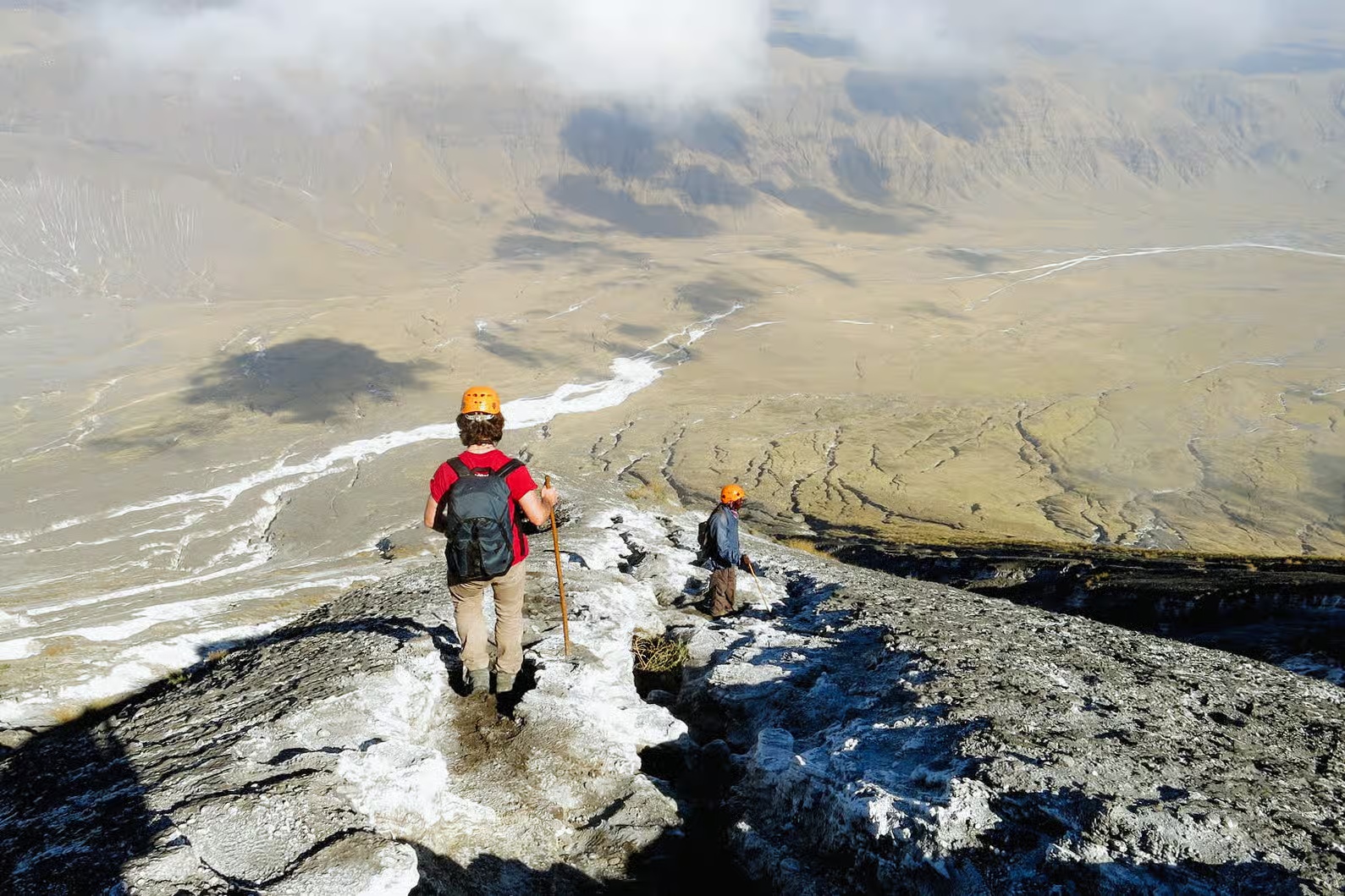
Standing over the lake is Ol Doinyo Lengai, the Mountain of God to the Maasai and the only active volcano on earth that erupts natrocarbonatite lava — a bizarre, low-temperature magma that flows black and cool at around 500°C, then weathers white within hours, giving the summit its snow-dusted look under equatorial sun. Climbing it is a serious undertaking: a night ascent starting around midnight, roughly five to seven hours of relentlessly steep scree and ash, in order to reach the crater rim at 2,962 metres at sunrise. It is not technical, but it is genuinely hard, and the reward is the Rift Valley laid out below with Natron burning red in the first light and, on clear mornings, Kilimanjaro on the horizon.
The area's other set piece is quieter and just as memorable: the Ngare Sero gorge, a slot canyon of smooth grey rock behind the village, where you wade upstream through cool, clear water with a Maasai guide to reach a series of waterfalls and plunge pools. After the furnace of the lake shore it is one of the great pleasures of northern Tanzania. Nearby, at Engare Sero, are more than four hundred human footprints preserved in volcanic ash and dated between roughly 5,000 and 19,000 years old — the largest collection of ancient human footprints found anywhere in Africa.
Natron is not a game-viewing destination in the conventional sense and travellers should come knowing that. There are no lion prides here, no big herds. What there is instead is landscape at a scale that dwarfs the parks, Maasai country that feels genuinely remote, wildebeest and zebra passing through on the plains between Natron and the Serengeti, gerenuk and dik-dik in the scrub, golden jackal, and a bird list that includes flamingo in absurd numbers, Chestnut-banded plover, and raptors riding the escarpment.
Photographers come for the light and the abstraction. The lake's crystallised salt flats, mineral swirls and dried mud patterns are as much a graphic-design subject as a landscape one, and the classic aerial images — those red and white marbled patterns — are among the most recognisable photographs taken in Africa.
Getting here is part of the story. The drive north from the Ngorongoro highlands takes four to five hours on rough track through Maasai country of extraordinary emptiness, past Ol Doinyo Lengai growing steadily larger in the windscreen. From Natron you can continue west into the northern Serengeti, making it a superb, wild alternative to the standard circuit route.
Accommodation is limited and refreshingly unpretentious — tented camps under acacias by the Ngare Sero river, cooled by shade and water rather than air-conditioning. This is not the northern circuit's luxury end, and travellers who come expecting it will be disappointed. Come instead for adventure, silence, hard light and one of the strangest, most beautiful places on the continent.
Wildlife & nature
Lake Natron's defining wildlife event is the breeding of lesser flamingo — around two and a half million birds, effectively the entire East African population, dependent on this single lake. Greater flamingo are also present, along with chestnut-banded plover, avocet, blacksmith lapwing and a strong list of Rift Valley waterbirds.
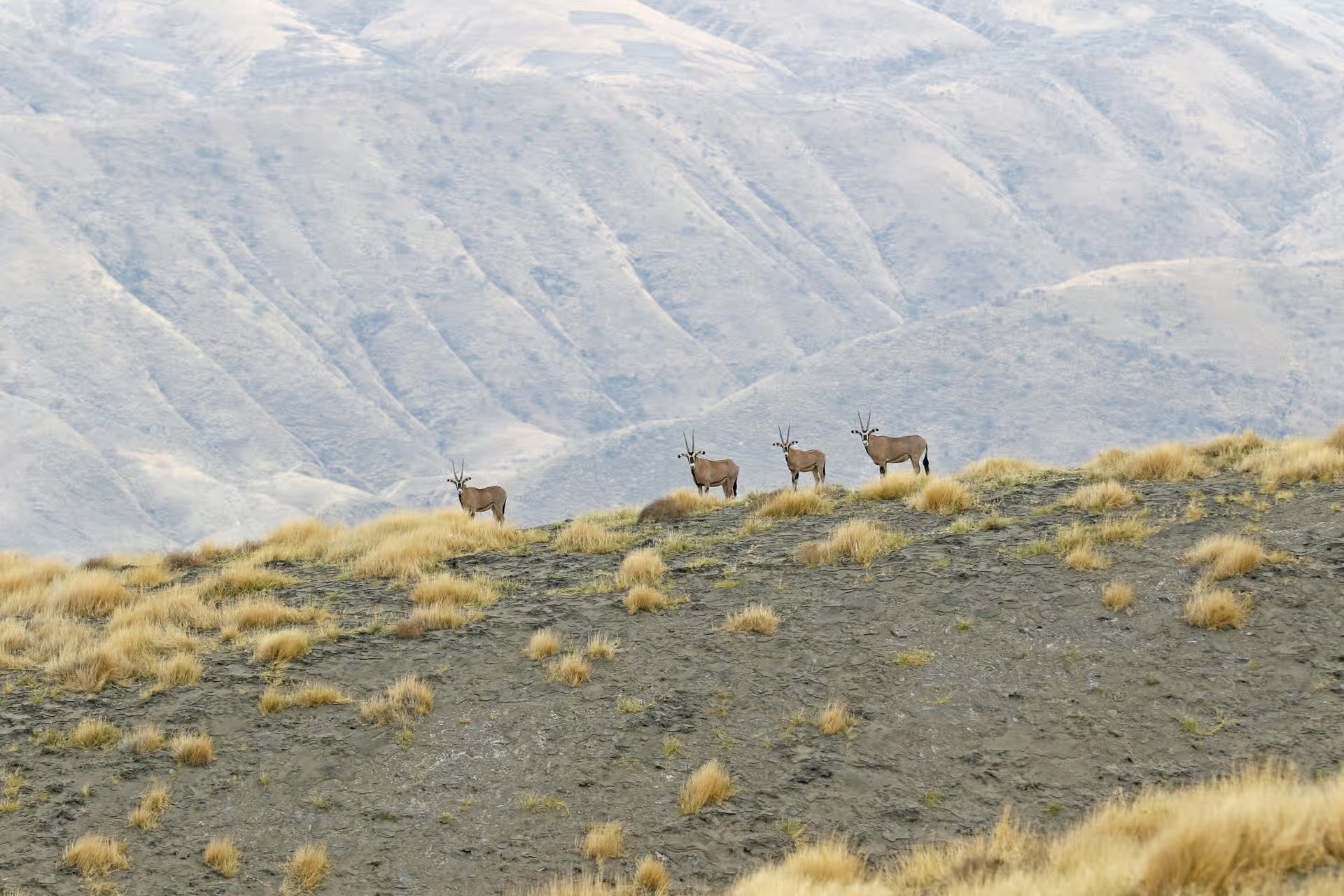
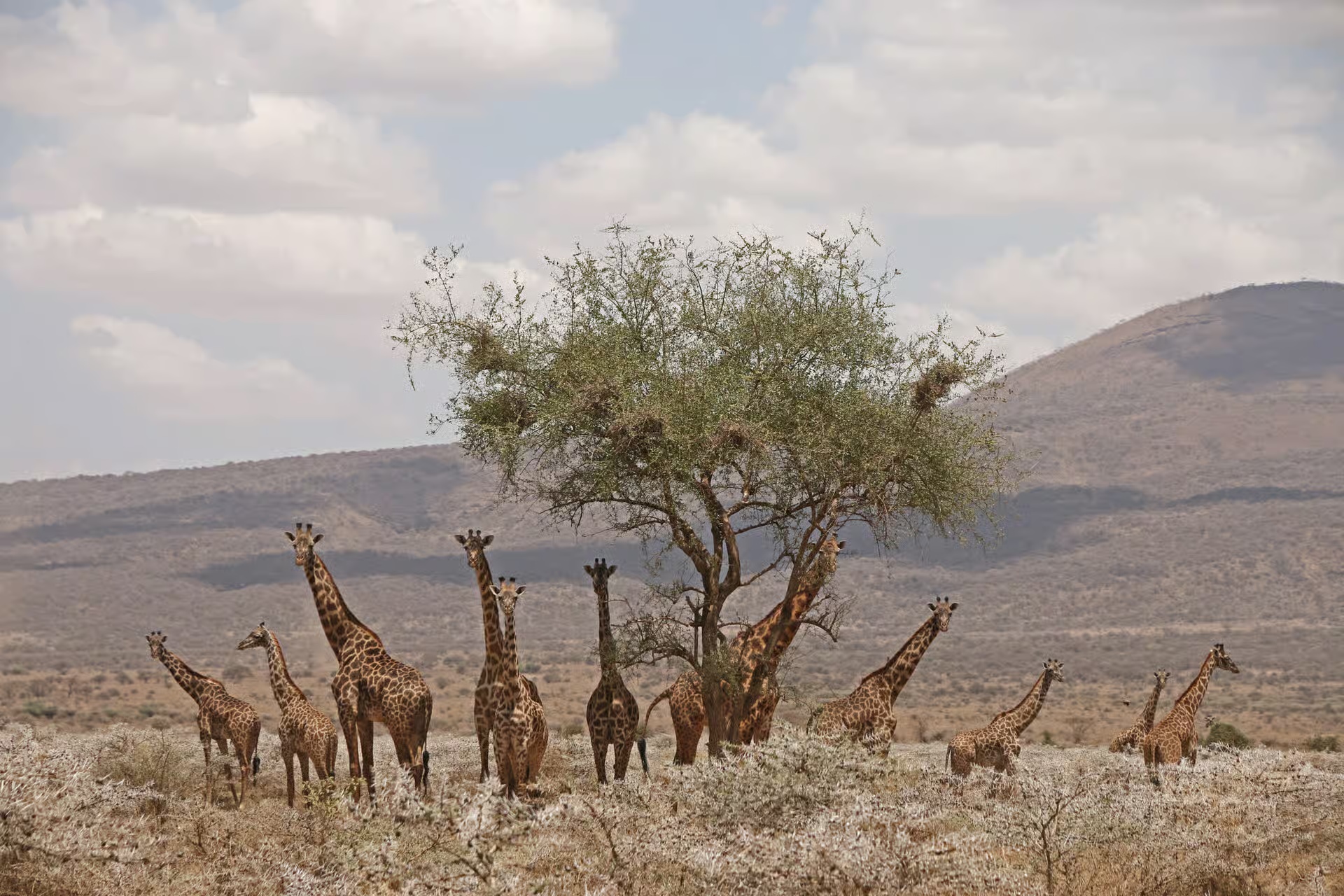
On land the species are those of hot, dry country: gerenuk, lesser kudu, Kirk's dik-dik, Grant's gazelle, golden and black-backed jackal, striped hyena and the occasional leopard in the gorges. Zebra and wildebeest cross the plains between Natron and the Serengeti seasonally. Ol Doinyo Lengai's slopes support almost nothing, which is part of their strange appeal. Around the Ngare Sero springs, the vegetation changes entirely — fig trees, doum palms and a green ribbon of life that the whole area depends on.
Signature experiences
- Ol Doinyo Lengai night climb — a midnight start, five to seven hours of steep ash, and sunrise on the crater rim of the world's only natrocarbonatite volcano.
- Flamingo walks on the lake shore with a Maasai guide, at first light when the heat is bearable.
- Ngare Sero gorge and waterfalls — wading a slot canyon to reach cool plunge pools.
- Engare Sero footprints — over 400 preserved human footprints in volcanic ash, the largest such site in Africa.
- Maasai village and boma visits arranged through community agreements.
- Scenic flights over the lake for the celebrated red-and-white mineral abstractions.
- Escarpment sundowners above the Rift, with the lake changing colour hour by hour.
- The overland route to the northern Serengeti — one of the wildest drives in East Africa.
Photography guide
Natron is a photographer's destination first. Shoot the lake shore at sunrise, when the flamingo are active, the heat haze has not yet set in and the light comes low across the flats. Midday, counterintuitively, is when the salt crusts and mineral patterns look most graphic — go abstract and shoot straight down or use a long lens to compress the surface. Sunset from the escarpment above camp gives you Ol Doinyo Lengai in silhouette.
The aerial images that made the lake famous require a scenic flight, which we can arrange from Arusha or as a fly-over en route to the Serengeti; drone use requires permits and is restricted, so plan on a light aircraft rather than your own drone. On Lengai, keep gear minimal — you will be climbing steep ash in the dark. Night skies here are exceptional, with almost no light pollution: a fast wide lens and a stable rock will produce Milky Way images over the volcano that need no processing tricks.
Where to stay
Camps at Natron are small, simple and well placed — tented properties beneath acacias along the Ngare Sero river, where shade, running water and a plunge pool matter far more than thread count. Expect character rather than opulence: this is one corner of northern Tanzania where the landscape, not the lodge, is the luxury. We select camps for their position near the gorge, the quality of their Maasai guiding teams, and how well they handle the heat.
How long to stay
- 1 night — enough for the lake shore at sunrise and the waterfall gorge, and the most common stay.
- 2 nights — our recommendation: adds the Engare Sero footprints, a village visit and an unhurried second dawn at the lake.
- 3 nights — necessary if you intend to climb Ol Doinyo Lengai, since the descent day is a write-off.
- Longer combinations — Natron works beautifully as the wild link between Ngorongoro and the northern Serengeti, adding two or three days to a classic circuit.
Nearby destinations
Ngorongoro lies four to five hours south on rough but scenic track. The northern Serengeti can be reached overland westward, one of the wildest drives available in Tanzania. Lake Eyasi and its Hadzabe communities are further south for travellers building a cultural route, and Arusha and Kilimanjaro are a long day's drive east.
Conservation & community
Lake Natron is a Ramsar Wetland of International Importance and the sole regular breeding site for East Africa's lesser flamingo, which makes its protection a matter of continental significance. Proposals for a soda-ash extraction plant and for hydroelectric development on the Ewaso Ng'iro river, which feeds the lake, have both been contested by conservationists; the flamingo's dependence on very specific water levels and salinity leaves no margin for error.
The land around the lake is Maasai community land, not a national park, and tourism revenue goes directly to villages through camp leases, guiding work and community fees. Travel here with that in mind: use local Maasai guides for every walk and climb, never approach nesting flamingo — disturbance can cause colony abandonment — keep vehicles off the crust of the flats, and buy beadwork directly from the women's cooperatives rather than at roadside stops.
Natron rewards travellers who want the strange over the comfortable. Give it two nights, walk the shore at dawn, swim in the gorge at noon, and let our team show you the Rift Valley at its most elemental.
Lake Natron, in short.
The essentials our specialists check first when shaping a private itinerary.
Good to know.
- Location
- Arusha Region, northern Tanzania, in the Rift Valley near the Kenyan border
- Size
- Lake surface varies with rainfall, up to c. 1,040 km²; depth rarely exceeds 3 m
- Elevation
- Lake c. 600 m; Ol Doinyo Lengai 2,962 m
- Getting there
- 4–5 hours by 4x4 from the Ngorongoro highlands or c. 5–6 hours from Arusha on rough track; airstrips serve the area, and an overland route continues west to the northern Serengeti
- Permits
- Community and conservation fees apply, along with mandatory local guides for the lake shore, gorge and Ol Doinyo Lengai; all are included in your itinerary
- Currency
- Tanzanian shilling, with US dollars accepted at camps. Carry cash for community fees, guides and beadwork purchases — there are no card facilities.
Why visit Lake Natron?
The world's most important flamingo breeding site
Around 2.5 million lesser flamingo — effectively the whole East African population — breed here and nowhere else.
Ol Doinyo Lengai
The Mountain of God: the only active volcano on earth erupting natrocarbonatite lava, climbed overnight to reach the crater rim at sunrise.
A blood-red soda lake
Caustic, shallow water coloured by salt-loving microorganisms, producing some of the most striking aerial photographs in Africa.
Ngare Sero waterfall gorge
Wade a smooth-walled slot canyon to cool plunge pools — the perfect antidote to the heat of the lake shore.
Engare Sero footprints
More than 400 preserved human footprints in volcanic ash, dated between roughly 5,000 and 19,000 years old.
Rift Valley at its most raw
Escarpments, ash plains and volcanic country on a scale that makes the national parks feel domesticated.
Genuine Maasai country
Community land rather than a national park, where guiding, camps and fees support local villages directly.
Exceptional night skies
Almost no light pollution, with the Milky Way rising directly over the volcano.
Species you may encounter.
Wildlife commonly associated with the region. Sightings are always wild and never guaranteed.
Lesser flamingo
The lake's reason for global importance — millions gather, nesting on mud cones out on the caustic flats.
Greater flamingo
Present in smaller numbers alongside their lesser cousins.
Chestnut-banded plover
A Rift Valley soda-lake specialist, easily found on the shoreline.
Gerenuk
The long-necked browsing gazelle of hot, dry country, common in the scrub.
Kirk's dik-dik
Tiny paired antelope in the acacia thickets around camp.
Lesser kudu
Shy and beautifully striped, favouring dense bush near the gorges.
Golden jackal
Frequently seen crossing the ash plains at dawn.
Striped hyena
Rare and nocturnal, occasionally encountered on night transfers.
Zebra and wildebeest
Cross the plains between Natron and the Serengeti on seasonal movements.
Augur buzzard
Rides the escarpment thermals above the lake all day.
Experiences in Lake Natron.
The right time for Lake Natron.
Peak: June – October · Flamingo breeding is water-dependent, typically August – October
Hot and mostly dry between rains; flamingo numbers variable and roads generally passable.
Very hot with good access; excellent for photography if you can manage the heat.
Rains begin; the approach tracks deteriorate quickly and river crossings can flood.
Long rains. Access is often difficult and some camps close.
Wet early, improving late; roads remain unreliable through much of the month.
Dry season opens with firm tracks and slightly cooler conditions.
Dry, accessible and the best month for climbing Ol Doinyo Lengai.
Peak flamingo season in most years, with excellent access and dramatic light.
Hot, dry and reliable; strong flamingo numbers and superb salt-flat patterns.
Extremely hot but excellent for photography and still very accessible.
Short rains arrive; the landscape freshens and tracks begin to soften.
Hot with intermittent showers; access is usually still fine.
- Altitude
- Lake c. 600 m; Ol Doinyo Lengai summit 2,962 m
- Average temperature
- Frequently 35–40°C by day; surface temperatures can exceed 40°C
- Dry season
- June – October
- Rainy season
- November – December and March – May
Lake Natron, in pictures.
Lake Natron on the map.
The park and the places around it — nearby destinations, areas and camps we work with.
Combine Lake Natron with…
Ngorongoro Conservation Area & Crater
The world's greatest natural wildlife amphitheatre.
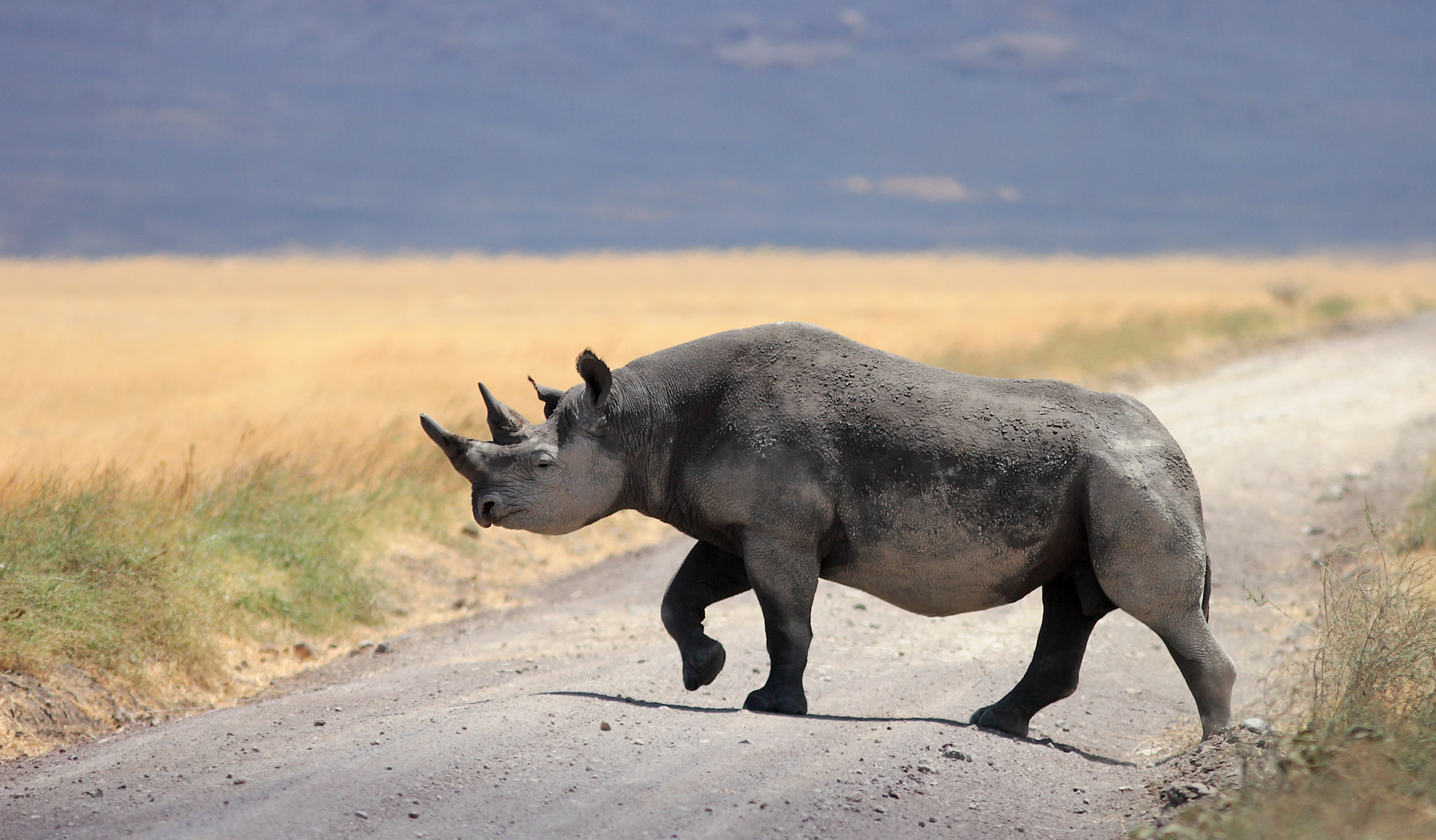
A UNESCO World Heritage Site where 260 square kilometres of crater floor hold lion, elephant, buffalo, leopard and one of Africa's last populations of black rhino — all beneath a 600-metre volcanic rim shared with Maasai herders.
Serengeti National Park
The endless plains.
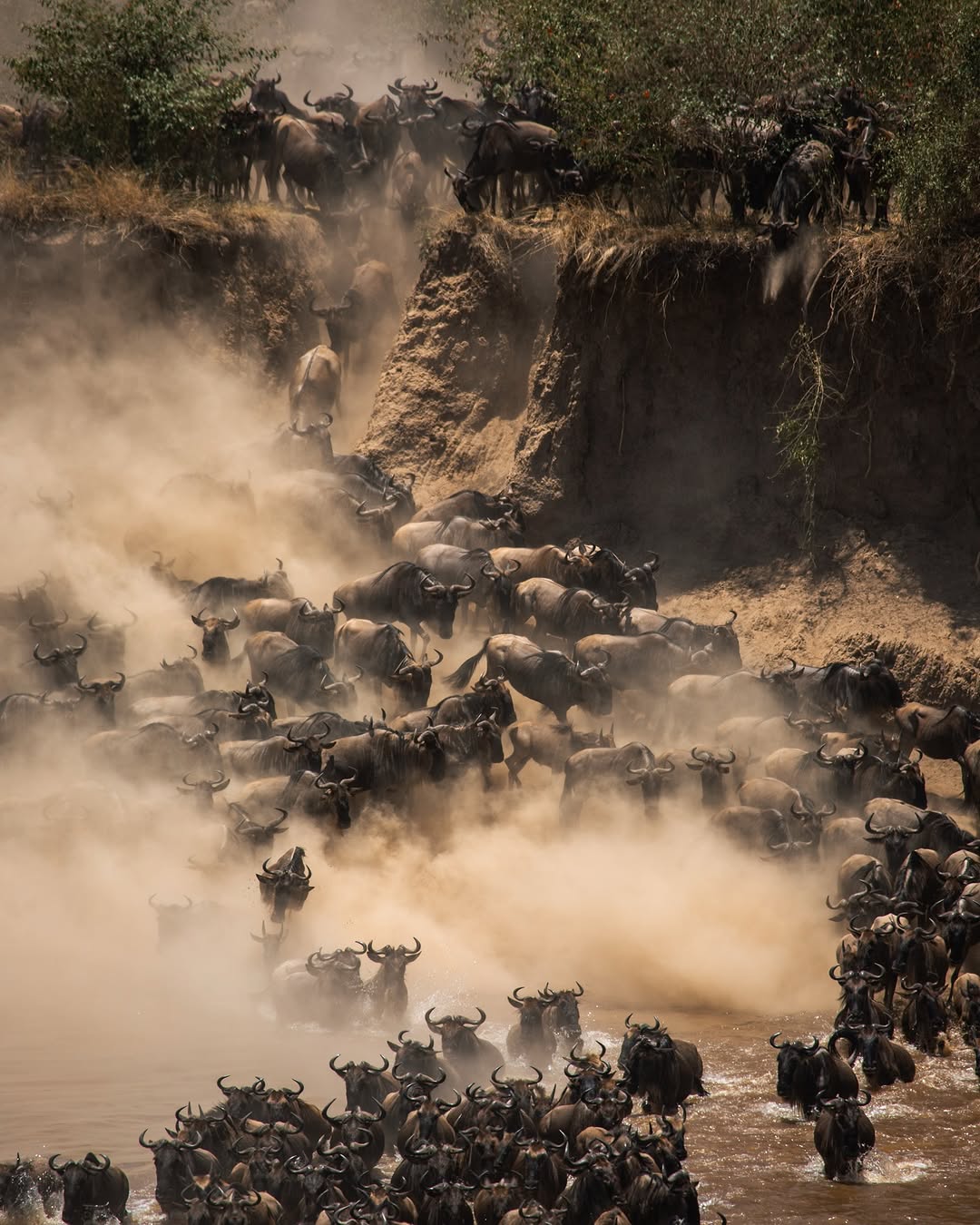
Fourteen thousand square kilometres of grassland, kopjes and riverine forest carrying the largest land migration on earth — and, outside the migration, the densest population of big cats in Africa.
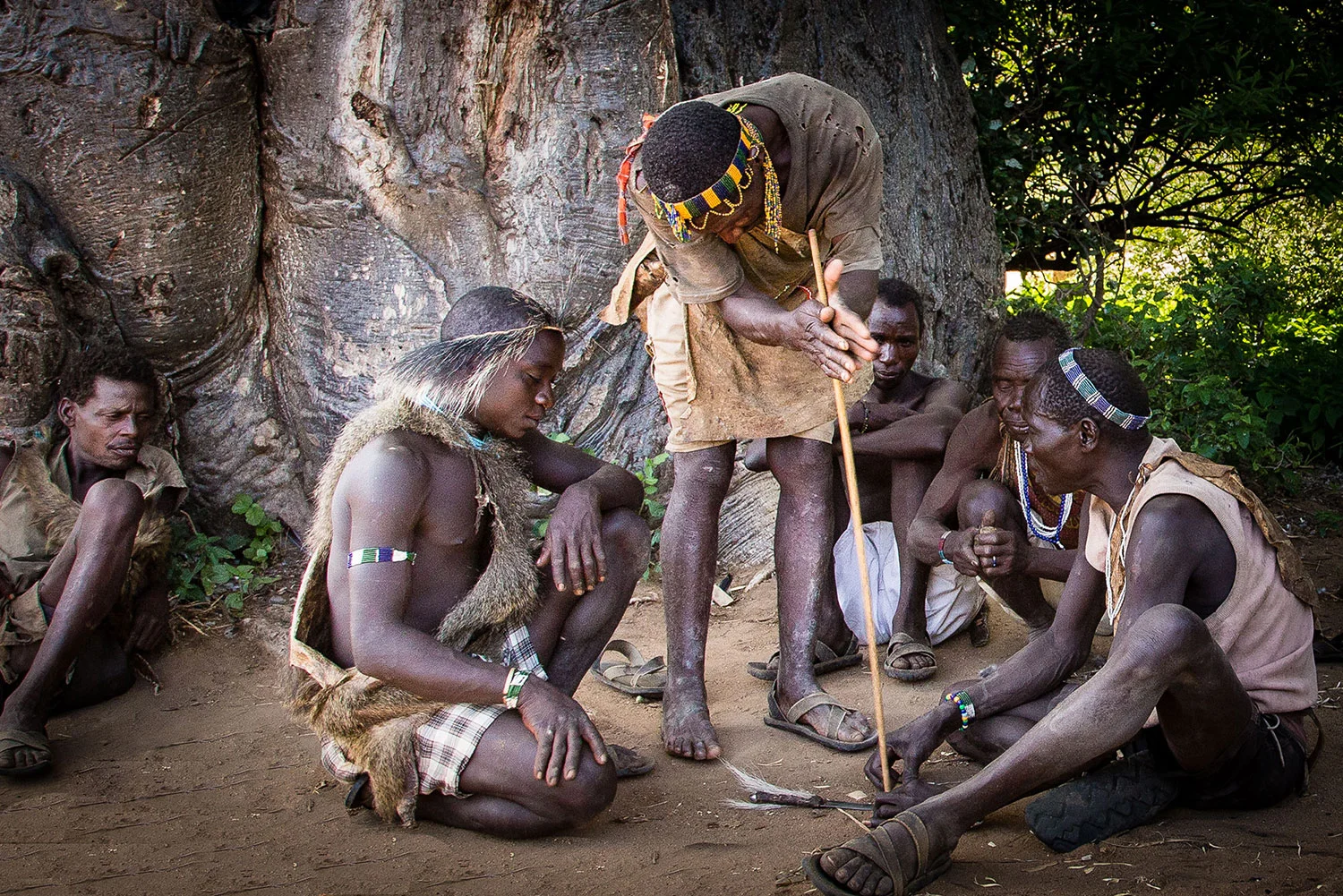
Lake Eyasi
Tanzania's most humbling half day.
A shallow seasonal soda lake beneath the Ngorongoro highlands, and home to the Hadzabe — one of the last hunter-gatherer societies on earth — alongside the Datoga pastoralists and blacksmiths.
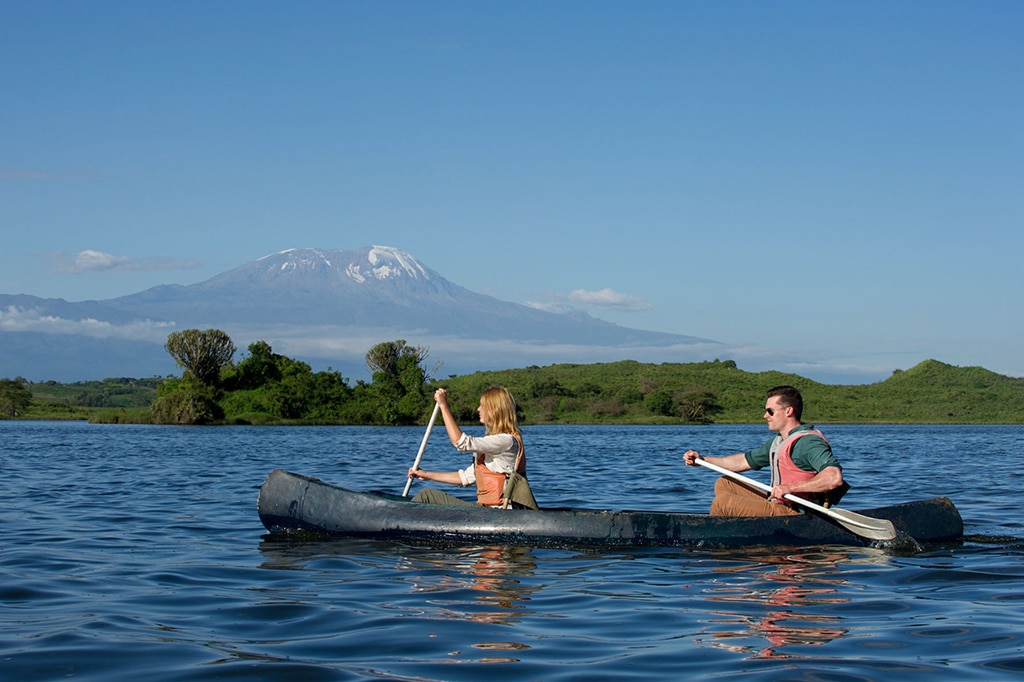
Arusha National Park
The most underrated hour from Kilimanjaro Airport.
A compact, gloriously varied park at the foot of Mount Meru — montane forest, crater grasslands and the alkaline Momella Lakes, with walking safaris, canoeing and colobus monkeys just forty minutes from Arusha.
Planning your visit.
Practical guidance from our on-the-ground team, tailored to this destination.
Packing
Lightweight long sleeves and trousers for sun protection, a wide-brimmed hat, high-factor sunscreen and far more water than you think you need. Sturdy shoes with grip for the gorge, and for Lengai a headtorch, gloves, trekking poles and a warm layer for the summit before dawn.
Health
Heat is the principal risk — daytime temperatures frequently exceed 38°C. Hydrate constantly, add electrolytes and avoid activity between 11am and 4pm. Lake water is caustic and can burn skin and damage eyes: never wade in the lake itself, and rinse immediately if splashed. Malaria prophylaxis is advisable.
Safety
Never walk on the lake surface — the crust conceals hot, caustic mud. Climb Ol Doinyo Lengai only with a licensed local guide; the ascent is steep, loose and unforgiving, and the mountain is active. Flash floods can affect gorge routes after rain upstream.
Photography
Sunrise on the shore for flamingo, midday for graphic salt-crust abstracts, and sunset from the escarpment for Lengai in silhouette. Aerial images require a scenic flight — drone use needs permits and is restricted here. Night skies are outstanding; bring a fast wide lens.
Connectivity
Mobile coverage is minimal to non-existent and camps run on solar power with limited charging. Treat Natron as genuinely offline and enjoy it.
Family advice
Best suited to older children and teenagers who can handle heat and rough roads. The waterfall gorge is a great family activity; the Ol Doinyo Lengai climb is unsuitable for under-16s and demanding for most adults.
Responsible tourism
This is Maasai community land. Use local guides for every activity, never approach nesting flamingo — disturbance can cause colonies to abandon — keep vehicles off the salt crust, buy beadwork directly from women's cooperatives, and carry every piece of waste out with you.
Frequently asked.
Why is Lake Natron red?
Salt-loving microorganisms, chiefly cyanobacteria, thrive in the highly alkaline water and produce red and pink pigments. The effect is most striking from the air and when water levels are low.
Can you swim in Lake Natron?
No. The water is caustic, can reach pH 12 and exceeds 40°C at the surface — it burns skin and eyes. Swim instead in the freshwater plunge pools of the Ngare Sero gorge.
When is the best time to see flamingos at Lake Natron?
Numbers are usually highest between August and October, but breeding depends entirely on water levels and salinity in a given year, so it can never be guaranteed.
How hard is it to climb Ol Doinyo Lengai?
Very hard, though not technical. Expect a midnight start, five to seven hours of relentlessly steep loose ash and scree to the crater rim at 2,962 metres, and a punishing descent. Good fitness and a licensed local guide are essential.
How do you get to Lake Natron?
By 4x4, typically four to five hours north from the Ngorongoro highlands or five to six from Arusha on rough track. Airstrips serve the area, and an overland route continues west into the northern Serengeti.
How many days do you need at Lake Natron?
Two nights is our recommendation — lake shore at dawn, the waterfall gorge, the ancient footprints and a village visit. Add a third night if you plan to climb Ol Doinyo Lengai.
Is Lake Natron a national park?
No. It is Maasai community land and a Ramsar Wetland of International Importance, so community fees and local guides apply rather than national park entry.
Is there big game at Lake Natron?
Not in the conventional sense. Expect gerenuk, dik-dik, lesser kudu, jackal and outstanding birdlife rather than lion and elephant. Come for the landscape and the flamingo.
How hot is Lake Natron?
Daytime temperatures frequently reach 35 to 40°C and the lake surface can exceed 40°C. Activities are planned around dawn and late afternoon for good reason.
Are the Engare Sero footprints worth visiting?
Yes — over 400 preserved human footprints in volcanic ash, dated between roughly 5,000 and 19,000 years old, and the largest collection of ancient human footprints in Africa.
Can you visit Lake Natron on the way to the Serengeti?
Yes, and it is one of the most rewarding routes in Tanzania. The overland drive west from Natron into the northern Serengeti is wild, empty and unforgettable in a well-equipped 4x4.
Can I fly a drone at Lake Natron?
Drone use requires permits and is restricted. The famous aerial images are best achieved on a chartered scenic flight, which we can arrange.
Is Lake Natron suitable for families?
Better for older children and teenagers. Heat and long rough drives are demanding for young children, though the waterfall gorge is a highlight for all ages.
Related reading.
Guides that pair well with a journey to this destination.
Ready to experience Lake Natron?
Tell us what draws you here and we'll shape a private journey around the places, experiences and pace that matter to you.