
Mount Kenya
“Glaciers on the equator, and a trek that ends on a 4,985-metre peak you can walk to.”
An equatorial glaciated massif rising to 5,199 m, with trekking peaks, giant heather moorland and the forested foothills of the Laikipia plateau.
About Mount Kenya.
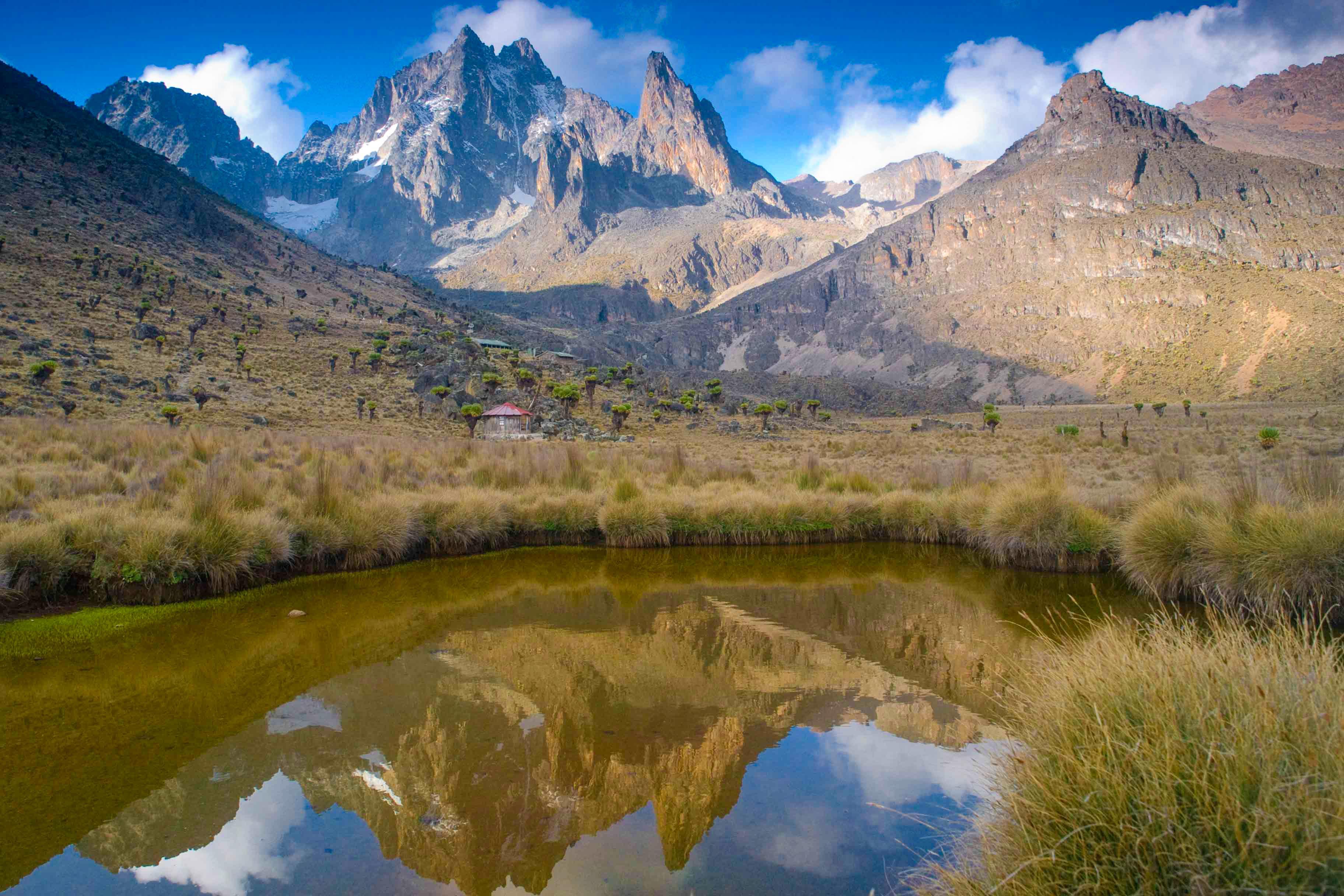
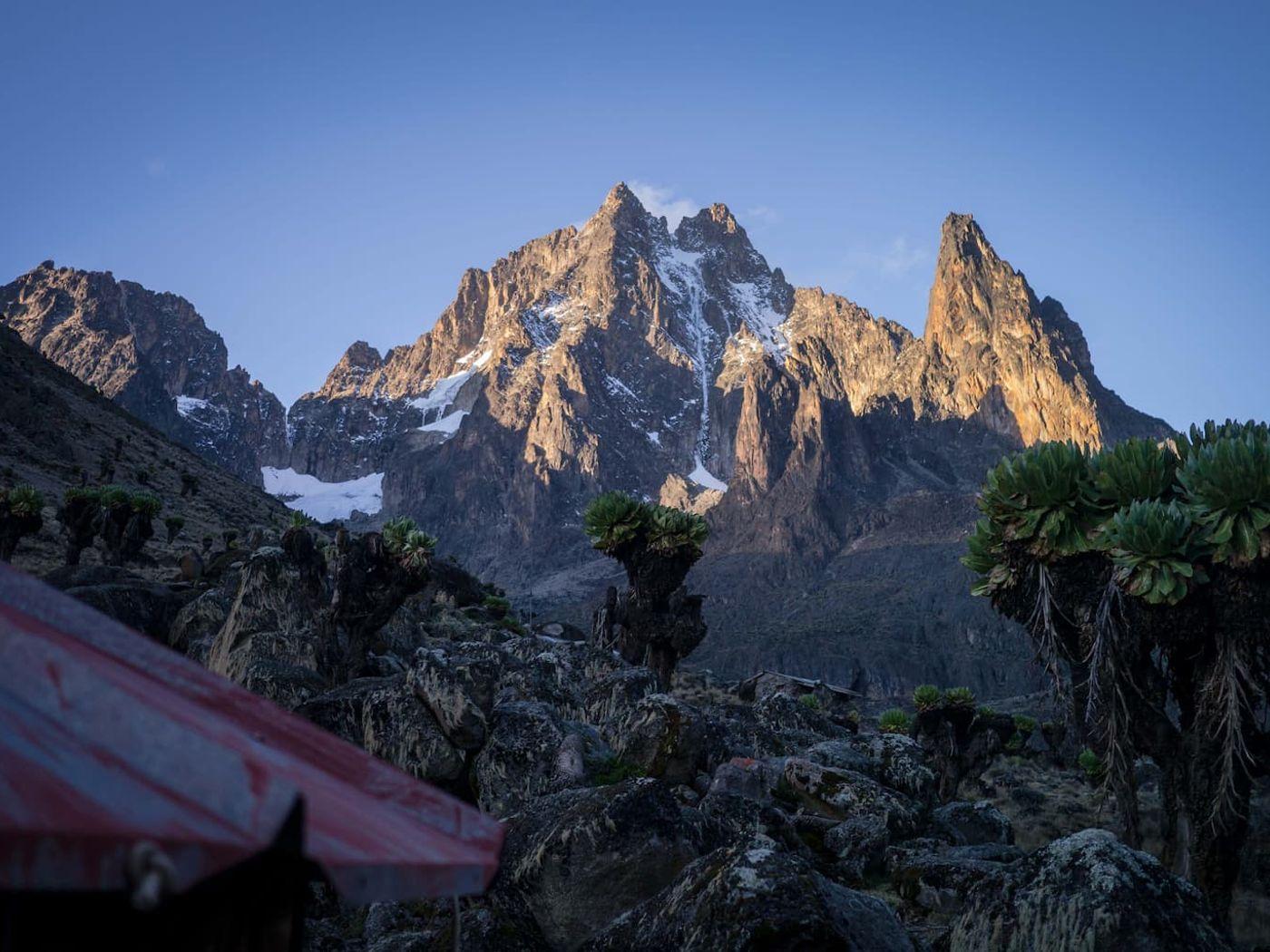
Mount Kenya is the second-highest mountain in Africa and, for most people, the more interesting climb. Its true summits — Batian at 5,199 m and Nelion at 5,188 m — are technical rock climbs. Point Lenana, at 4,985 m, is a trekking peak, which means a fit walker with the right acclimatisation can stand within touching distance of the summits without ever using a rope.
The mountain is a UNESCO World Heritage Site and an extraordinary botanical progression: farmland and bamboo, then dense montane forest, then giant heather, then the surreal Afro-alpine zone of giant lobelia and groundsel, and finally glacier and rock. Three main routes lead to Point Lenana. Sirimon is the driest and best for acclimatisation, Chogoria is the most scenic with its gorges and tarns, and Naro Moru is the fastest and least forgiving. Most trekkers take four to five days, and the strongest itineraries go up Sirimon and down Chogoria.
Altitude, not difficulty, is the deciding factor. Point Lenana is a walk, but it is a walk at nearly five thousand metres, and rushing it is the single most common reason people fail. Add a day rather than a supplement.
The foothills are worth attention in their own right. Elephant, buffalo and bongo occur in the forest belt, colobus are common, and the mountain forms the backdrop to the Laikipia conservancies immediately to the north.
Mount Kenya, in short.
The essentials our specialists check first when shaping a private itinerary.
Good to know.
- Location
- Central Kenya, straddling the equator, around 175 km north-east of Nairobi.
- Altitude
- The main risk. Ascend slowly, hydrate, and be willing to add a day rather than push through symptoms.
- Trekking summit
- Point Lenana, 4,985 m — a walk, not a climb. Batian and Nelion are technical.
- Duration
- Four to five days for Point Lenana; five is strongly recommended for acclimatisation.
- Routes
- Sirimon (driest, best acclimatisation), Chogoria (most scenic), Naro Moru (fastest, hardest on the body).
- Fitness
- Good general fitness and multiple consecutive days of walking. No technical skills needed for Lenana.
- Gear
- Four-season sleeping bag, insulated jacket, waterproof shell, broken-in boots, gloves, hat and headtorch.
- Support
- Licensed guide required, with porters and cook. Applicable park, camping and support costs are detailed in your quotation.
- Combines with
- Laikipia conservancies, Samburu or the Aberdares, all within reach of the foothills.
Why visit Mount Kenya?
Point Lenana
A 4,985 m summit reachable on foot, usually gained at sunrise.
Chogoria route
The most beautiful approach, past Lake Michaelson and the Gorges Valley.
Sirimon route
The driest ascent and the best profile for acclimatisation.
Giant lobelia and groundsel
Afro-alpine plants found nowhere else, on the moorland above 3,500 m.
Equatorial glaciers
Shrinking ice fields within sight of the summit route.
Forest wildlife
Elephant, buffalo, colobus and, rarely, bongo in the lower forest belt.
Species you may encounter.
Wildlife commonly associated with the region. Sightings are always wild and never guaranteed.
African elephant
Resident in the forest belt; encounters on the lower trail sections require guide caution.
Cape buffalo
Common in the bamboo and forest zone, and the main safety consideration on foot.
Black-and-white colobus
Abundant in the montane forest on all approaches.
Rock hyrax
Very common and confiding around the high camps.
Mountain bongo
Critically endangered forest antelope; present but effectively never seen.
Scarce swift and alpine chat
High-altitude specialists on the moorland and rock.
Giant forest hog
Occasional in forest clearings, mostly at dawn and dusk.
Experiences in Mount Kenya.
The right time for Mount Kenya.
Best trekking: January – February, July – October · Avoid: April – May, November
Dry, stable and clear — one of the two best trekking windows.
Driest month; excellent conditions on all routes.
Long rains begin; trails deteriorate quickly.
Wettest month; poor visibility and slippery descents.
Still wet; high camps cold and cloud-bound.
Drying out; cold but increasingly viable.
Cold, dry and clear; good trekking conditions.
Peak trekking season with stable weather.
Dry and clear; excellent summit conditions.
Generally dry early, with cloud building late in the month.
Short rains; wet and often cloud-covered.
Improving through the month; festive treks are popular.
- Altitude
- Summit 5,199 m (Batian); Point Lenana 4,985 m
- Average temperature
- -10 to 20°C depending on altitude; sub-zero at high camps
- Dry season
- January – February and July – October
- Rainy season
- March – June and November – December
Combine Mount Kenya with…
Maasai Mara National Reserve
Kenya's greatest wildlife theatre.
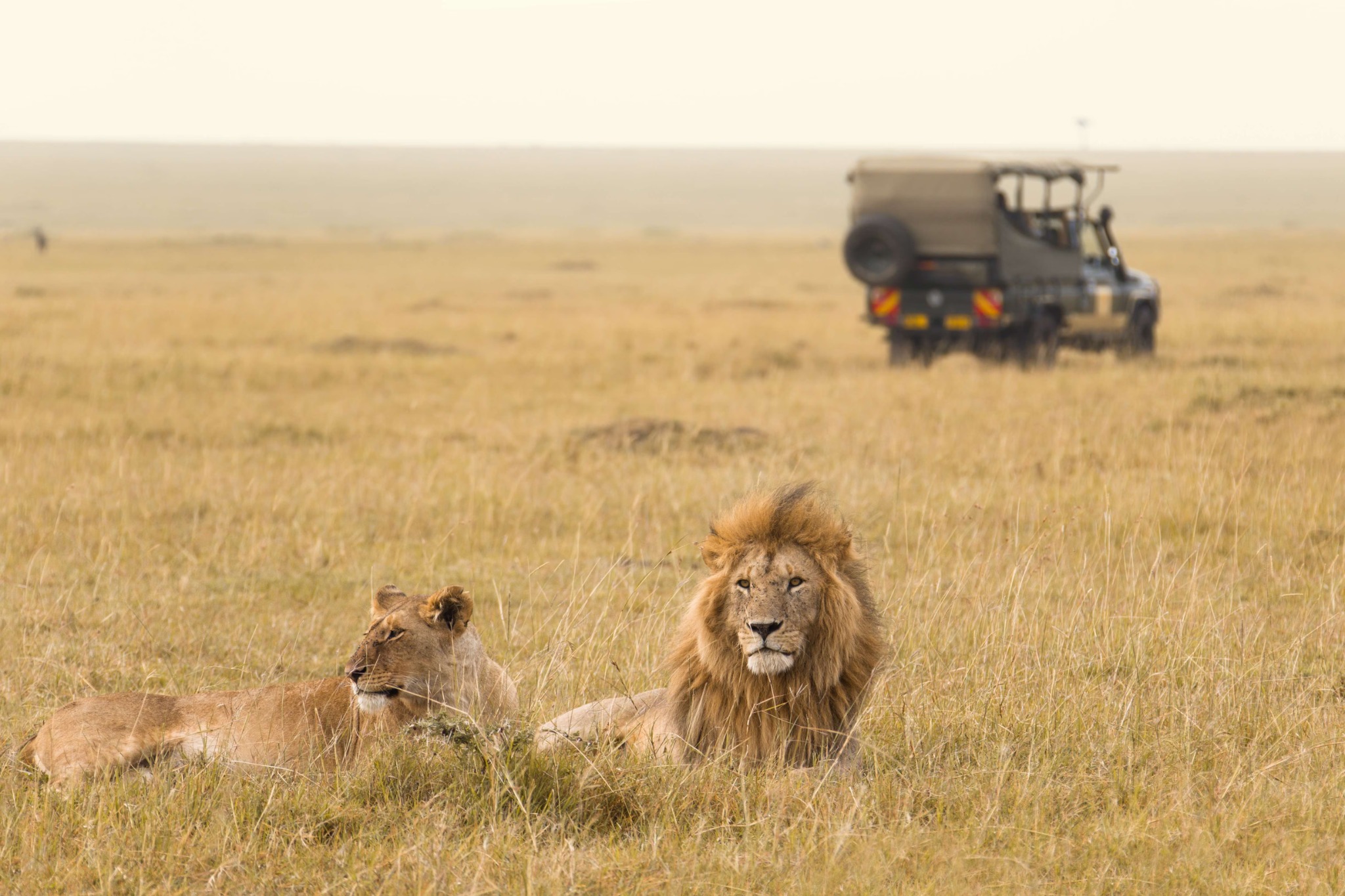
Rolling grassland on the Kenyan side of the Serengeti ecosystem, holding one of Africa's strongest lion populations and the Mara River crossings from July to October.
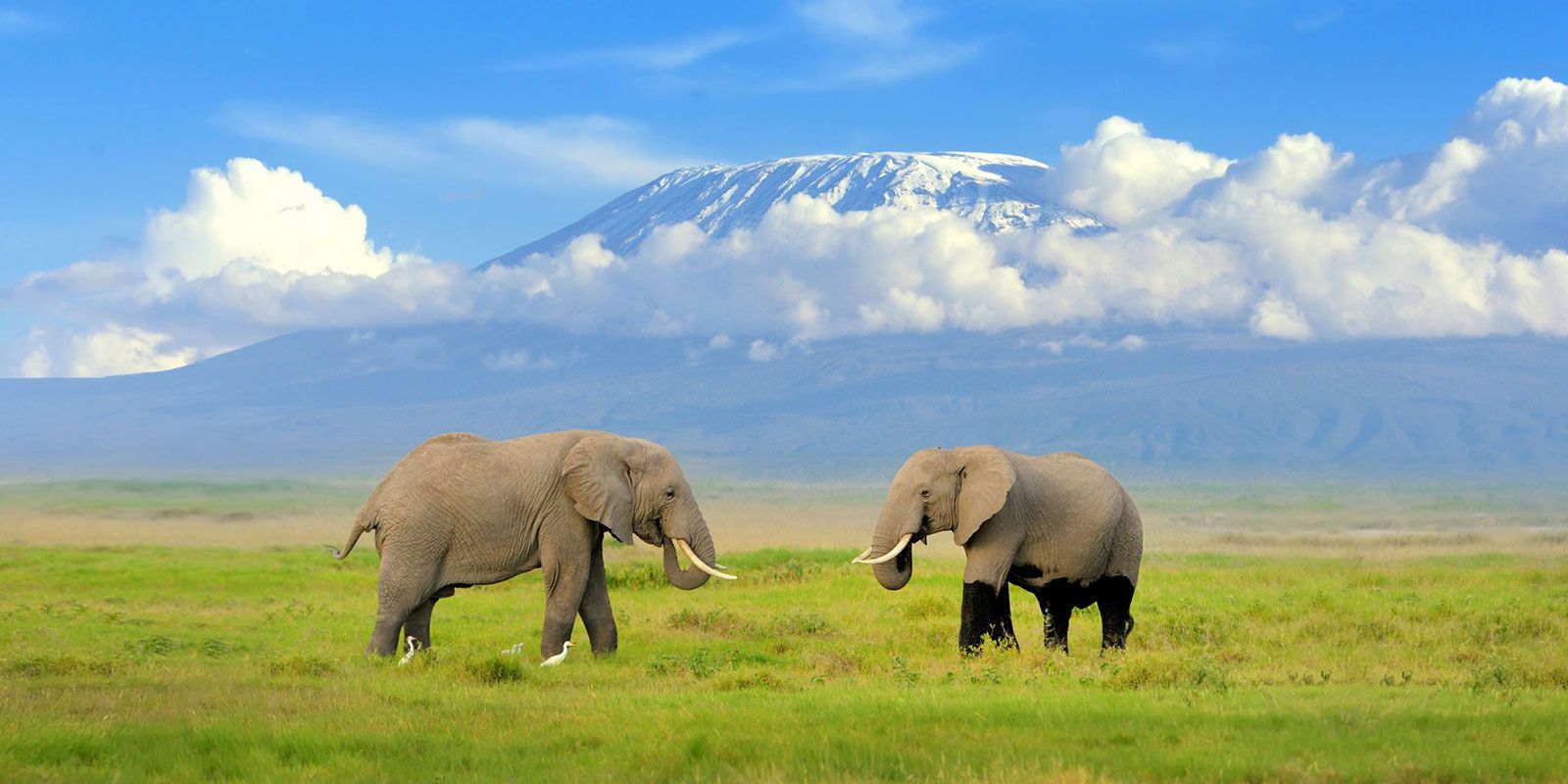
Amboseli National Park
Elephants beneath Kilimanjaro.
Kenya's classic elephant park, set on dusty plains and swamps beneath the north face of Mount Kilimanjaro.
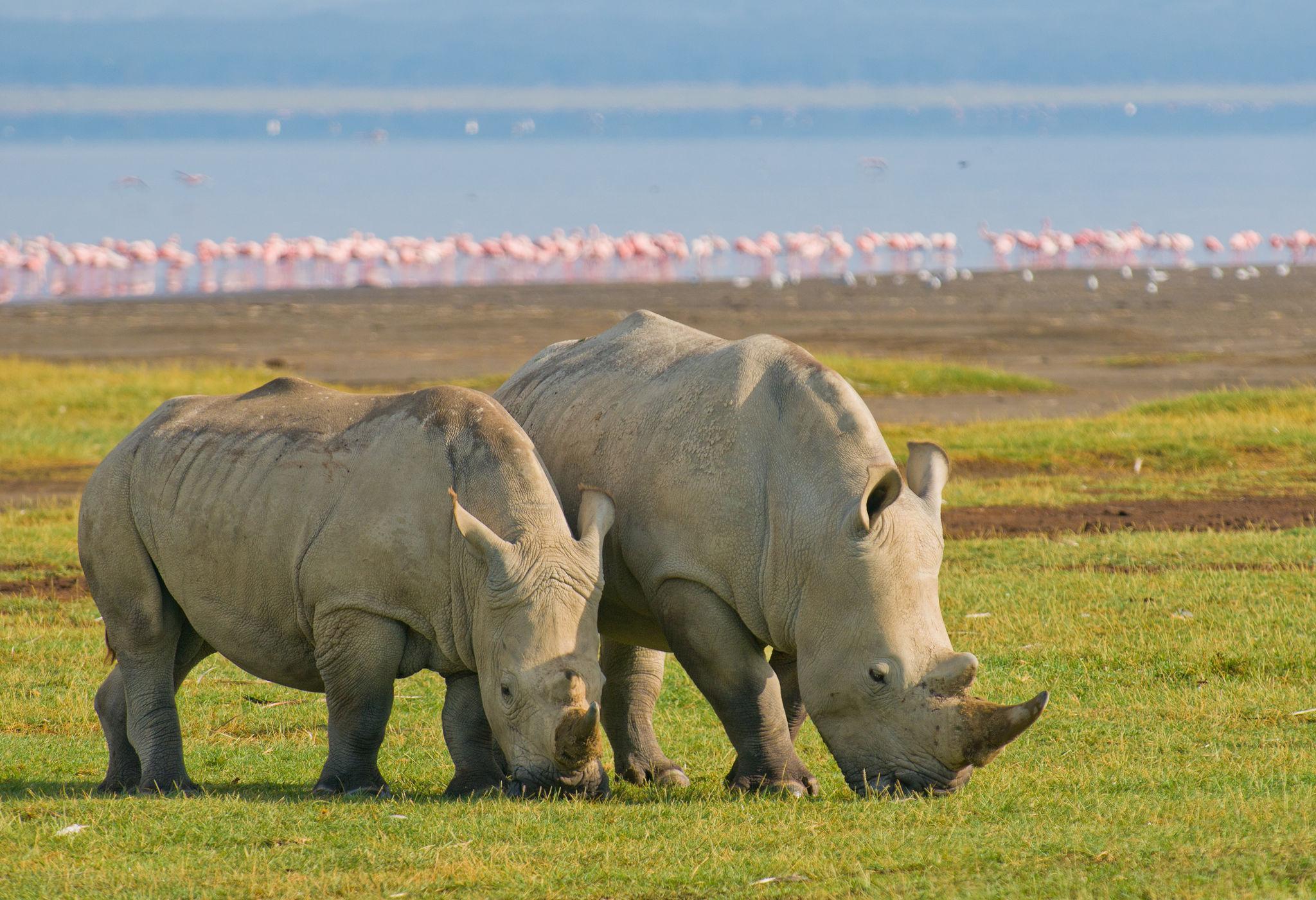
Lake Nakuru National Park
Rhino, flamingo and yellow-fever forest.
A compact Rift Valley soda lake ringed by acacia forest and cliffs, protecting one of Kenya's most important black and white rhino populations.
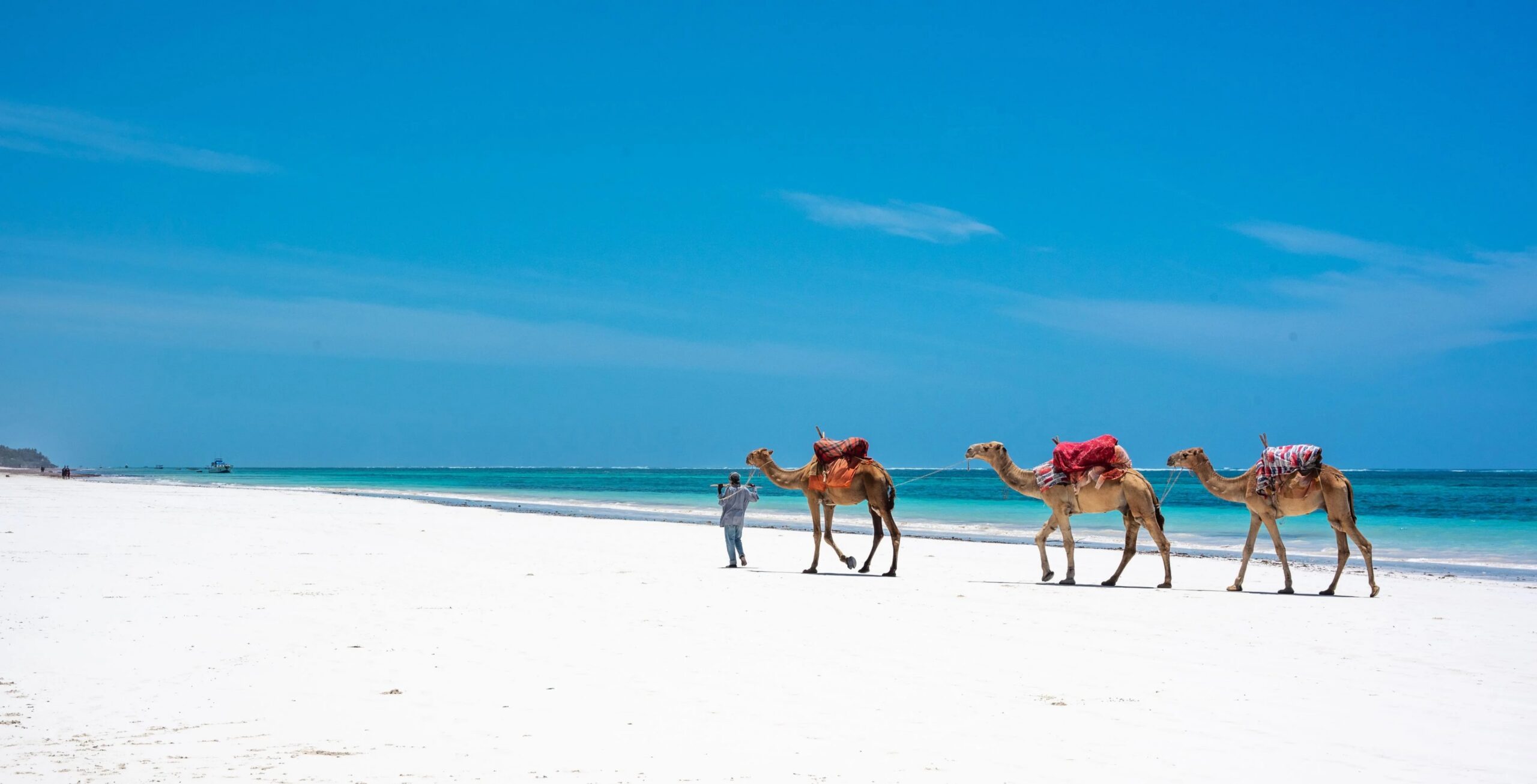
Diani Beach
The easy end of a safari.
Kenya's best-known beach: a long stretch of white sand and coral reef south of Mombasa, with reliable flights, good hotels and warm water year-round.
Frequently asked.
Do I need climbing experience for Mount Kenya?
Not for Point Lenana at 4,985 m — it is a trek. Batian and Nelion, the true summits, are technical rock climbs requiring ropes and experience.
How many days does it take?
Four minimum, five recommended. The extra day is spent acclimatising and dramatically improves both summit success and enjoyment.
Which route is best?
Up Sirimon for the acclimatisation profile and down Chogoria for the scenery. Naro Moru is quicker but gains height too fast for many people.
Is it harder than Kilimanjaro?
Lower and shorter, with more varied terrain and far fewer trekkers. Point Lenana involves a short scramble that Kilimanjaro does not, but altitude is less extreme.
When should I avoid it?
April, May and November. The rains make trails poor and the views largely disappear.
Are there glaciers?
Yes, though they are retreating rapidly. Several are visible from the summit route.
Related reading.
Guides that pair well with a journey to this destination.
Ready to experience Mount Kenya?
Tell us what draws you here and we'll shape a private journey around the places, experiences and pace that matter to you.