
Bwindi Impenetrable National Park
“You spend days getting here and an hour with them, and the hour is the one you remember for the rest of your life.”
A dense, ancient montane rainforest in south-western Uganda holding roughly half the world's mountain gorillas, across four separate trekking sectors.
About Bwindi Impenetrable Forest.
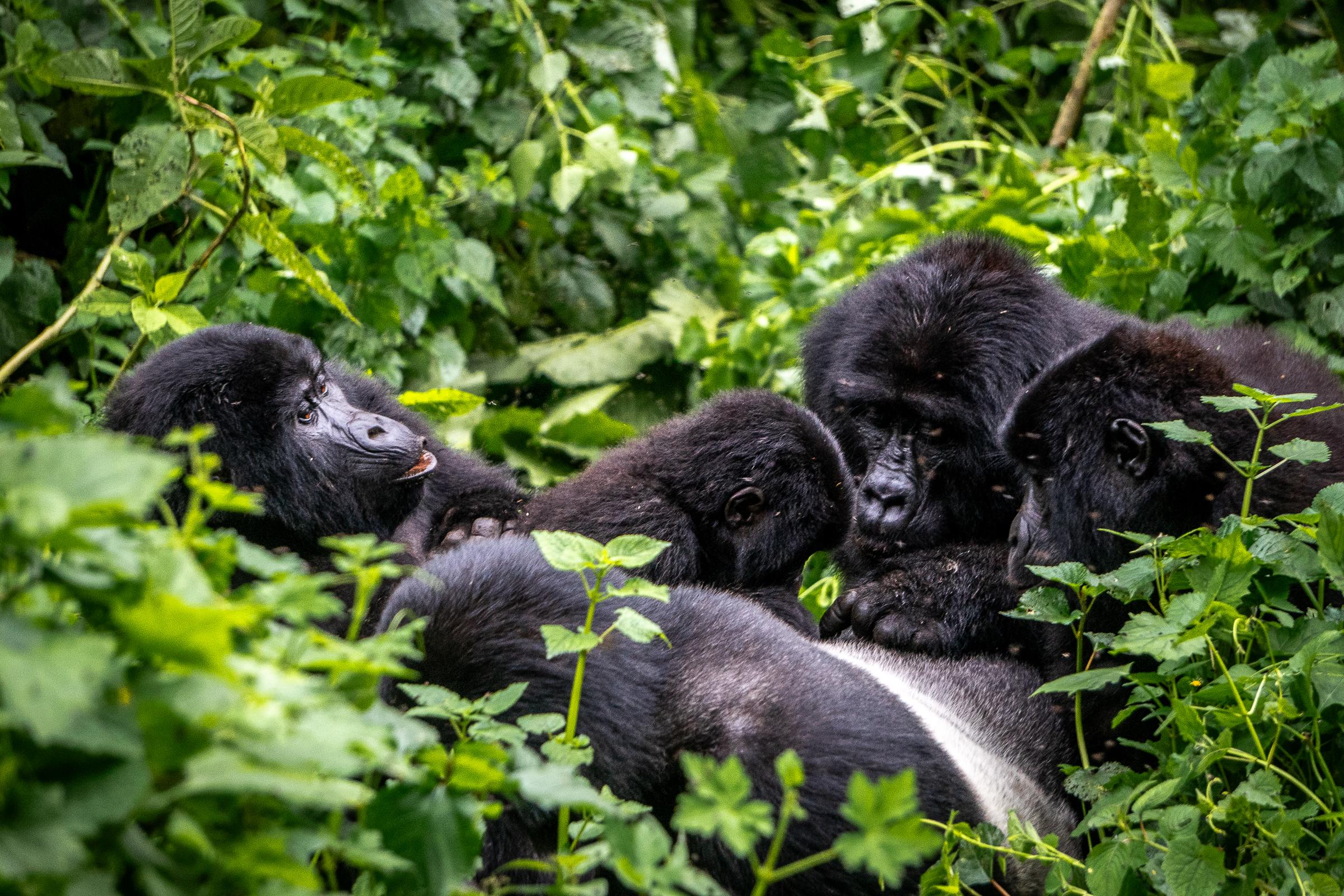
Bwindi is a 331 square kilometre block of Afromontane rainforest on the edge of the Albertine Rift, and it is genuinely impenetrable in places — vine tangles, steep ridges, mud, altitude between 1,160 and 2,600 metres. It is also home to roughly half the world's remaining mountain gorillas, in more than twenty habituated families spread across four trekking sectors: Buhoma in the north, Ruhija in the east, and Rushaga and Nkuringo in the south.
A permit buys one hour with a habituated family. The trek to reach them takes anywhere from thirty minutes to six hours depending on where the group has moved overnight, and you are assigned to a family on the morning of the trek according to fitness and the rangers' latest tracking. Rushaga also offers a gorilla habituation experience — four hours with a semi-habituated family alongside researchers, on a separate and more expensive permit.
Bwindi is far more than gorillas. It is one of the richest forests in Africa for birds, with around 350 species including two dozen Albertine Rift endemics, and it holds around 120 mammal species and eleven diurnal primates. The Batwa community, displaced when the park was gazetted, now runs cultural experiences that are worth the time and worth paying properly for.
Sector choice matters, because sectors are far apart on bad roads. We match your sector to your permit, your lodge and your arrival route rather than the other way round.
Bwindi Impenetrable National Park, in short.
The essentials our specialists check first when shaping a private itinerary.
Good to know.
- Location
- South-western Uganda, on the edge of the Albertine Rift near the DRC border.
- Permits
- A gorilla permit is required and strictly limited per family per day. Habituation permits are separate and cost more. Book several months ahead for June to August and December.
- Getting there
- Fly to Kihihi or Kisoro from Entebbe, then 1 to 2 hours by road; or 8 to 10 hours by road from Kampala.
- Age limit
- Minimum 15 years for gorilla trekking, strictly enforced.
- Sectors
- Buhoma, Ruhija, Rushaga and Nkuringo. Sectors are far apart, so lodge and permit must match.
- Fitness
- Treks run from 30 minutes to 6 hours on steep, muddy terrain at altitude. Porters are available and hiring one supports local employment.
- Gear
- Waterproof jacket, gaiters, sturdy boots with ankle support, gardening gloves for vines, and a dry bag for camera gear.
- Responsible tourism
- Permit revenue funds park protection and a share goes to neighbouring communities. Hire porters and pay Batwa guides directly and fairly.
Why visit Bwindi Impenetrable National Park?
Gorilla trekking
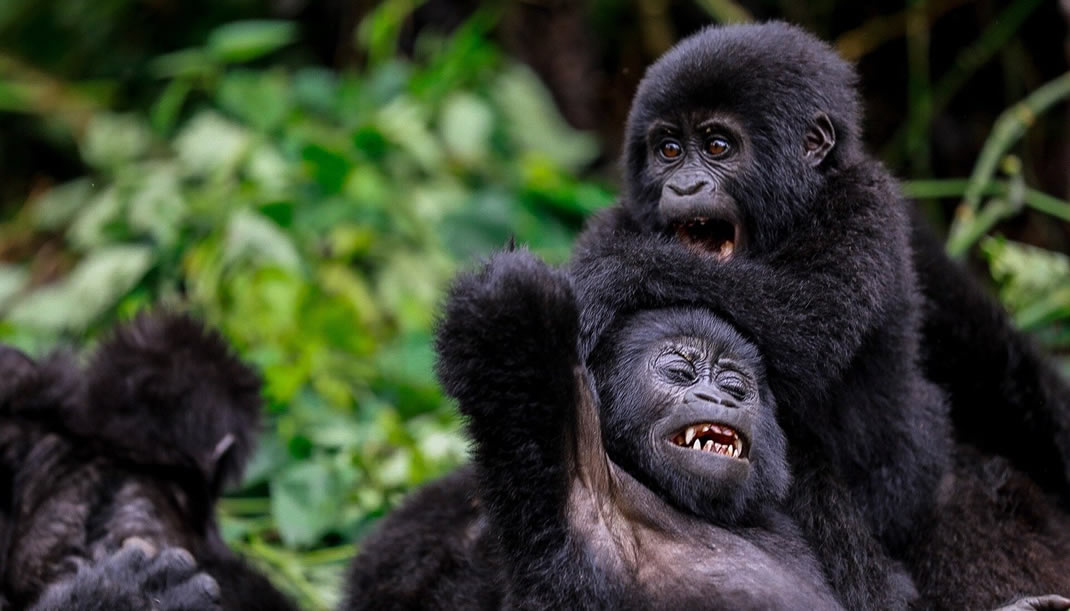
One hour with a habituated mountain gorilla family, on a strictly limited daily permit.
Gorilla habituation experience
Four hours with a semi-habituated family alongside researchers, available in the Rushaga sector.
Albertine Rift endemics
Around 350 bird species including two dozen endemics; a world-class birding forest.
Batwa cultural experience
Forest walks and cultural interpretation led by the Batwa community.
Four distinct sectors
Buhoma, Ruhija, Rushaga and Nkuringo, each with its own families and lodges.
Munyaga and Muzabajiro trails
Waterfall and viewpoint walks for non-trekking days.
Species you may encounter.
Wildlife commonly associated with the region. Sightings are always wild and never guaranteed.
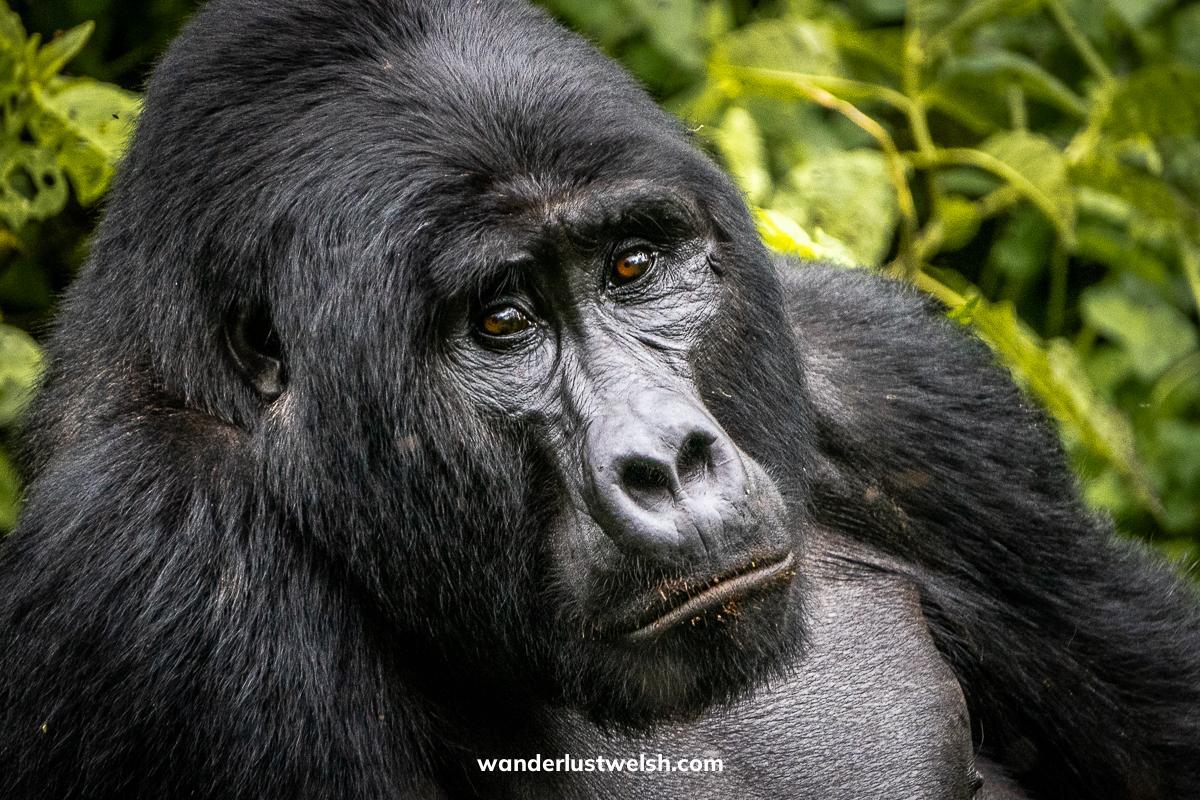
Mountain gorilla
Roughly half the global population, in more than twenty habituated families.
Chimpanzee
Present in the forest but not habituated for tracking here.
L'Hoest's monkey
One of eleven diurnal primates, often seen along forest edges.
Black-and-white colobus
Common in the canopy throughout the park.
African forest elephant
Present in small numbers, rarely seen in the dense vegetation.
African green broadbill
An Albertine Rift endemic and a major target for visiting birders, best in Ruhija.
Duiker species
Black-fronted and yellow-backed duiker occur in the undergrowth.
Butterflies
Over 200 species recorded, including several forest endemics.
Experiences in Bwindi Impenetrable National Park.
The right time for Bwindi Impenetrable National Park.
Driest trekking: June – August, December – February · Wet but quiet: March – May, September – November
Drier trails and good conditions; permits in strong demand.
One of the driest months and among the best for trekking.
Rains build; forest very green and lodges quieter.
Wettest period; trails are muddy and steep sections demanding.
Still wet, though trekking continues throughout.
Dry season begins; excellent trekking conditions.
Peak season — book permits and lodges months ahead.
Dry and busy; permits sell out earliest in this month.
Rain returning; still very manageable and quieter.
Wet but green; birding is excellent.
Wettest of the second rains; muddy trekking.
Drying out; festive weeks book out early.
- Altitude
- 1,160 – 2,600 m
- Average temperature
- 11 – 23°C; cool, wet and humid
- Dry season
- June – August and December – February
- Rainy season
- March – May and September – November
Bwindi Impenetrable National Park on the map.
The park and the places around it — nearby destinations, areas and camps we work with.
Journeys featuring Bwindi Impenetrable National Park.
Combine Bwindi Impenetrable National Park with…
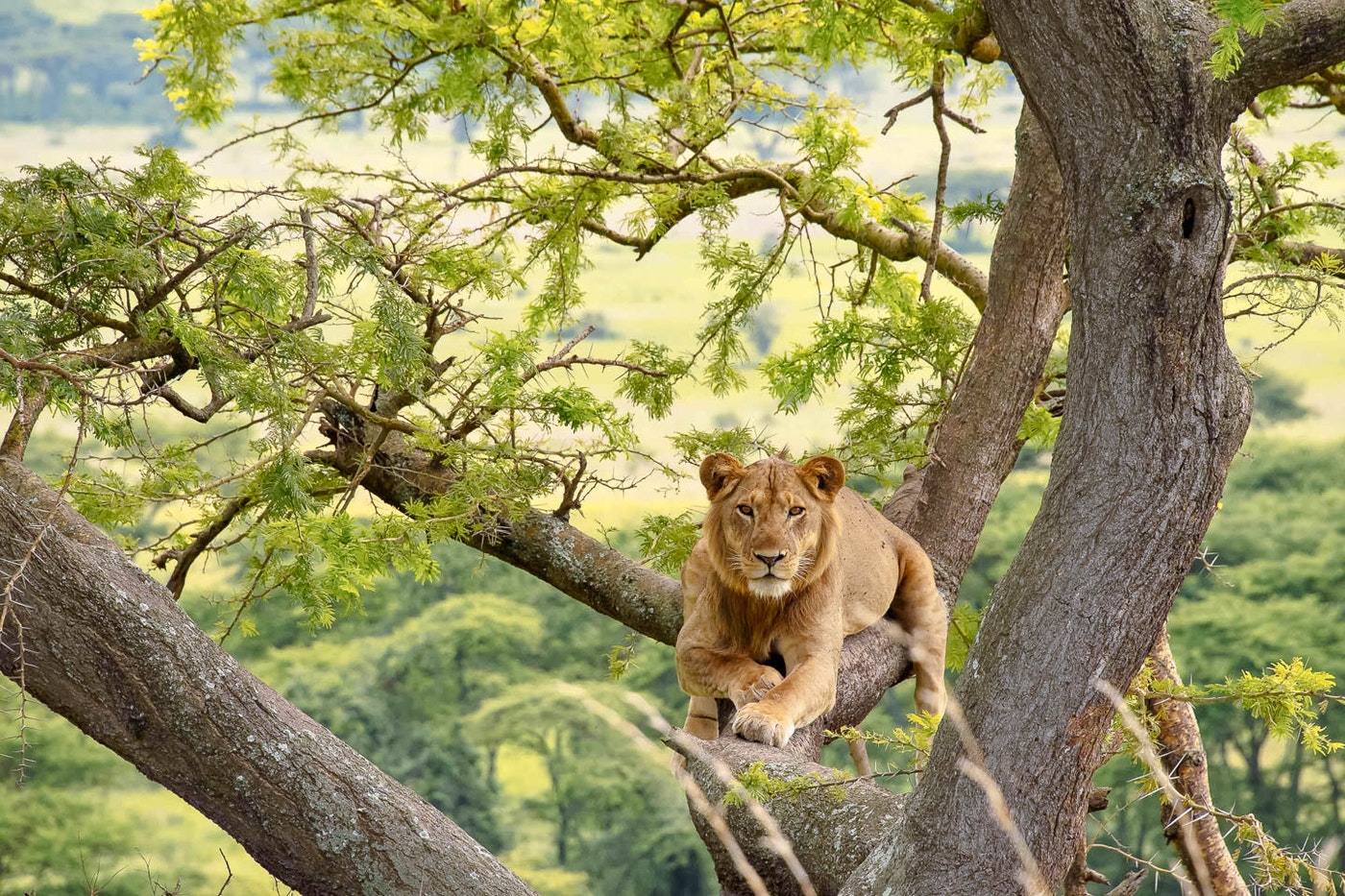
Queen Elizabeth National Park
Tree-climbing lions and a channel full of hippo.
Uganda's most popular savannah park — the Kazinga Channel, the Ishasha tree-climbing lions, crater lakes, Kyambura gorge chimpanzees and nearly 600 bird species.
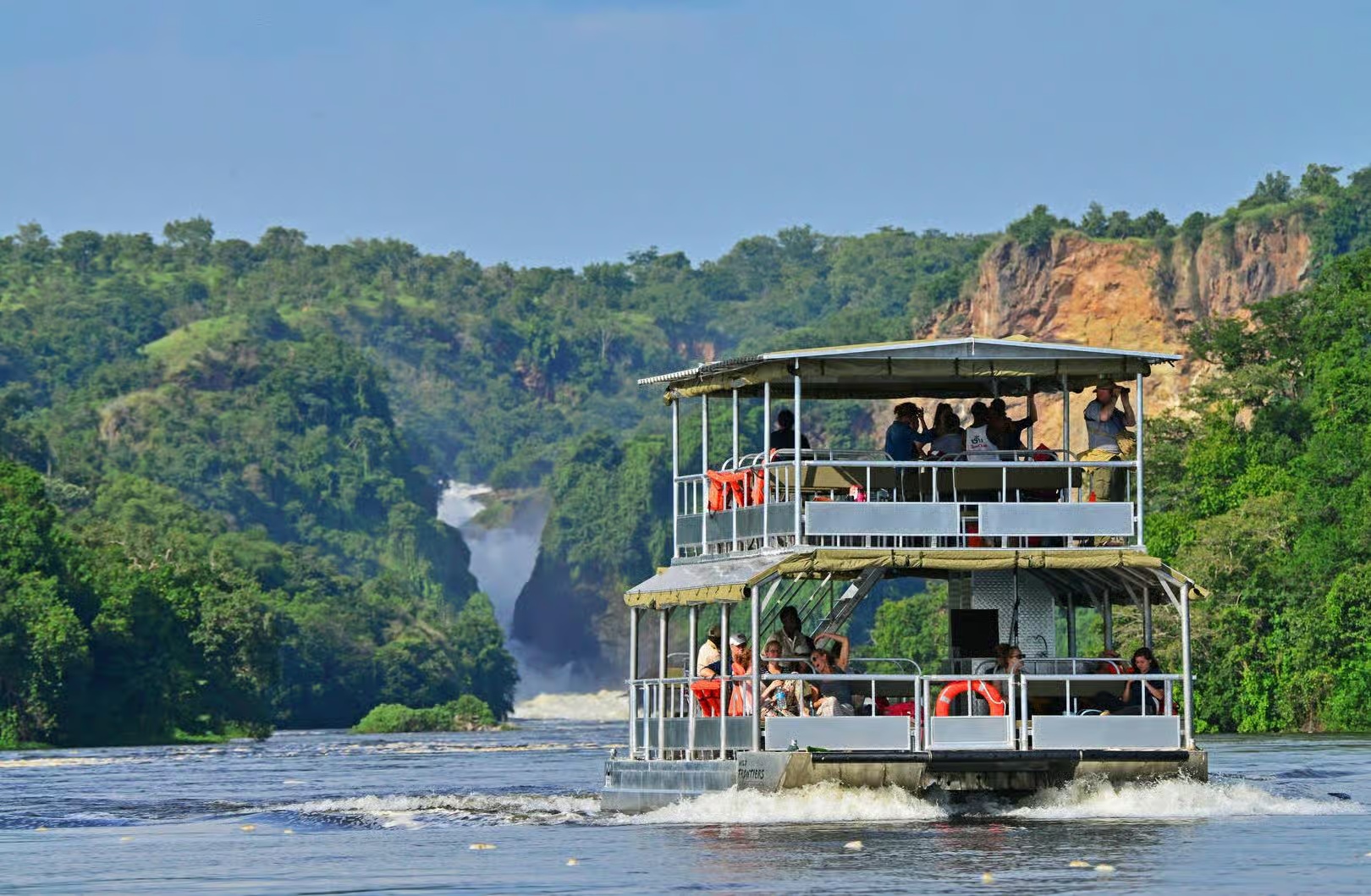
Murchison Falls National Park
The Nile forced through seven metres of rock.
Uganda's largest national park, split by the Victoria Nile, with the Murchison gorge, boat safaris to the falls, big game on the northern savannah and Budongo forest to the south.
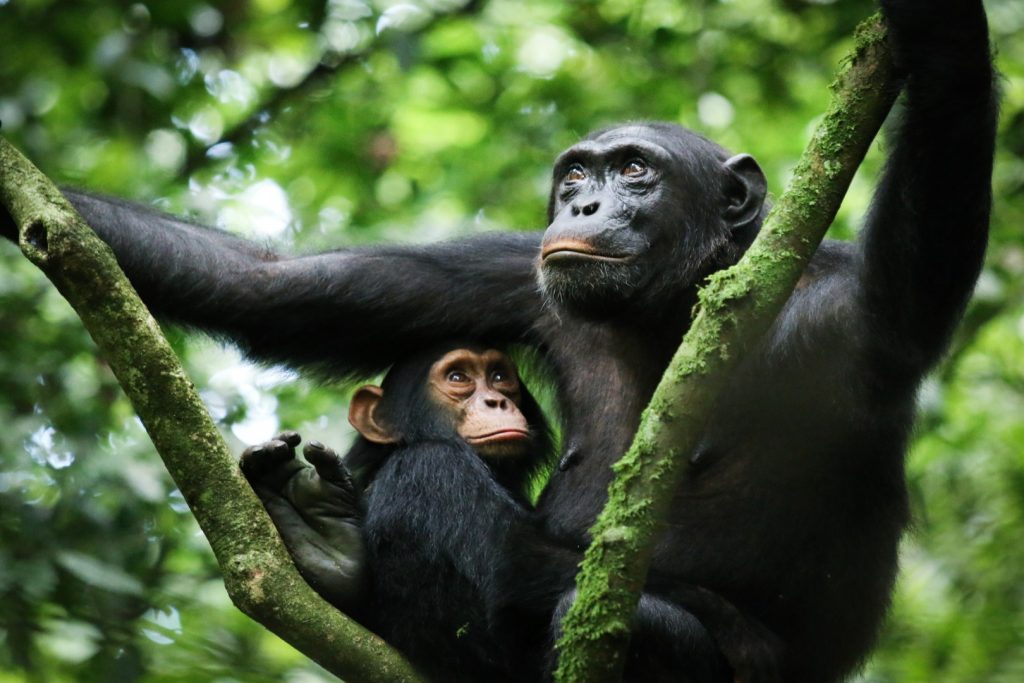
Kibale National Park
The primate capital of East Africa.
A tall tropical rainforest in western Uganda with the exceptionally high primate diversity and outstanding chimpanzee tracking.
Mgahinga Gorilla National Park
Three volcanoes, one gorilla family.
Uganda's smallest national park, in the Virunga volcanoes — one habituated gorilla family, golden monkey tracking, volcano climbs and Batwa cultural trails.
Planning your visit.
Practical guidance from our on-the-ground team, tailored to this destination.
Health rules
You may not trek with a cold, flu or other transmissible illness — gorillas are highly susceptible. A 7 m distance and mask use are enforced.
Photography
No flash. Bring a fast lens for low forest light; drones are prohibited.
Frequently asked.
How difficult is gorilla trekking in Bwindi?
Variable and sometimes hard. Treks last from 30 minutes to 6 hours on steep, slippery terrain at up to 2,600 m. Reasonable fitness matters, and hiring a porter makes a real difference.
How far ahead should I book a permit?
Several months for June to August and December to February. Permits are capped per family per day and the drier months sell out first.
What is the minimum age?
Fifteen years, strictly enforced for both trekking and the habituation experience.
Bwindi or Volcanoes National Park in Rwanda?
Bwindi has more families, more sectors and lower permit costs; Rwanda has an easier drive from Kigali and generally shorter treks. We quote both and let the cost and travel time decide.
What is the habituation experience?
Four hours with a semi-habituated family alongside researchers, in the Rushaga sector, on a separate and more expensive permit than a standard trek.
Can I trek if I have a cold?
No. Gorillas are highly vulnerable to human respiratory illness and rangers will refuse a visibly unwell trekker. This is not negotiable.
Is one hour really all I get?
Yes, on a standard permit — a limit set to protect the families. Most people find the hour longer and more affecting than they expected.
Related reading.
Guides that pair well with a journey to this destination.
Ready to experience Bwindi Impenetrable National Park?
Tell us what draws you here and we'll shape a private journey around the places, experiences and pace that matter to you.