

Chimpanzee Trekking
Follow the noise.
Tracking habituated chimpanzee communities in Kibale, Nyungwe, Gombe and Mahale — faster, louder and more chaotic than a gorilla trek, and utterly absorbing.
- Available in
- Tanzania · Uganda · Rwanda
- Best time
- Firmest trails: June – September, December – February · Wetter but often lower-feeding: March – May, October – November
- Type
- primate
Africa's noisiest primate encounter.
Where a gorilla trek is a slow, hushed hour, chimpanzee tracking is movement and sound. You hear the community long before you see it — a rolling wave of screams and drummed buttress roots that seems to come from every direction at once.
Chimpanzees travel fast and high, so tracking means walking on trails, stopping to look up, then walking again. When you find them feeding in a fig tree the whole forest floor becomes a theatre: youngsters wrestling, adults grooming, someone charging through the undergrowth for no reason you will ever understand.
Kibale in Uganda has exceptionally high primate diversity and is among the most reliable chimpanzee destinations in East Africa. Nyungwe in Rwanda adds montane forest and a canopy walkway. Gombe and Mahale, on the shore of Lake Tanganyika, are remote, expensive to reach and the most rewarding of all for anyone who has read Jane Goodall.
Habituation experiences — a full day with researchers rather than one hour with a ranger — are available in Kibale and are worth the extra permit for photographers and repeat visitors.
Why Chimpanzee Trekking?
Habituated communities
Groups followed daily by researchers and rangers, so encounters are consistent.
One hour, eight people
Small permitted groups keep the experience quiet and the community undisturbed.
Full-day habituation
In Kibale you can trade the one-hour visit for a whole day with the research team.
Thirteen primate species
Kibale alone holds red colobus, L'Hoest's monkey, grey-cheeked mangabey and more.
Goodall's forests
Gombe and Mahale on Lake Tanganyika, where modern primatology began.
Easier than gorillas
Flatter trails and lower altitude make this the more accessible primate trek.
Where to experience Chimpanzee Trekking.
Uganda
Explore Uganda →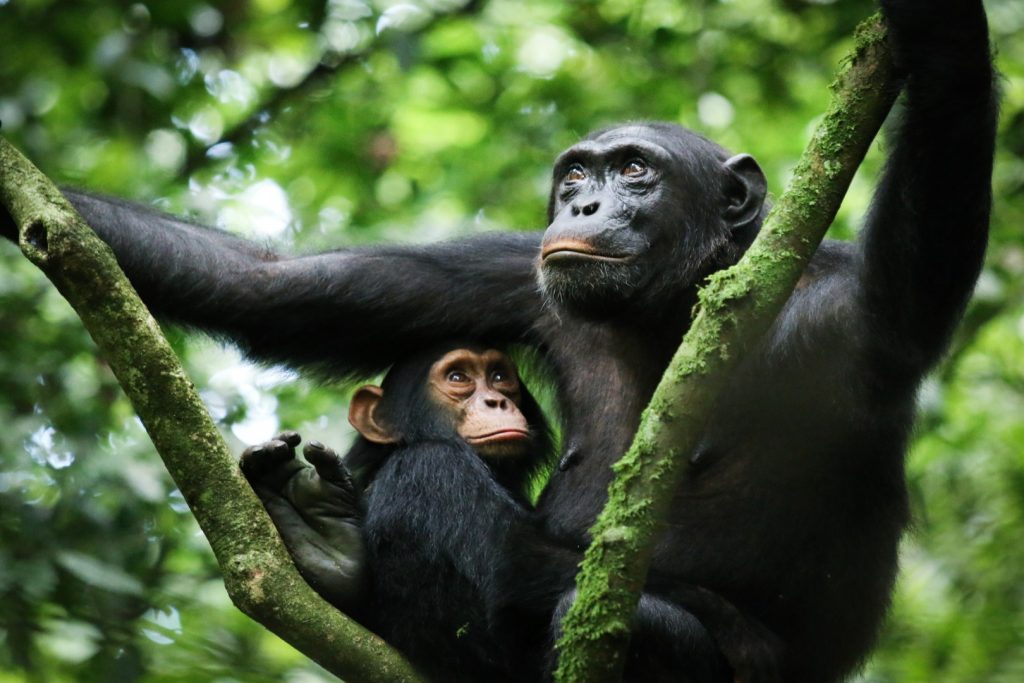
Rwanda
Explore Rwanda →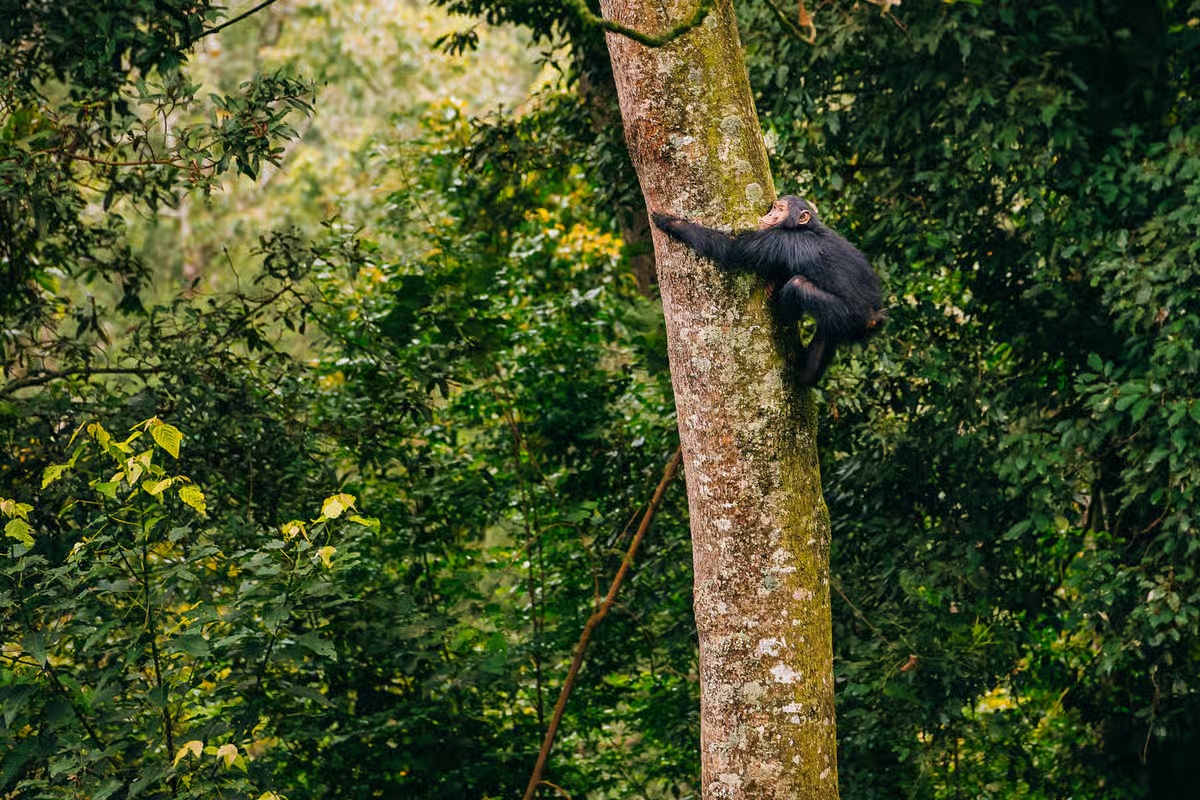
Tanzania
Explore Tanzania →
Gombe Stream National Park
Where Jane Goodall changed everything.
A steep strip of forest on the shore of Lake Tanganyika where Jane Goodall began her chimpanzee research in 1960 — small, remote and historically extraordinary.

Mahale Mountains National Park
Chimpanzees on a white sand beach.
A remote mountain forest on Lake Tanganyika holding around a thousand chimpanzees, reached only by boat and paired with some of the clearest freshwater in the world.
When to experience it.
Tracking runs year-round. The drier months of June to September and December to February give firmer trails; in the wet season chimpanzees often feed lower and closer to the trails, which some guides consider an advantage.
Dry spell — comfortable trails and reliable tracking.
Warm and mostly dry; good all-round conditions.
Long rains begin; forest lush and humid, chimps often feeding lower.
Wettest period — muddy trails, fewer visitors, easier permits.
Rains taper through the month; conditions improve steadily.
Dry season opens — the best tracking window begins.
Peak conditions and peak demand for permits.
Dry, busy; book permits well ahead.
Dry and slightly quieter than August.
Short rains begin; humid but productive.
Wet and green; permits easier to secure.
Short dry season returns for good festive-period tracking.
What to expect.
The briefing
Trackers locate the community at their overnight nesting site from around 06:00 and radio in. You are briefed at the park office and set out in a group of no more than eight.
The tracking
Mostly on established forest trails, with detours through undergrowth. Expect one to three hours of walking, less demanding than a gorilla trek.
The hour
Once the community is located you have one hour. Chimpanzees move often, so the hour is spent repositioning rather than sitting still.
Photography
Difficult and rewarding — dark forest, backlit canopy, fast subjects. Fast glass and high ISO are essential; flash is not permitted.
Fitness
Moderate. Trails are uneven and humid but gradients are gentler than in gorilla country.
Journeys featuring Chimpanzee Trekking.
Chimpanzee Trekking in pictures.

Planning this experience.
- Age minimum
- 12 years standard, 15 for habituation.
- Trek duration
- One to three hours plus one hour with the community.
- Group size
- Maximum six to eight trekkers.
- Where
- Kibale and Nyungwe by road; Gombe and Mahale by flight to Kigoma plus boat.
- Best paired with
- Gorilla trekking, Queen Elizabeth NP, or a Serengeti safari.
Explore more experiences.
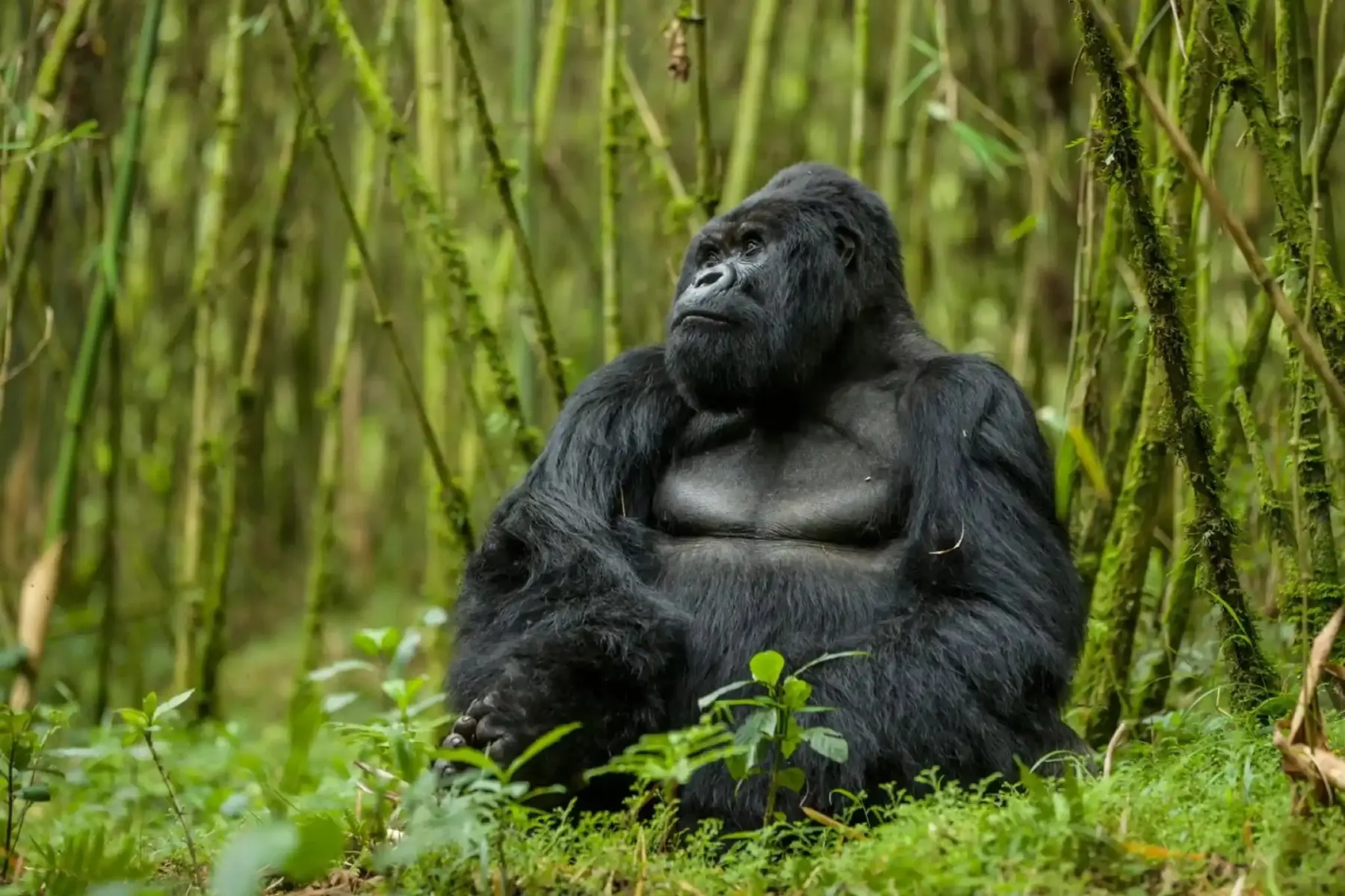
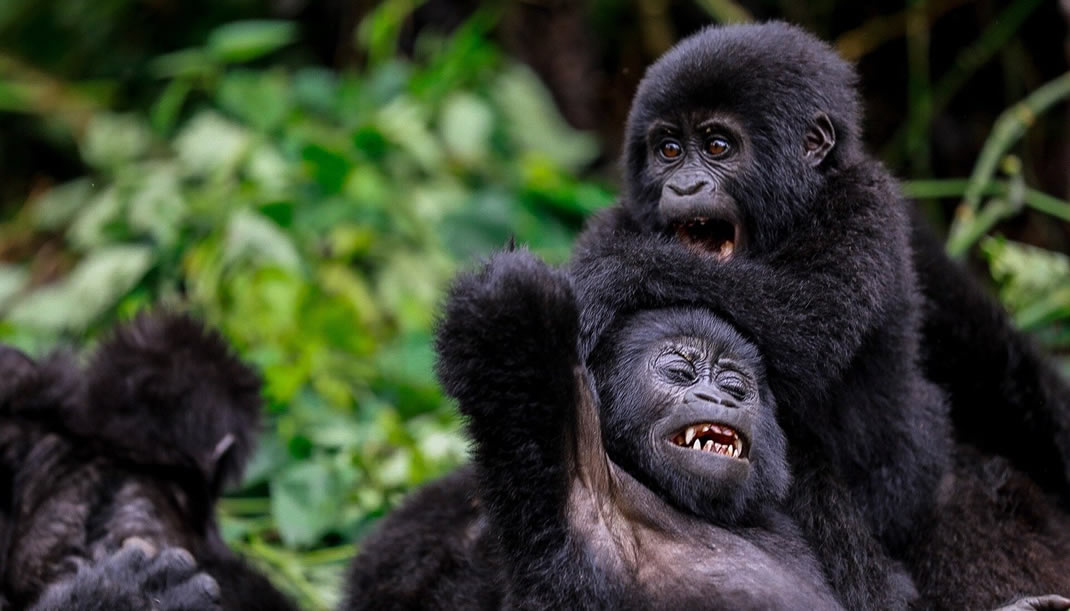
Gorilla Trekking
Into the forest.
A morning trek through misted mountain rainforest to spend one quiet hour with a habituated family of mountain gorillas — one of the rarest wildlife encounters on Earth.
Hiking & Trekking
On foot, at last.
Day hikes and multi-day walks away from the vehicle — crater rims, forest waterfalls, Rift Valley escarpments, the Usambara Mountains and guided walking safaris with an armed ranger.
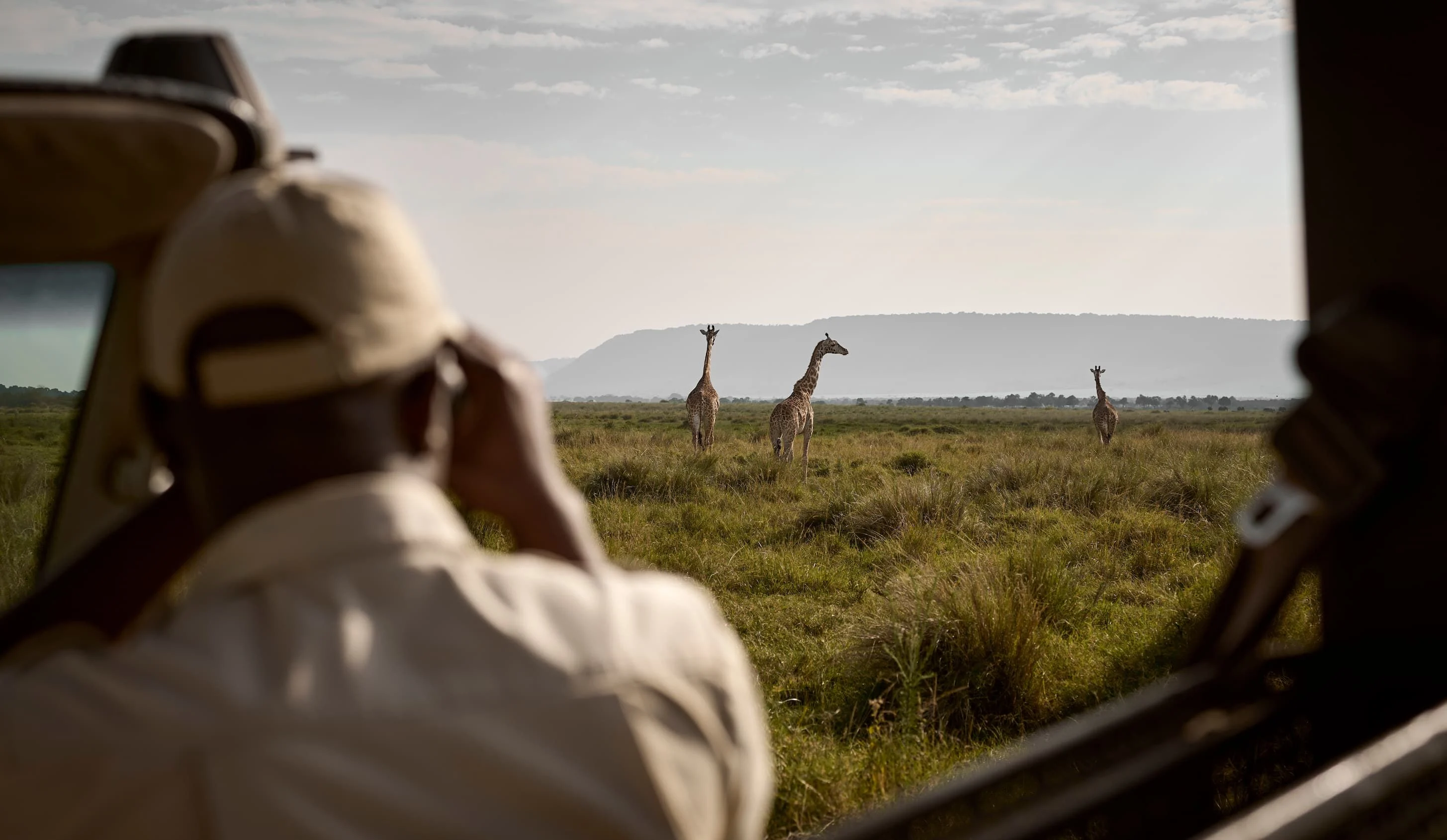
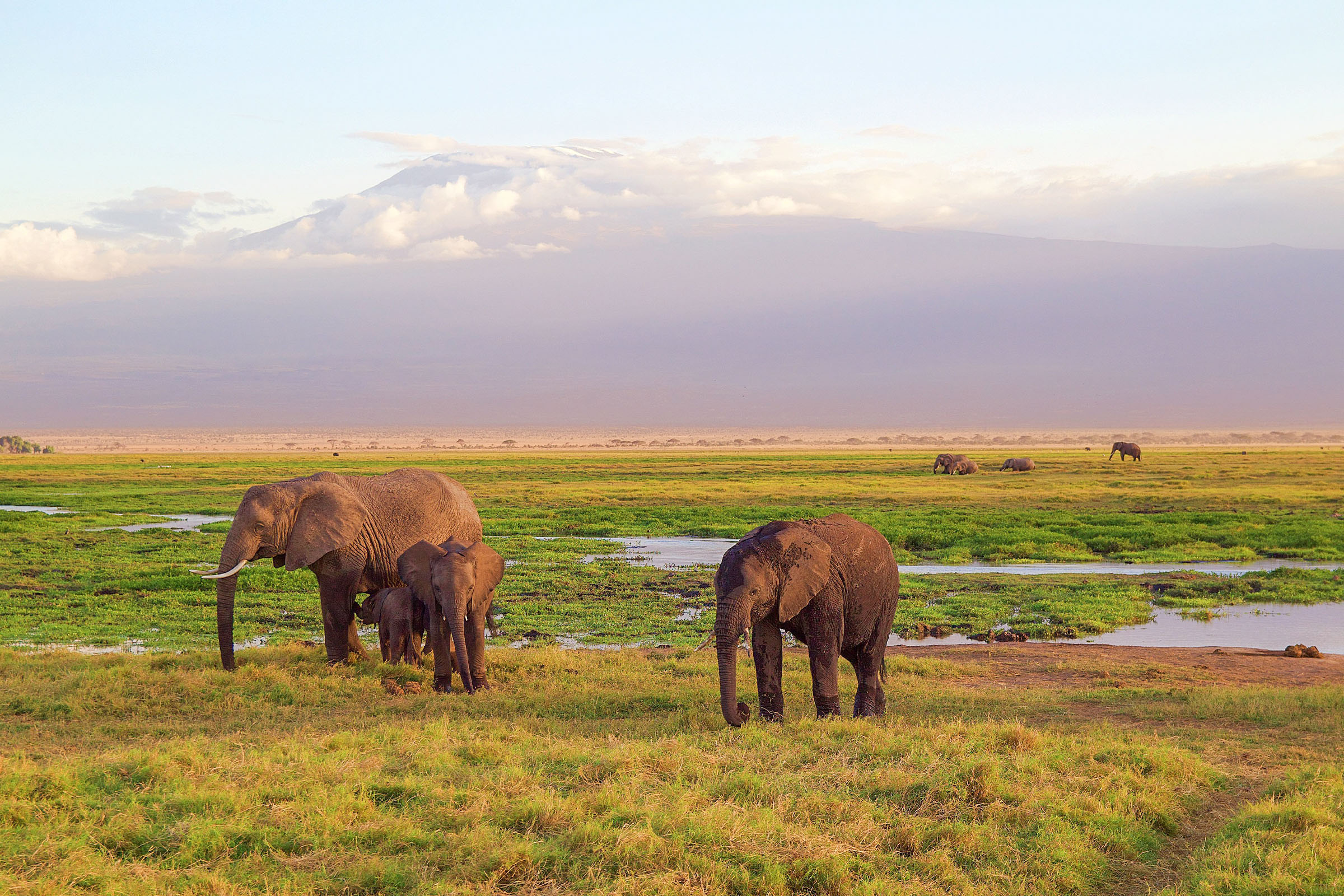
Wildlife Safaris
The reason you came.
Private, guided game viewing across the great ecosystems of East Africa — the Serengeti, Ngorongoro, Tarangire, the Maasai Mara and beyond — with your own vehicle and guide on tailor-made journeys, and shared departures only where specifically stated.
Frequently asked.
Is chimpanzee tracking easier than gorilla trekking?+
Generally yes. Trails are flatter, altitude is lower and treks are shorter. The trade-off is that chimpanzees move constantly, so you spend the hour following rather than sitting.
How reliable are sightings?+
In Kibale, very — trackers locate the community from their nesting site each morning. These are still wild animals in dense forest, so sightings can never be promised.
What is the habituation experience?+
A full day with the research team from nesting to nesting, limited to a handful of visitors and priced on a separate, higher permit. It is the best option for photographers.
Should I choose Kibale, Nyungwe, Gombe or Mahale?+
Kibale for reliability and easy combination with gorillas; Nyungwe if you are already in Rwanda; Gombe or Mahale if remoteness and primatology history matter more than cost.
Can children take part?+
From twelve years in most parks. Younger children can enjoy forest and crater-lake walks while older family members trek.
Build this experience into your journey.
Tell us what draws you to chimpanzee trekking and we'll design a private journey around your dates, pace and interests.